


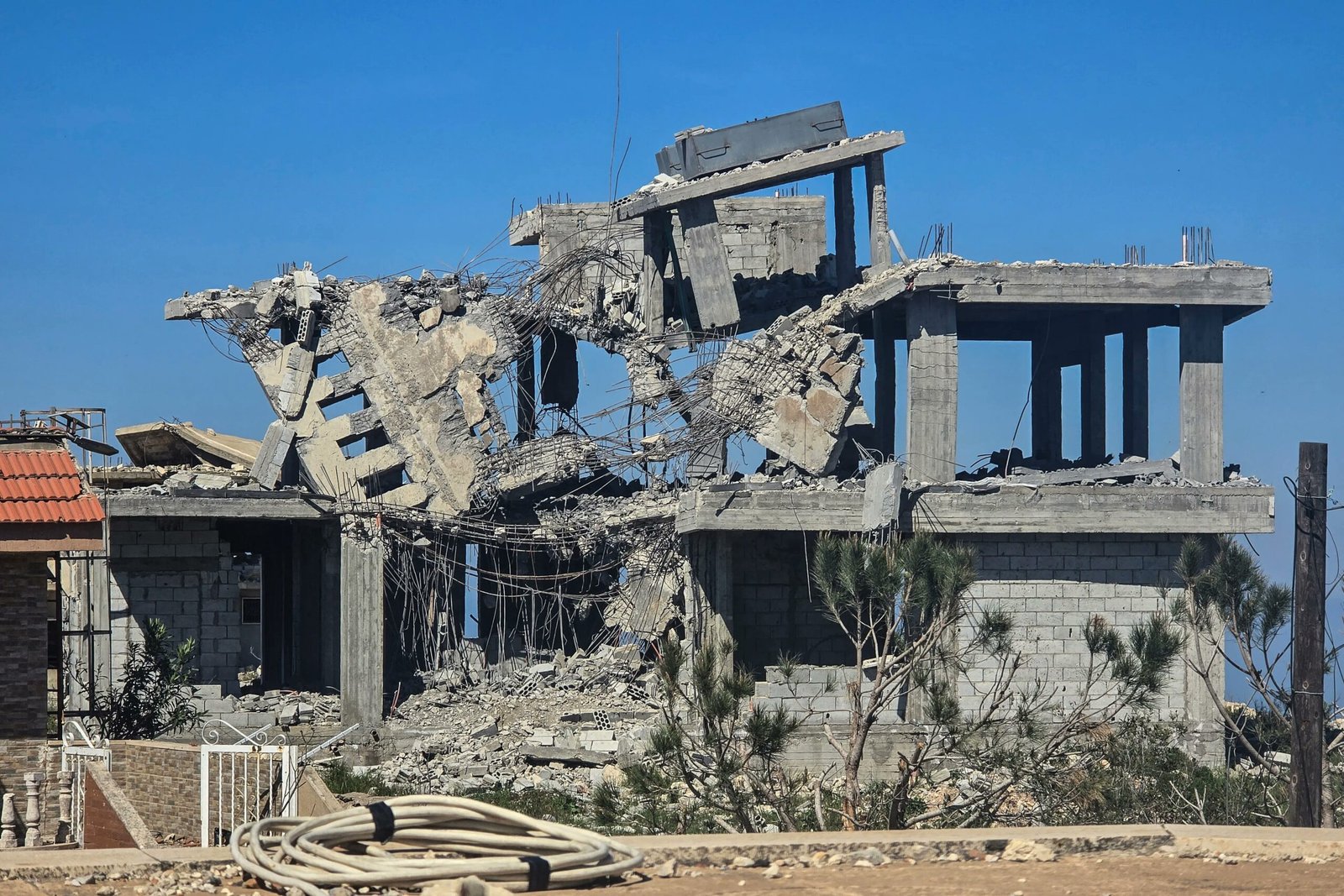
BEIRUT/JERUSALEM: Fresh Israeli airstrikes and retaliatory drone activity by Hezbollah have pushed a fragile ceasefire in southern Lebanon to the brink, just hours before high-stakes diplomatic talks in Washington. The renewed violence underscores how quickly the situation on the ground is outpacing political efforts to stabilize one of the region’s most volatile flashpoints.
At least four people were killed in Israeli strikes across southern Lebanon, according to state media, while Hezbollah confirmed launching an attack drone targeting Israeli forces. The exchange highlights the growing strain on a 10-day U.S.-mediated ceasefire set to expire imminently, with Lebanese leadership now seeking an extension as a precondition for broader negotiations.
President Joseph Aoun signaled that Beirut will push for prolonging the truce during upcoming talks, framing it as essential to preventing a wider escalation. Yet the timing is precarious. Hostilities that reignited on March 2, when Hezbollah opened fire in alignment with Iran have already claimed more than 2,400 lives in Lebanon, according to official figures, while Israel continues to consolidate a buffer zone along the border.
The latest strikes reveal the complexity and volatility of the battlefield. In the village of Tayri, an Israeli strike hit a civilian vehicle, killing two people. Lebanese military officials also alleged that a drone targeted rescuers attempting to evacuate a wounded journalist from the rubble, an accusation Israel denies, stating it does not obstruct rescue operations. The Israeli military maintains that its actions targeted individuals who crossed its “Forward Defense Line” and posed an immediate threat.
Further escalation followed in Yohmor, where additional airstrikes killed two more people. Hezbollah responded by deploying a drone against Israeli artillery positions, claiming retaliation for ceasefire violations. Israel, in turn, reported intercepting the drone and reiterated that Hezbollah’s movements breached agreed lines.
Beyond the battlefield, the diplomatic track is equally fraught. Lebanon is preparing to push not only for a ceasefire extension but also for a halt to Israeli demolitions in southern villages, the withdrawal of Israeli troops, and progress on border delineation. These demands reflect Beirut’s broader strategy: to convert a temporary truce into a structured negotiation process addressing long-standing territorial and security disputes.
However, internal divisions complicate Lebanon’s position. Hezbollah has openly criticized the government’s willingness to engage diplomatically, exposing fractures between state institutions and the Iran-backed group that continues to wield significant military influence. This divergence weakens Lebanon’s negotiating posture at a critical moment.
On the Israeli side, Foreign Minister Gideon Saar described the talks as a “historic decision” to engage directly with Lebanon after decades, while simultaneously labeling the country a “failed state” shaped by Hezbollah’s dominance. The dual messaging offering dialogue while intensifying military pressure reflects Israel’s attempt to negotiate from a position of tactical advantage.
The broader geopolitical context remains deeply entangled. While the Lebanon ceasefire operates on a separate track from U.S.-Iran tensions, the overlap is impossible to ignore. Washington has denied formal linkage, yet Iran’s influence through Hezbollah continues to shape the conflict’s trajectory, blurring the lines between local confrontation and regional power struggle.
As U.S. Secretary of State Marco Rubio prepares to participate in the Washington talks, expectations remain cautious. Lebanon seeks guarantees on sovereignty and territorial integrity, while Israel prioritizes security and the containment of Hezbollah. Both objectives, however, remain structurally at odds.
Lebanon and Israel, still technically in a state of war since 1948, face a narrowing window for de-escalation. The immediate question is whether diplomacy can outpace the violence or whether the current ceasefire will collapse under the weight of unresolved contradictions.
What unfolds next will not only determine the stability of southern Lebanon but may also signal whether fragile, short-term truces can evolve into durable political frameworks in a region where conflict repeatedly outlives negotiation.
-Ahmed Alaa El Din and Elimam Abdallah