

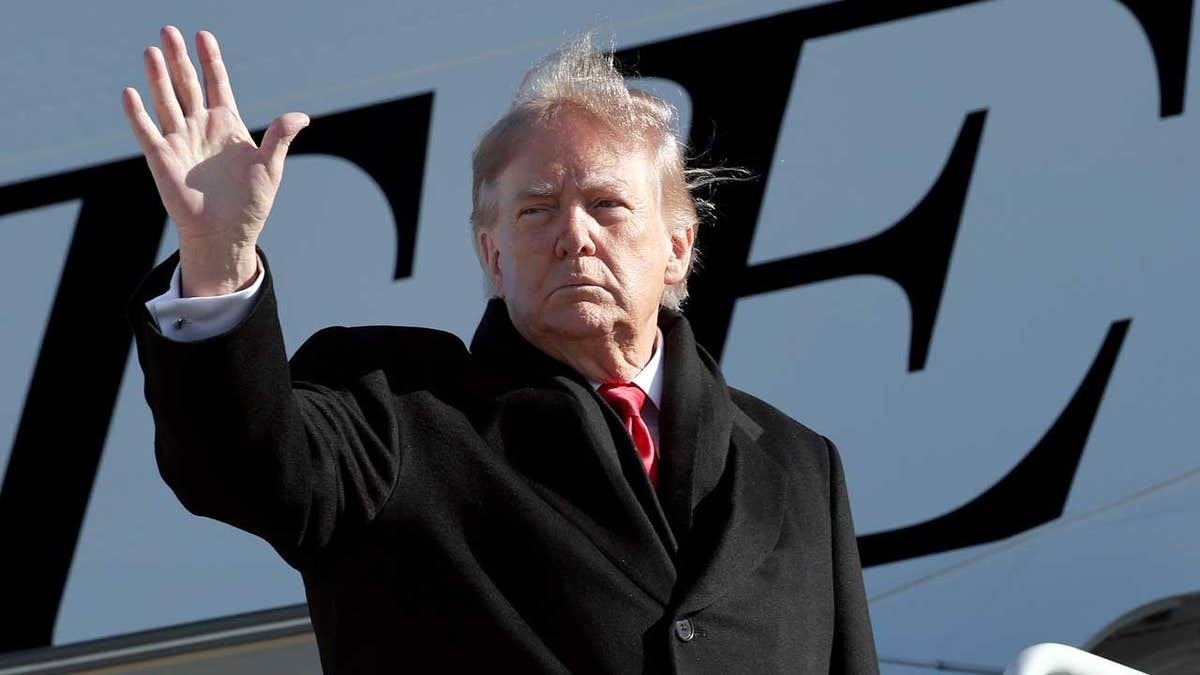
MANILA, Philippines: US President Donald Trump’s arrival in the Philippines marks the beginning of a strategically significant Asian tour, bringing together economic diplomacy, regional security calculations and intensifying competition among major powers. At a time when Washington faces domestic political challenges and an increasingly complicated international environment, Trump’s engagement with Southeast Asian leaders carries implications extending far beyond trade agreements and diplomatic ceremonies.
The Philippines, Washington’s longstanding treaty ally, provides an important starting point for an administration seeking to reaffirm American leadership in the Indo-Pacific. His visit coincides with the annual summit of the Association of Southeast Asian Nations (ASEAN), offering an opportunity to strengthen economic partnerships, reassure regional allies and reinforce the United States’ strategic presence in a region where China’s influence continues to expand.
The larger question, however, is whether Washington can translate diplomatic visibility into sustained regional confidence and long-term strategic cooperation.
Southeast Asia has become one of the most consequential arenas of contemporary geopolitical competition. Its strategic geography, expanding economies, critical maritime routes and growing technological markets make it indispensable to both American and Chinese ambitions. For ASEAN members, the challenge is particularly complex. They depend on China for substantial trade and investment while maintaining important security, economic and diplomatic relationships with the United States. Consequently, most regional governments have resisted choosing sides in the emerging rivalry between the two powers.
Trump’s participation in the ASEAN summit reflects Washington’s recognition that maintaining influence in Southeast Asia requires more than security commitments. Economic engagement, infrastructure investment, technological partnerships and access to American markets are equally important. Discussions are expected to address regional trade, security cooperation and longstanding conflicts, including Myanmar’s continuing instability and tensions in the South China Sea.
The maritime dispute remains particularly sensitive. China’s expansive territorial claims overlap with the maritime interests of several Southeast Asian countries, especially the Philippines. Repeated confrontations involving Chinese and Philippine coast guard and naval forces have heightened concerns about the possibility of escalation. For Manila, the American security partnership represents an important strategic guarantee. Washington has repeatedly reaffirmed its treaty obligations, including in circumstances involving armed attacks against Philippine forces in the South China Sea.
Yet ASEAN’s broader approach remains centred on dialogue, regional stability and avoiding military confrontation. The proposed non-aggression framework with China reflects the region’s desire to establish mechanisms that could prevent maritime disputes from developing into a wider conflict.
One of the most significant engagements on Trump’s agenda is the meeting with leaders of the Quadrilateral Security Dialogue, comprising the United States, India, Japan and Australia. The gathering carries particular importance because it represents the first meeting of Quad leaders since Trump returned to the White House.
The Quad has evolved into an important platform for strategic coordination across the Indo-Pacific. Although it is not a formal military alliance, its members share concerns about maritime security, freedom of navigation, resilient supply chains, emerging technologies and the preservation of a rules-based regional order. For Washington, the grouping provides a framework for coordinating regional priorities without establishing another conventional military alliance.
India’s participation is especially important. New Delhi maintains strategic partnerships with Washington, Tokyo and Canberra while pursuing an independent foreign policy and preserving its longstanding diplomatic engagement with Moscow and other international partners. India’s approach to the Indo-Pacific is therefore different from a straightforward containment strategy against China. Its priorities include maritime stability, economic connectivity, freedom of navigation and the protection of strategic autonomy.
The effectiveness of the Quad will depend not simply on its members’ shared concerns about China but on their ability to develop practical cooperation while accommodating their individual strategic interests. For India, the challenge will be to strengthen cooperation with its Quad partners without compromising its broader diplomatic and economic relationships.
Economic agreements form another central pillar of Trump’s Asian engagement. His scheduled trade agreement with Thailand illustrates the administration’s preference for using market access, tariff negotiations and investment commitments as instruments of foreign policy.
The proposed framework involves Thailand removing tariffs on most American goods and reducing barriers affecting US automobiles, agricultural products and pharmaceuticals. Earlier commitments also included substantial purchases of American aircraft, agricultural commodities and liquefied natural gas.
However, the changing American tariff environment has introduced uncertainty into the broader regional trade relationship. The US Supreme Court’s decision to overturn the 19 per cent tariff previously imposed on Thai imports, followed by Washington’s subsequent efforts to introduce replacement tariffs, highlights the complications facing countries negotiating commercial arrangements with the United States.
For Asian economies, the central concern is predictability. Businesses require stable trade rules, reliable supply chains and confidence that negotiated agreements will remain commercially viable. Tariffs may provide Washington with negotiating leverage, but prolonged uncertainty can also encourage regional economies to diversify their trading relationships.
China remains deeply integrated into Asian manufacturing and supply chains. Consequently, American efforts to expand economic influence must compete with an established regional commercial architecture rather than operate in isolation. Trump’s anticipated announcements involving aviation, defence, energy and technology investments in the Philippines are therefore significant. They demonstrate Washington’s recognition that strategic influence increasingly depends on economic interdependence.
The most consequential dimension of Trump’s Asian tour may emerge during his subsequent engagement in China. His planned discussions with Chinese President Xi Jinping and Russian President Vladimir Putin have attracted international attention because of the possibility of unprecedented three-way nuclear diplomacy.
If realised, such an engagement would represent an extraordinary diplomatic development. The three countries possess enormous nuclear capabilities and occupy central positions in the international security architecture. Strategic stability among Washington, Beijing and Moscow is essential to preventing geopolitical competition from escalating into a wider confrontation.
However, bringing these three powers together does not automatically guarantee progress. Their security interests, nuclear doctrines, regional ambitions and perceptions of strategic vulnerability remain substantially different.
For Washington, engagement with Beijing is particularly important amid competition over technology, trade, Taiwan and the wider Indo-Pacific balance. For Moscow, direct engagement with Washington and Beijing offers an opportunity to reinforce its international diplomatic position. China, meanwhile, has little incentive to accept arrangements that constrain its strategic ambitions without corresponding concessions.
The possibility of a meeting with North Korean leader Kim Jong Un adds another layer to the diplomatic calculations. Trump has repeatedly expressed interest in meeting Kim, recalling his earlier diplomatic engagement with Pyongyang. The prospects of such a meeting have reportedly improved following indications from Moscow that a meeting between Putin and Kim could also be possible.
Nevertheless, diplomatic speculation should not be confused with a confirmed breakthrough. North Korea’s nuclear programme remains one of the most difficult security challenges in Northeast Asia. Any meaningful engagement would need to address denuclearisation, sanctions, regional security guarantees and the wider strategic interests of South Korea, Japan, China and Russia.
A meeting between Trump and Kim could revive diplomatic momentum, but symbolism alone cannot resolve the underlying security disagreements.
Trump’s overseas engagement also comes against a difficult domestic political backdrop. His party’s electoral setbacks, disruption within the American aviation sector and controversy surrounding the technology industry have created additional political pressures for the administration. International diplomacy offers an opportunity to project presidential authority, demonstrate economic achievements and reinforce the image of an administration actively shaping global developments.
The ceremonial reception in Manila, the ASEAN summit and engagements with regional leaders provide valuable diplomatic optics. However, foreign policy success cannot be measured through ceremonial visibility alone. The administration must demonstrate that its commitments translate into tangible economic opportunities, credible security partnerships and lasting diplomatic progress.
The protests in Manila against Trump’s visit also reveal an important dimension of regional politics. Demonstrators have questioned the Philippines’ dependence on Washington and called for a more independent foreign policy. Their concerns reflect a broader debate across Southeast Asia about sovereignty, strategic autonomy and the consequences of great-power competition.
Even among countries that value American security cooperation, there is growing recognition that regional stability requires diplomacy rather than permanent confrontation.
Trump’s Asian tour arrives at a defining moment in the transformation of the international order. The Indo-Pacific is no longer simply a geographical region of economic growth; it is the principal arena where questions of military security, technological leadership, trade architecture and geopolitical influence are increasingly interconnected.
The United States wants to preserve its regional leadership, China seeks to consolidate its influence, and countries such as India, Japan, Australia and ASEAN members are navigating an increasingly complex strategic environment.
The central challenge for Washington is to reconcile its economic ambitions with the expectations of its regional partners. Trade agreements must offer predictability, security commitments must remain credible, and diplomatic engagement must recognise the independent interests of Asian nations.
For ASEAN, the priority is to prevent great-power rivalry from undermining regional economic integration and political stability. For India, the emerging situation offers opportunities to strengthen strategic partnerships while maintaining its independent diplomatic identity.
Ultimately, the significance of Trump’s visit will not be determined by the number of agreements signed or the grandeur of diplomatic ceremonies. It will depend on whether Washington can build enduring partnerships, reduce strategic uncertainty and contribute to a more stable Indo-Pacific.
The region is entering an era in which influence will be measured not merely by military strength or economic size, but by the ability to build trust, sustain cooperation and accommodate a more multipolar international system.
-Michael Stewart