

KADUNA, Nigeria: President Bola Ahmed Tinubu is asking Nigerians to give his government another mandate after removing fuel subsidies and overhauling foreign-exchange policy. But with petrol prices reaching ₦1,400–₦1,500 per litre in September, electricity remaining unreliable and insecurity threatening livelihoods, Nigeria faces a fundamental question: when will economic reform become tangible economic relief?
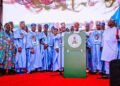
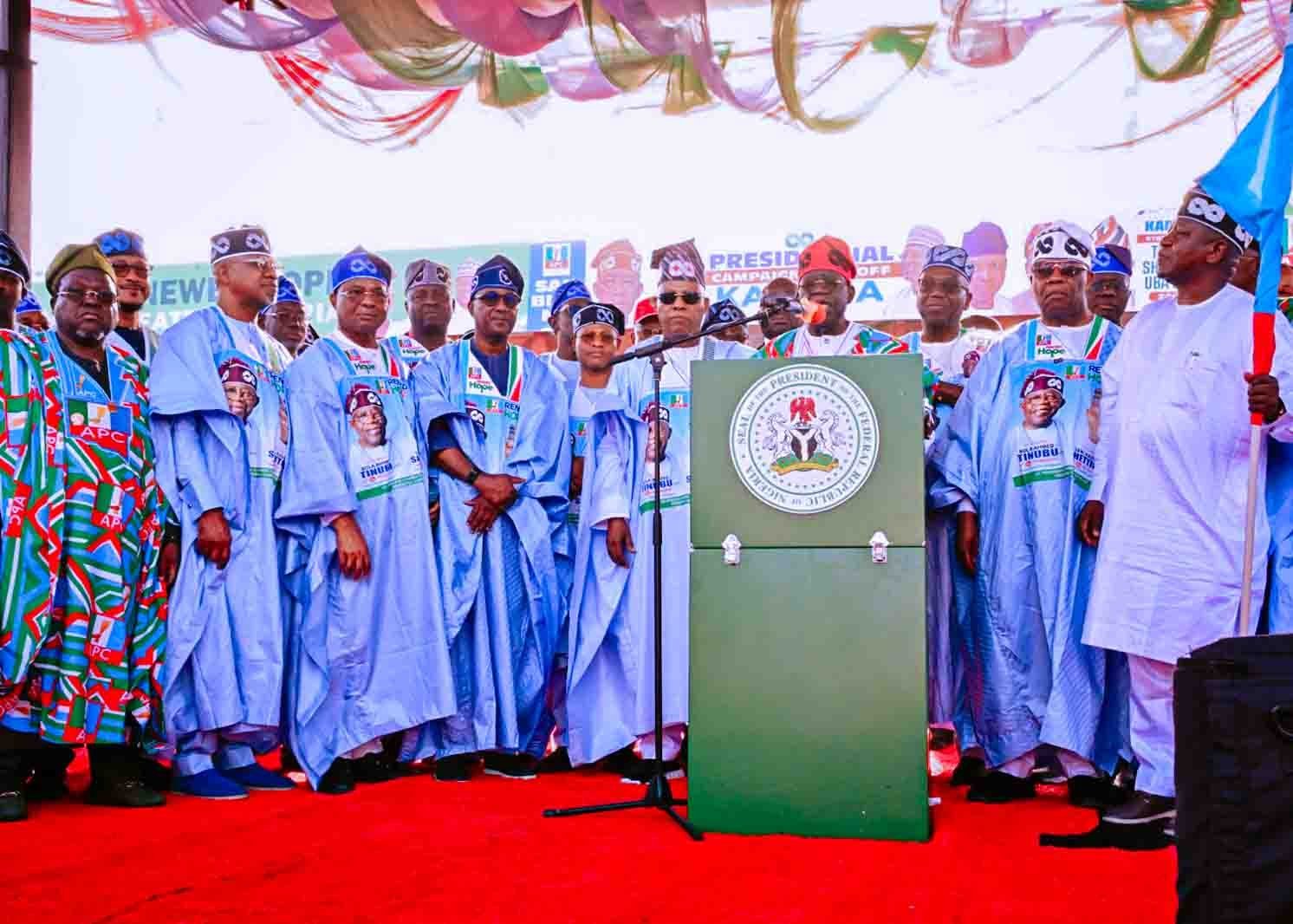
When Bola Ahmed Tinubu launched his re-election campaign in Kaduna on 24 October, his central argument was that Nigeria must continue along the path of economic reform rather than return to policies he considers unsustainable. The president defended his administration’s record, blamed previous political leaders for the country’s hunger and poverty, and promised that the sacrifices Nigerians had endured would ultimately produce results. Yet his campaign begins against a difficult economic reality: the government’s argument about long-term reform must compete with the daily arithmetic of survival. Reuters reported that petrol prices reached approximately ₦1,400 per litre in Lagos and Abuja and as much as ₦1,500 in parts of northern Nigeria in September. The January 16, 2027 presidential election will therefore take place against a backdrop of continuing debate over living costs, energy affordability and public security.
The central contradiction in Tinubu’s economic programme is not that reform was unnecessary. Nigeria’s former petrol subsidy system had long raised questions about fiscal sustainability, transparency and the distribution of public resources. A government spending heavily to keep fuel prices artificially low can leave fewer resources for infrastructure, health, education and security. Subsidies may also disproportionately benefit those who consume more fuel, while poorly targeted arrangements can create opportunities for fraud and diversion.
But identifying a structural problem is only the beginning of economic governance. The more consequential question is whether a government can reform a system without transferring a disproportionate share of the adjustment costs onto citizens who have the least capacity to absorb them.
Tinubu’s decision to remove the petrol subsidy shortly after taking office in May 2023 altered Nigeria’s economic landscape. The immediate effects extended well beyond the price displayed at filling stations. Fuel is a cost embedded throughout the economy: in transporting food from farms to markets, moving workers between home and employment, operating generators, distributing manufactured goods and providing everyday services. When petrol becomes significantly more expensive, the consequences spread through supply chains and household budgets.
For a low-income family, the increase is not an abstract adjustment in market prices. It may mean fewer journeys, reduced food purchases, postponed medical care or less money available for school expenses. For a small business, it may mean higher operating costs, narrower margins or the need to increase prices. These are not incidental side effects of economic policy. They are central to assessing its social consequences.
The government can argue that the previous system was fiscally unsustainable. It must also explain why the burden of correcting that system has been so difficult for ordinary Nigerians to manage.
This is where the political defence of reform becomes vulnerable to a deeper question of accountability. Tinubu’s argument that his opponents created the country’s problems may provide a campaign narrative, but it cannot substitute for an assessment of what his administration has achieved since taking office. Previous governments bear responsibility for the structural weaknesses they left behind. The current government must be judged on how effectively it addresses them, how it distributes the costs and benefits of its decisions, and whether it can demonstrate measurable improvements in living standards.
Economic reform is not vindicated simply because reversing it would be expensive. Nor is a policy necessarily successful because it improves selected government accounts. Its broader test is whether it creates a more productive economy capable of supporting households, businesses and public services.
The International Monetary Fund has warned Nigeria against restoring a broad petrol subsidy, arguing that universal fuel support is costly and can benefit higher-income consumers disproportionately. It has recommended targeted assistance for vulnerable households instead. The distinction is important: protecting people from an economic shock is not the same as keeping the price of fuel artificially low.
Yet targeted assistance is only a credible alternative when it actually reaches the people who need it. It requires reliable household data, transparent eligibility rules, efficient payments, adequate funding and mechanisms to prevent political patronage or diversion. If relief arrives late, covers too few households or fails to match the scale of rising costs, the theoretical advantages of targeting will mean little to people struggling to pay for transport and food.
The government must therefore demonstrate not merely that it has rejected the old subsidy system, but that it has built a more effective system of social protection in its place. What proportion of vulnerable households has received assistance? How regularly is it delivered? Is the support sufficient to offset a meaningful part of the additional burden? These are questions that require transparent evidence rather than campaign assurances.
Nigeria’s energy crisis makes the challenge more complicated. The country’s status as a major oil producer has not guaranteed reliable electricity for households and industry. Businesses frequently depend on petrol or diesel generators when grid supply is inadequate, effectively forcing them to pay for alternative power on top of other operating expenses. Higher fuel prices can therefore increase the cost of coping with an unreliable electricity system.
This creates a damaging economic cycle. Expensive energy raises production and distribution costs; higher costs place pressure on prices; and higher prices weaken purchasing power. Businesses may defer investment, reduce employment or pass additional expenses to consumers. For manufacturers, the issue is not simply whether petrol is available, but whether energy can be obtained reliably and at a cost that allows production to remain competitive.
Expanding domestic refining capacity, including the contribution of the Dangote refinery, offers Nigeria an opportunity to strengthen domestic supply and reduce some dependence on imported refined products. But refining capacity alone cannot guarantee cheap petrol. Prices remain influenced by crude-oil costs, foreign-exchange conditions, logistics, distribution expenses and commercial pricing arrangements. Domestic production may improve resilience, but it does not automatically insulate consumers from market pressures.

The same distinction applies to electricity. Financial reforms in the power sector will have limited meaning for households and businesses if they do not translate into more dependable service. Nigeria needs an energy strategy that connects petroleum policy, electricity generation, transmission infrastructure, distribution performance and affordability. Without that connection, subsidy removal risks becoming a fiscal intervention whose wider productive benefits remain constrained by the very energy weaknesses the country needs to overcome.
Security adds another layer to this economic challenge. Insecurity in parts of northern Nigeria and the continuing insurgency in the northeast threaten lives, disrupt communities and undermine economic activity. Where farmers cannot safely access their land, agricultural production and market supply can suffer. Where roads are vulnerable to attacks or kidnapping, transport becomes more dangerous and expensive. Where businesses face persistent insecurity, investment and employment opportunities are harder to sustain. Reuters has identified both economic hardship and security as major issues confronting the administration ahead of the election.
These pressures cannot be solved through economic policy alone. But neither can economic reform succeed in isolation from security and governance. Fiscal savings must support public capacity; public capacity must deliver functioning infrastructure and services; and those services must enable citizens to work, produce and participate in the economy. A failure at any point weakens the wider reform programme.
Tinubu’s administration has pointed to improvements in public finances, foreign reserves and investor sentiment as evidence that its decisions are creating a stronger economic foundation. Those indicators matter. A country facing persistent fiscal pressures needs a more sustainable public-finance framework, and greater investor confidence can support productive investment. But macroeconomic stabilisation and household recovery are not interchangeable measures of success.
A stronger fiscal position does not automatically translate into lower food prices, better wages, reliable electricity or more secure employment. The transmission from government savings to public benefit depends on spending choices, implementation quality, institutional capacity and the creation of productive economic opportunities. If citizens are asked to endure higher costs, they are entitled to demand transparency about how the resulting fiscal space is being used.
The government’s case would be strengthened by publishing clear, accessible evidence connecting reform gains to public outcomes: what has been saved, how the resources have been allocated, which projects have been completed, how social assistance is performing and whether access to essential services is improving. The issue is not merely whether the administration has raised revenue or attracted investment. It is whether those gains are producing a more resilient economy in which citizens can see and experience progress.
The opposition, meanwhile, faces its own test of credibility. Criticising petrol prices and demanding relief is not, by itself, a complete economic programme. Any proposal to restore subsidies or introduce alternative support must explain its financing, beneficiaries, duration and safeguards against the weaknesses of the former system. Proposals centred on domestic refining or energy-sector reform must likewise establish how they would improve affordability and reliability. Voters deserve competing policies that can be scrutinised on their costs, implementation and likely effects, rather than a choice between official assurances and opposition promises.
The Kaduna rally has brought these questions to the centre of the 2027 campaign. Tinubu is asking Nigerians to judge his government by the long-term objectives of its reforms. His critics are drawing attention to the hardship many households continue to experience. Both the economic rationale and the human consequences of the policies must remain part of the public debate.
Ultimately, Nigeria’s challenge is larger than the petrol subsidy. It is about the social contract between the state and its citizens: what the government asks people to sacrifice, what it promises in return, and how transparently it accounts for the results. A reform programme that improves fiscal indicators but fails to build public confidence risks leaving its most important political and economic task unfinished.
As the January 16 election approaches, the administration will need more than a defence of difficult decisions. It will need credible evidence that those decisions are creating better conditions for ordinary Nigerians. The opposition, in turn, will need more than criticism; it will need workable alternatives that protect vulnerable households without reproducing fiscal weaknesses.
The question confronting Tinubu is not simply whether Nigeria could afford to maintain the old subsidy system. It is whether the country can afford an extended period in which the costs of reform are immediate, while its promised benefits remain uncertain for many citizens.
Nigeria does not need a choice between fiscal responsibility and social protection. It needs an economic settlement capable of delivering both. Tinubu has defended the necessity of reform. As he seeks another mandate, the decisive test will be whether Nigerians can see its results in the cost of living, the reliability of electricity, the security of their communities and the opportunities available to their families.
-Ed Osmond