



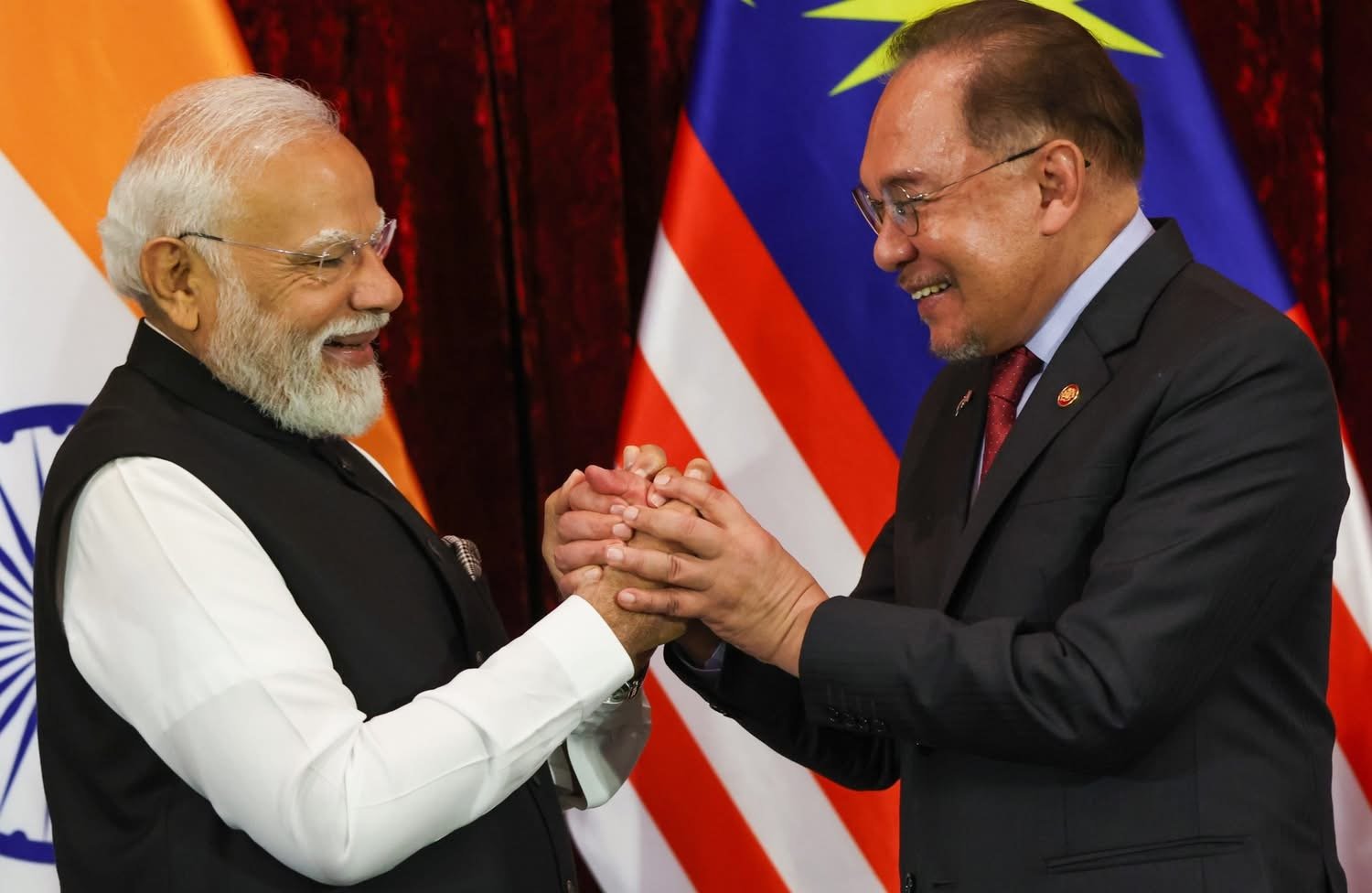
KUALA LUMPUR: Prime Minister Narendra Modi’s 2026 visit to Malaysia represents a significant evolution in India–Malaysia relations, reflecting a deliberate effort by both nations to shape a multidimensional partnership suited to the shifting strategic and economic landscape of Asia. While the visit did not produce dramatic headline-grabbing announcements, the breadth of agreements signed reveals a carefully constructed framework designed to deepen resilience, technological cooperation, governance standards, and people-centric engagement. Collectively, these outcomes signal a recalibration from symbolic diplomacy toward structured, future-oriented collaboration.
The audio-visual co-production agreement illustrates the growing importance of cultural and creative industries as instruments of strategic influence. In an era where media content shapes perceptions more rapidly than traditional diplomacy, collaboration in film and digital production enhances mutual visibility and cultural familiarity. For India, whose entertainment industry has global reach, Malaysia offers both a production hub and an expanding Southeast Asian audience. For Malaysia, partnership with India strengthens its creative economy while diversifying cultural exports. Such cooperation reinforces soft power linkages that underpin long-term political and economic trust.
The memorandum on disaster management underscores a shared recognition that climate vulnerability has become a central strategic concern. Both countries face rising risks from extreme weather, flooding, and environmental degradation. Institutionalizing cooperation in disaster preparedness, early warning systems, and response mechanisms enhances national resilience while contributing to broader regional stability. Beyond immediate operational benefits, this agreement positions India and Malaysia as collaborative actors within the Global South capable of sharing expertise and building collective climate resilience rather than relying solely on external assistance.
Equally significant is the memorandum on combating and preventing corruption. Though less publicly visible than technology or trade agreements, governance cooperation has far-reaching implications. As global capital increasingly prioritizes transparency and regulatory predictability, alignment on anti-corruption frameworks strengthens investor confidence in both markets. By exchanging best practices and enhancing institutional coordination, India and Malaysia signal that economic growth will be anchored in credible governance structures. This reinforces their ambition to attract long-term, high-quality investment rather than speculative flows.
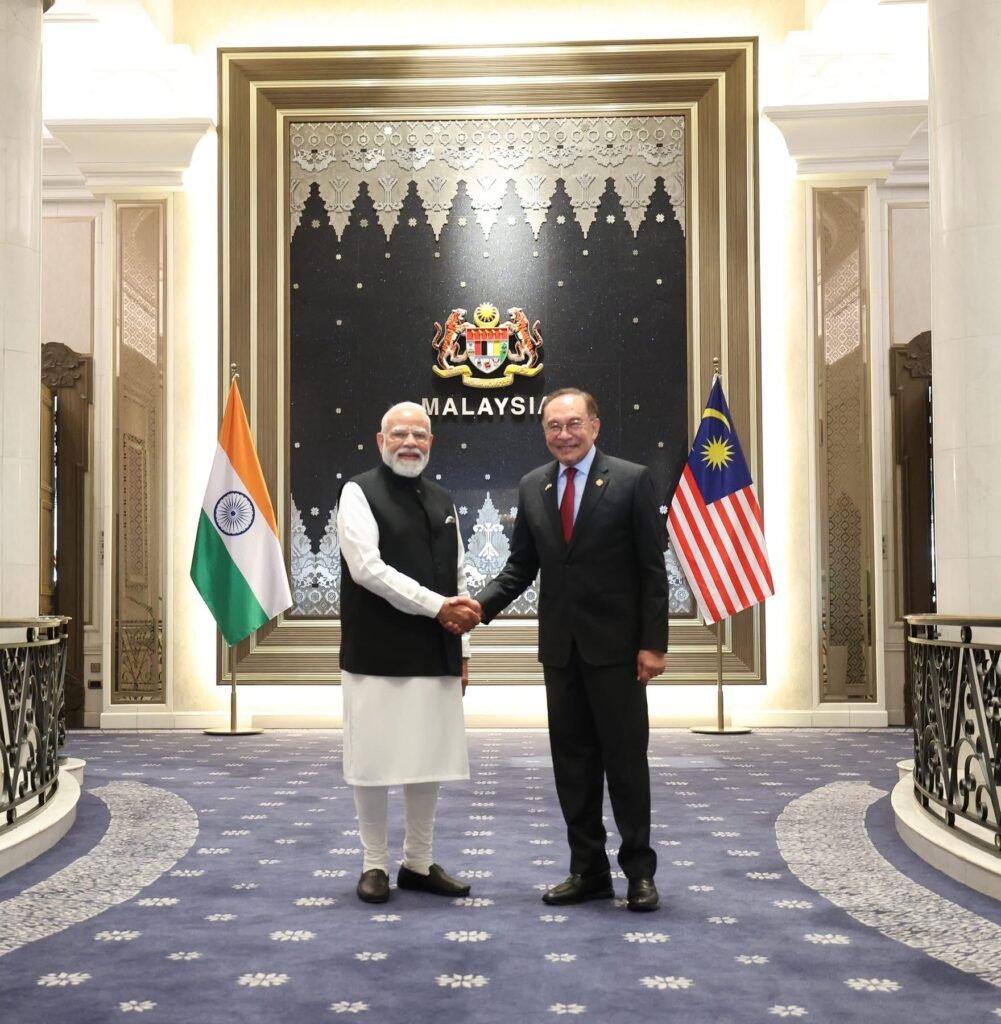
Security cooperation frameworks, including the exchange of letters on United Nations peacekeeping and broader national security coordination, reflect converging strategic outlooks without binding either country into rigid alignment. Both nations support multilateralism and emphasize strategic autonomy within the Indo-Pacific. Enhanced peacekeeping cooperation leverages India’s extensive experience and Malaysia’s active participation in international missions, reinforcing their shared commitment to global stability. At the same time, bilateral security coordination strengthens information-sharing and institutional dialogue, enabling both countries to address emerging non-traditional threats such as cyber risks and transnational crime.
Semiconductor cooperation stands out as one of the most strategically consequential outcomes. Malaysia’s established role in semiconductor assembly, testing, and packaging complements India’s expanding ambitions in design, fabrication support, and electronics manufacturing. As global semiconductor supply chains undergo restructuring amid geopolitical tensions, this partnership reflects a shared effort to build diversified and resilient production networks. For India, collaboration with Malaysia accelerates integration into global value chains. For Malaysia, India offers scale, demand, and long-term market expansion. Together, they are positioning themselves as credible participants in an increasingly multipolar technology ecosystem.
The framework agreement on the International Big Cats Alliance highlights an emerging dimension of diplomacy where environmental stewardship intersects with geopolitical credibility. Conservation initiatives generate global goodwill and reinforce leadership within the Global South. By aligning on biodiversity protection, India and Malaysia demonstrate that ecological responsibility can coexist with economic development, strengthening their international standing and appealing to environmentally conscious constituencies.
The memorandum of cooperation between India’s Employees’ State Insurance Corporation and Malaysia’s PERKESO introduces a crucial human-centric element to bilateral ties. By extending social security coordination for Indian professionals working in Malaysia, the agreement enhances labor mobility and provides a safety net for expatriate workers. In a global environment where migration is often politically sensitive, such frameworks make cross-border employment more sustainable and mutually beneficial. They also reinforce trust among skilled professionals whose mobility underpins modern economic integration.
Cooperation in technical and vocational education and training reflects recognition that human capital will define competitiveness in the coming decades. India’s large workforce and Malaysia’s advanced manufacturing base create natural complementarities. Structured collaboration in skills development ensures that both countries can adapt to technological transformation, from automation to digitalization. This focus on workforce readiness strengthens not only bilateral economic ties but also broader regional productivity.
Health and medical cooperation builds on lessons from the COVID-19 pandemic, emphasizing the importance of public health collaboration, research partnerships, and medical capacity building. Strengthened institutional linkages in healthcare enhance preparedness for future crises while opening avenues for pharmaceutical and medical innovation. This cooperation contributes to societal resilience and reinforces the human security dimension of bilateral engagement.
Digital financial integration, particularly the cross-border payments agreement between NPCI International Payments Limited and Malaysia’s PAYNET, represents a forward-looking step in economic connectivity. Interoperable payment systems reduce transaction costs, facilitate tourism and remittances, and embed digital public infrastructure within everyday economic activity. For India, exporting its digital payment architecture enhances technological influence. For Malaysia, integration with India’s robust fintech ecosystem expands efficiency and financial inclusion.
Announcements such as the establishment of an Indian consulate, a Thiruvalluvar Centre at Universiti Malaya, and scholarships for Malaysian nationals reflect investments in long-term societal connections. These initiatives strengthen educational and cultural linkages, ensuring that the relationship is anchored not only in economic and strategic interests but also in enduring people-to-people ties.
Taken together, the outcomes of the visit reveal a partnership structured around complementarity, resilience, and shared autonomy. Rather than pursuing alignment through grand declarations, India and Malaysia are constructing a layered framework encompassing governance, technology, human capital, culture, and security. In an era marked by geopolitical uncertainty and supply-chain realignment, such pragmatic and multidimensional cooperation offers a model for how middle powers in Asia can shape their own strategic futures while contributing to regional stability and growth.
-Hasnoor Lattif
READ THE FULL E-MAGAZINE | WorldAffairs: For Decision-Makers Who Need More Than Headlines