

SAU PAULO, Brazil: Brazil’s historic presidential comeback strengthens the political left’s regional position, but a divided electorate, mounting fiscal pressures, a conservative Congress and uncertain relations with Washington will determine whether Lula’s fourth non-consecutive term becomes a democratic renewal or an increasingly difficult struggle for governability.
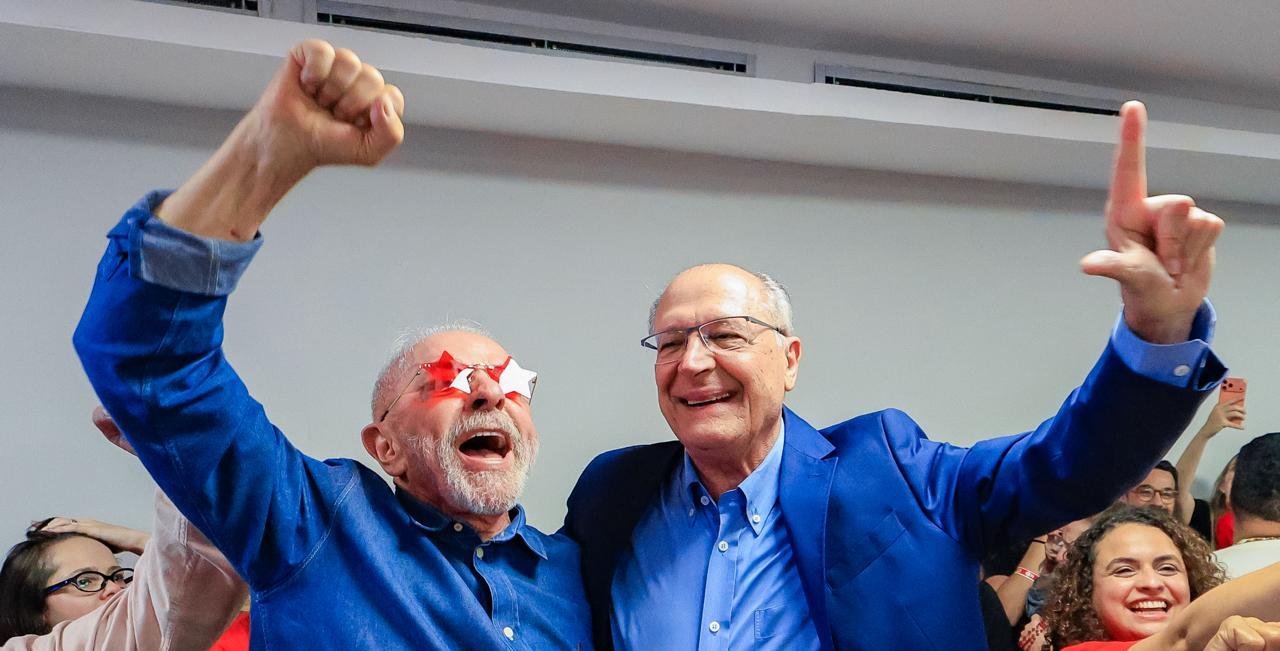
Brazil’s presidential election has delivered a remarkable political reversal. President Luiz Inácio Lula da Silva has defeated right-wing Senator Flávio Bolsonaro, the son of former president Jair Bolsonaro, securing a fourth non-consecutive term after trailing his rival in the first round. With nearly all ballots counted, Lula won approximately 51.78% of valid votes against Bolsonaro’s 48.22%, overturning a first-round deficit of roughly 2.2 million votes.
The outcome is historic, but its deeper significance lies in what it reveals about Brazil’s political future. Lula’s victory is simultaneously a setback for the Bolsonaro political dynasty, a warning against assuming that first-round momentum guarantees electoral victory, and a reminder that social protection and democratic continuity retain considerable appeal among Brazilian voters. Yet it is not a decisive rejection of the right: nearly half the electorate backed Bolsonaro.
The result therefore offers Lula a mandate to govern, not a blank cheque to rule.
It also places Brazil at the centre of a wider geopolitical contest. As Latin America navigates competing political movements, economic uncertainty and intensifying strategic competition between major powers, the decisions made in Brasília will influence regional integration, the future of BRICS, relations with the United States and the international debate over economic sovereignty.
A Comeback Beyond Expectations
Lula’s campaign entered the runoff under pressure after Bolsonaro emerged ahead in the first round. The president’s response centred on issues that directly affect households: purchasing power, the cost of living, social welfare and the promise of more tangible economic relief.
The result demonstrates the importance of coalition-building in a polarised electorate. Lula did not need to persuade every Bolsonaro supporter to abandon the right. He needed to mobilise enough undecided voters, consolidate his existing base and persuade voters dissatisfied with the incumbent government’s economic performance that the alternative posed greater risks. The final result suggests that this strategy succeeded. Campaign mobilisation, digital outreach and voter engagement helped Lula reverse the first-round outcome.
But the political interpretation requires caution. Voters can support a candidate for different reasons, and an election result cannot establish that every voter endorsed the same programme. Some may have supported Lula’s social policies; others may have been motivated by concerns about democratic institutions, the Bolsonaro family’s political legacy or the prospect of a more confrontational relationship with the judiciary. The strongest conclusion is therefore not that Brazil has decisively moved left, but that Lula assembled a winning coalition in a country where the right remains exceptionally strong.
This distinction will shape the next four years. A president who treats victory as proof that opponents have been politically defeated risks deepening the divisions that made the election so contentious. A president who recognises the scale of the opposition’s support has a stronger incentive to negotiate, govern inclusively and demonstrate that democratic institutions can function despite ideological disagreement.
Democracy Under Pressure
The election has also highlighted the vulnerability of public confidence in democratic processes. Reports of disrupted public transport prompted allegations of voter suppression, while heavy rain affected voting in some areas. The voting period was extended following requests from both campaigns, amid disputes over access and the administration of the process. These circumstances demand scrutiny, but allegations must be distinguished from established findings. The legitimacy of an election depends on transparent procedures, equal access to voting, impartial electoral administration and credible investigation of substantiated complaints—not on whether the result favours the political left or right.
Lula’s victory speech emphasised democracy and the need to work with the Congress elected by Brazilians. That acknowledgement matters because the legislature is expected to remain a formidable obstacle to parts of his agenda.
The larger test is whether political leaders on both sides accept electoral defeat as part of democratic competition. Jair Bolsonaro’s 2022 defeat and subsequent conviction over a coup plot have already placed Brazil’s constitutional order under extraordinary pressure. His 27-year prison sentence has also become a central element of the political environment in which his son campaigned.
Lula’s return cannot, by itself, repair institutional distrust. That requires consistent application of the law, protection of judicial independence, credible anti-corruption enforcement and restraint from politicians who might benefit from portraying every adverse decision as illegitimate.
Democracy will be strengthened not simply because Lula won, but if his government demonstrates that institutions can protect political competition without becoming instruments of partisan revenge.
The Economic Test Ahead
The most consequential question facing Lula is whether his government can convert electoral support into sustained improvements in living standards without destabilising public finances. Brazil’s economic pressures are interconnected. High interest rates make borrowing expensive for households and businesses, while rising debt-servicing costs constrain the government’s fiscal room. At the same time, the administration faces pressure to sustain social programmes, improve public services and respond to concerns over wages and purchasing power. These pressures expose a difficult political trade-off. Cutting expenditure too abruptly could undermine the social commitments that helped Lula win. Expanding spending without a credible financing strategy could weaken investor confidence, increase borrowing costs and make future economic recovery more difficult.
The answer cannot be reduced to a simple choice between social spending and fiscal discipline. Brazil needs a credible combination of productive investment, more efficient public expenditure, stronger tax administration, job creation and policies that improve productivity. Social programmes can support demand and reduce hardship, but their long-term effectiveness depends on a growing economy capable of generating sustainable revenue.
The government must also address household indebtedness. When families devote an increasing share of their income to servicing loans, they have less money for consumption, education and other essential needs. Businesses face a similar problem when expensive credit discourages investment and expansion.
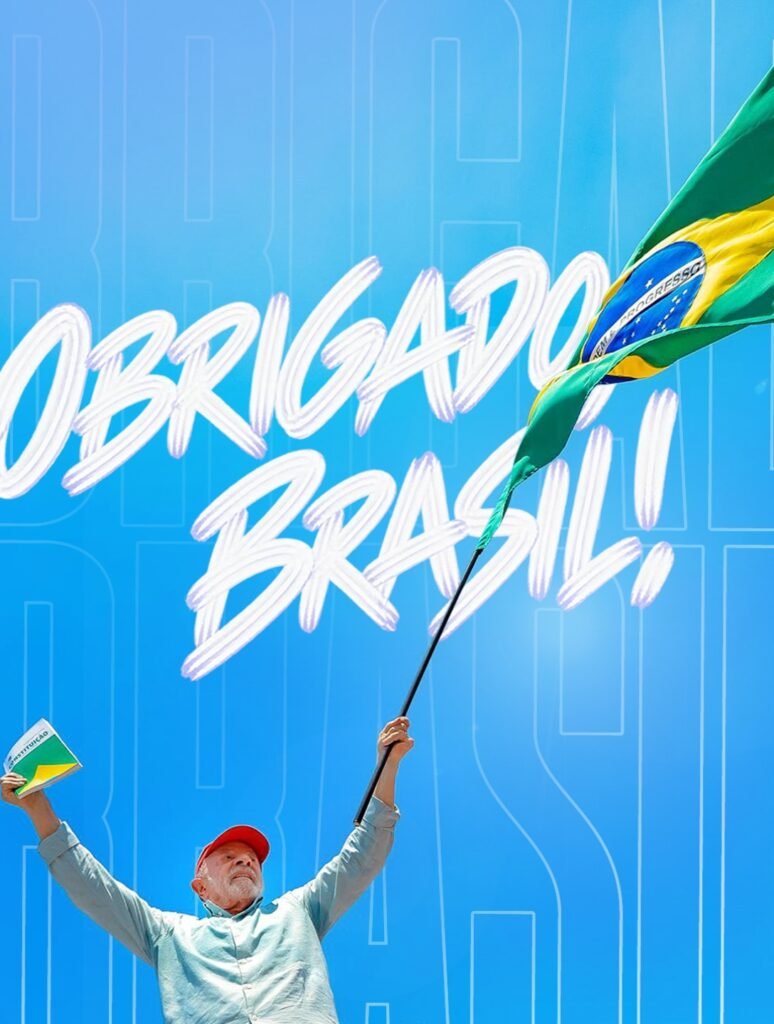
Lula’s political standing will therefore depend less on the announcement of new programmes than on whether Brazilians experience improvements in real purchasing power, employment quality, access to services and financial security. The danger is that a government elected on promises of economic relief could become trapped between popular expectations and the financial constraints of delivering them.
Congress Will Test Lula
Lula’s electoral victory does not mean that his legislative agenda will pass easily. Brazil’s Congress has a strong conservative presence, and the political forces aligned with Bolsonaro retain considerable organisational capacity.
The president will need to assemble shifting coalitions across parties, negotiate with congressional leaders and make compromises over spending, taxation, public security and institutional reform. Such negotiations are normal in a pluralistic democracy, but they can become especially difficult when the executive and legislature are controlled by competing political blocs.
The right will also have an opportunity to redefine its leadership. Flávio Bolsonaro’s defeat weakens the family’s immediate presidential ambitions, but the result does not extinguish the movement associated with his father. Conservative voters retain influence over legislative politics, and the opposition can use economic disappointments or governance controversies to rebuild support.
Lula must therefore avoid confusing the defeat of a candidate with the defeat of the political forces behind him. The next presidential term is likely to be shaped by continuing competition over security, welfare, taxation, cultural issues and the role of the state. A government that cannot negotiate effectively with Congress may find that its electoral mandate produces more political confrontation than policy progress.
Washington Faces a Choice
Relations with the United States could become one of the most consequential external tests of Lula’s presidency.
President Donald Trump’s administration imposed additional tariffs on Brazilian products in 2025 amid disputes involving Brazil’s political and judicial affairs, including the prosecution of former president Jair Bolsonaro. The measures raised questions about the use of trade policy to exert pressure over another country’s domestic institutions. Lula has framed such pressure as a challenge to Brazil’s sovereignty. His re-election gives him renewed domestic authority to defend an independent foreign policy, but it does not remove the practical importance of the American market, investment and technological cooperation.
The relationship will require strategic calculation on both sides. Washington has an interest in maintaining economic ties with Latin America’s largest economy, while Brazil has reasons to preserve access to the United States even as it diversifies its commercial partnerships. A further escalation could damage businesses and consumers in both countries. Conversely, a pragmatic approach to trade, investment and diplomatic disagreements could create space for a more stable relationship without requiring either government to abandon its core positions.
For Lula, the objective should be strategic autonomy rather than strategic isolation. Brazil can defend its institutional independence while continuing to negotiate with Washington on mutually beneficial terms.
The United States, meanwhile, faces a choice: treat Brazil’s electoral decision as a legitimate expression of democratic sovereignty or risk turning disagreements with Lula into a broader contest that damages bilateral economic interests.
BRICS and Regional Power
Lula’s victory also strengthens the continuity of Brazil’s engagement with BRICS and regional integration initiatives. His foreign-policy outlook favours multilateral institutions, cooperation among emerging economies and a larger role for the Global South in international decision-making.
Brazil’s influence in this arena rests on more than its diplomatic rhetoric. Its agricultural exports, mineral resources, industrial base, energy potential and regional economic weight give it substantial international leverage. Yet that leverage will be most effective if Brazil can translate political relationships into tangible gains: diversified export markets, investment in infrastructure, technology partnerships, improved logistics and greater resilience against external economic shocks.
BRICS offers opportunities for cooperation, but it is not a unified geopolitical bloc with identical interests. Its members differ over security priorities, economic models and relationships with Washington. Brazil will need to navigate those differences without allowing strategic partnerships to compromise its own economic interests.
The same principle applies to Latin America. Regional integration can expand trade, improve transport connectivity and strengthen collective bargaining power. However, political differences between governments can repeatedly obstruct these ambitions.
Lula’s challenge is to build cooperation that survives changes in leadership. Durable regional arrangements must deliver benefits to businesses, workers and consumers across political boundaries rather than depend solely on ideological affinity between presidents.
World Leaders Welcome Lula’s Victory
The international response to Lula’s victory reveals how Brazil’s political future intersects with regional integration, democratic legitimacy and competing ideological visions. Leaders across Latin America welcomed the result, although their messages placed different emphasis on democracy, social justice and bilateral cooperation.
Claudia Sheinbaum – President of Mexico
“Long live democracy, the people of Brazil won. Congratulations, President Lula!”
Sheinbaum’s statement framed the result as a democratic victory. For Mexico, a stronger relationship with Brazil could support regional cooperation and give Latin America greater diplomatic weight in dealings with Washington. The challenge is whether political solidarity can translate into practical economic coordination.
Santiago Peña – President of Paraguay
“Paraguay and Brazil share a common agenda of integration and development. We will continue working together for the well-being of our people.”
Peña’s message highlighted the practical interests that transcend ideological differences. Trade, transport infrastructure, energy and regional integration are central to the relationship. His congratulations also underline that Lula’s return does not automatically mean a rupture with conservative governments in the region.
Yamandú Orsi – President of Uruguay
“I just spoke with the president-elect of Brazil, Luiz Inacio Lula da Silva, a friend. I congratulated him on the victory and on the democratic celebration that an electoral process represents.”
Orsi emphasised both personal ties and the democratic process. Uruguay’s interest lies in sustaining regional economic cooperation and ensuring that political divisions do not undermine the functioning of Mercosur, South America’s principal trade bloc.
Rodrigo Paz – President of Bolivia
“Bolivia and Brazil are neighboring and brother countries, united by a shared history and common challenges.”
Paz pledged to strengthen bilateral ties and create more opportunities for both countries. His response is significant because it demonstrates that cooperation with Brasília can remain a priority even when governments differ politically. Energy, border security, trade and infrastructure offer concrete areas for engagement.
Miguel Díaz-Canel – President of Cuba
“Dear brother Lula, on behalf of the Cuban government and people, I congratulate you for this historic victory that ensures the continuity of the path of peace, sovereignty, and social justice embarked upon by the Brazilian people under your leadership.”
Díaz-Canel’s message placed Lula’s victory within the language of sovereignty and social justice traditionally associated with Latin America’s left. However, the durability of that political alignment will depend on practical cooperation and the distinct economic and diplomatic interests of each country.
José Raúl Mulino – President of Panama
“I congratulate the Brazilian people for this democratic day and especially President Lula for the victory! We will continue working together for our countries.”
Mulino’s statement focused on democratic participation and bilateral cooperation. Panama’s regional role in logistics, trade and connectivity gives it practical reasons to maintain productive relations with Brazil irrespective of political differences.
Gustavo Petro – President of Colombia
Petro described Lula’s victory as “a triumph for humanity” and a strategic defeat for what he called the “forces of darkness.”
His response was more explicitly ideological than those of several other regional leaders. It reflects the importance that progressive governments attach to Lula’s continued presence in regional politics. But such rhetoric also illustrates the risk of interpreting a democratic election exclusively through partisan categories: Brazil’s next government will need to represent citizens who voted for both candidates.
Gabriel Boric – Former President of Chile
Boric celebrated the Brazilian result, thanking Lula for sustaining hope and expressing support for his commitment to humanity.
His message highlighted the symbolic importance of Lula’s political survival for progressive movements. Yet the wider lesson for the regional left is that symbolic victories must be followed by credible economic policies and effective governance if public support is to endure.
Cristina Fernández de Kirchner – Former President of Argentina
Fernández congratulated Lula and the Brazilian people, comparing the electoral mobilisation to Argentina’s historic Peronist political tradition.
Her reaction underscored the regional significance of Lula’s comeback for political movements rooted in organised labour and social welfare. But Brazil’s result does not settle the broader debate over how governments can finance social commitments while maintaining economic stability.
The common thread in these messages is the recognition of Brazil’s importance to the region. Some leaders stressed democratic legitimacy; others emphasised sovereignty, social justice or economic integration. Their statements do not necessarily signify agreement on every policy issue. Rather, they demonstrate the diplomatic importance of maintaining working relationships with a country whose economic scale and political influence make it indispensable to Latin America.
What Washington Will Do
The international response also raises a question that remains unresolved: how will the Trump administration deal with a Lula government that has renewed its democratic mandate but continues to differ with Washington on trade and political sovereignty?
US Senator Bernie Sanders welcomed Lula’s victory, calling it “extraordinary” and saying the Brazilian president had “stood up for Brazilian workers & democracy.” US Representative Ro Khanna likewise urged Trump to respect the election result and not undermine Brazil’s democratic process.
These comments reflect a divide within American politics over the appropriate response to Lula’s re-election. They should not be confused with an official statement from the Trump administration endorsing the result or setting out its future policy towards Brazil.
Donald Trump Jr, meanwhile, questioned the decision to extend voting hours, suggesting that the response would have been different had a conservative government taken a similar step. His remarks illustrate how Brazil’s election has become entangled in the wider American political debate.
The broader issue is whether political disagreements will be managed through diplomacy or escalated through economic pressure. Tariffs can impose costs on Brazilian exporters, but they can also affect American importers, supply chains and consumers. Any renewed confrontation could complicate investment decisions and undermine the economic interests both countries share.
For Lula, the appropriate response is to defend Brazil’s sovereignty while remaining open to negotiation. For Washington, respecting the electoral outcome would be consistent with the principle that bilateral disagreements should be addressed through recognised diplomatic channels rather than attempts to influence another country’s domestic political choices.
The Verdict Beyond Victory
Lula’s comeback will be remembered as one of the most extraordinary reversals in Brazil’s modern electoral history. He overcame a first-round deficit, mobilised a winning coalition and secured another term at an age when most political careers have long since ended.
Yet history offers no guarantee of success in government.
The president now faces a country divided almost evenly between rival political visions, a legislature that can obstruct his agenda, households under financial pressure and a fiscal environment that limits his room for manoeuvre. Internationally, he must maintain productive relations with Washington while pursuing strategic autonomy and deeper engagement with regional partners and BRICS.
The opportunity is substantial. Brazil can strengthen its democratic institutions, expand economic opportunity, improve public security and use its diplomatic influence to advance trade and cooperation across the Global South.
But the risks are equally clear. Failure to stabilise public finances, improve living standards or negotiate effectively with Congress could erode the political advantage Lula has just regained. A government that relies too heavily on the symbolism of its victory may find that the electorate’s expectations are far more demanding than its campaign promises.
The decisive question is not whether Lula has defeated the Bolsonaro family in an election. He has. It is whether he can govern a country in which millions of voters continue to oppose him, without turning political division into permanent paralysis.
Lula has won the presidency. Now he must prove that his victory can deliver economic security, democratic confidence and a more influential Brazil on the world stage.
– Fabiola Savarese