

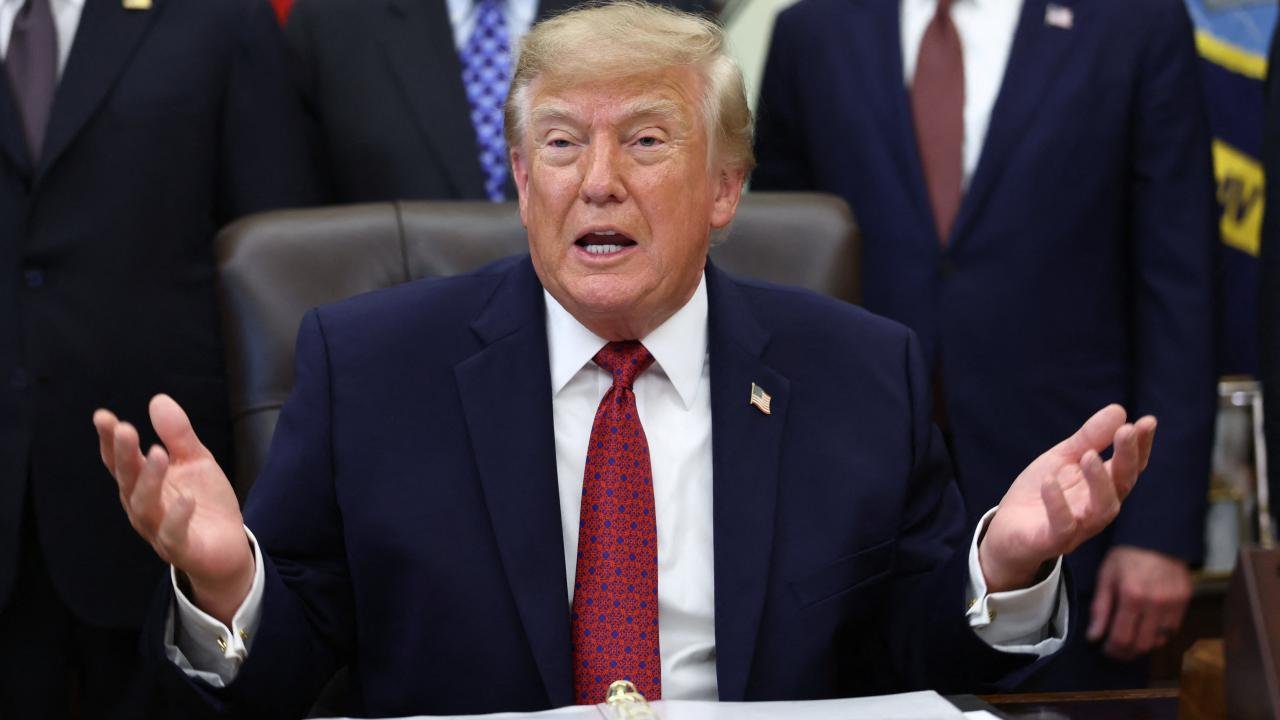
WASHINGTON, USA: President Donald Trump’s declaration that the war against Iran is “militarily effectively over” may signal a significant shift in Washington’s approach to the conflict, but it should not be mistaken for the arrival of peace. His remarks suggest that the United States is moving away, at least temporarily, from an immediate resumption of large-scale bombardment. Yet the continuing naval blockade, military deployments, unresolved nuclear negotiations and competing regional demands indicate that the confrontation remains deeply entrenched. What Washington is describing as a military conclusion may, in reality, be the beginning of a more complicated phase of strategic coercion and diplomatic bargaining.
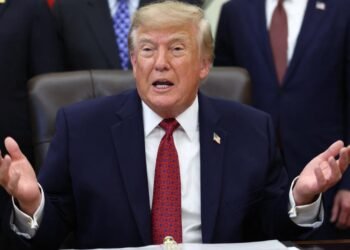
Trump’s unexpected appearance in the White House briefing room, following his meeting with Qatar’s Prime Minister Sheikh Mohammed bin Abdulrahman bin Jassim Al Thani, carried considerable diplomatic significance. His assertion that Iran’s military capabilities had effectively been neutralised and that the United States intended to maintain the status quo appeared to reflect a calculation that further military escalation might offer diminishing strategic returns. Nevertheless, his insistence that American forces remained ready for action demonstrated that the administration was not abandoning its military options. The distinction between suspending bombardment and relinquishing the threat of force is central to understanding Washington’s evolving position.
The timing of this announcement is particularly important. The Republican Party’s losses in both chambers of Congress in the midterm elections have exposed the domestic political consequences of an eight-month-old conflict. Rising fuel prices, economic uncertainty and public dissatisfaction have transformed the war from a foreign policy decision into an increasingly consequential domestic political liability. For an administration facing a weakened legislative position, continuing an expensive military confrontation without a clearly defined political outcome carries substantial risks.
The economic consequences extend far beyond American voters. Disruptions to energy markets, uncertainty surrounding maritime security and restrictions on Iranian oil exports have intensified concerns across an already fragile global economy. For energy-importing countries, particularly across Asia, prolonged instability in the Gulf threatens inflation, transportation costs, industrial production and fiscal stability. Developing economies, which have limited capacity to absorb external energy shocks, are particularly vulnerable. The conflict has therefore demonstrated how military decisions taken in the Middle East can generate economic consequences across continents.
Trump’s decision to maintain the naval blockade while declaring the military campaign effectively over reveals the administration’s emerging strategy. Rather than relying exclusively on aerial bombardment, Washington appears prepared to use maritime restrictions, economic pressure and the continuing threat of military intervention to influence Tehran’s calculations. The blockade is particularly consequential because it seeks to restrict Iran’s oil exports and limit its economic capacity. However, such a strategy also carries considerable risks. Economic pressure does not automatically translate into political concessions, particularly when the targeted government considers the dispute a question of national sovereignty and strategic survival.
Iran’s negotiating position illustrates the difficulty of achieving a settlement through coercion alone. Tehran has demanded an end to the American blockade, sanctions relief, the unfreezing of Iranian assets, compensation for wartime damage and an end to hostilities across the region, including Israeli military operations in Lebanon. These demands go well beyond the immediate question of nuclear enrichment. They reflect Iran’s attempt to negotiate a broader regional settlement that addresses its security concerns and economic isolation. Washington, however, has shown little willingness to accept several of these conditions.
The nuclear question remains the most consequential obstacle. Trump wants a long-term arrangement that prevents Iran from advancing its nuclear programme, while the United States has reportedly identified military targets that could be struck if negotiations collapse. His reference to 38 bridges as potential targets illustrates the continuing scale of the military threat. Yet the challenge of securing nuclear materials, monitoring facilities and establishing credible verification mechanisms cannot be resolved through military superiority alone. Even substantial damage to nuclear infrastructure cannot substitute for an internationally credible monitoring and verification framework.
Qatar’s diplomatic involvement consequently assumes greater importance. Doha has maintained channels of communication across competing regional interests and has emerged as an important intermediary in negotiations involving Washington and Tehran. Reports that Qatari officials presented proposals concerning Iran’s nuclear programme suggest that Gulf diplomacy may be creating an alternative to renewed military escalation. Saudi Arabia, the United Arab Emirates, Bahrain, Kuwait and other regional governments also have strong incentives to prevent another prolonged confrontation. Their economic diversification strategies, infrastructure investments and international connectivity depend on regional stability. However, a preference for maintaining the status quo should not be confused with support for an indefinite military blockade or an unresolved conflict.
The American military presence remains another source of uncertainty. Thousands of US personnel have been repositioned around Iranian waters, while naval forces continue enforcing restrictions on maritime movements. The reported firing upon and disabling of a commercial vessel accused of attempting to breach the blockade, alongside further limited strikes against Iranian air defences, demonstrates that military activity has not entirely ceased. This creates a potentially dangerous situation in which Washington declares the war effectively over while retaining the operational capacity to resume hostilities. A miscalculation involving a commercial vessel, naval deployment or regional military installation could rapidly undermine diplomatic progress.
The domestic constitutional debate in the United States adds another dimension. Critics have questioned whether the administration possessed adequate congressional authorisation for the conflict and whether its conduct complied with the War Powers Resolution. Republican Congressman Thomas Massie’s move to force an impeachment vote against Defence Secretary Pete Hegseth over his handling of the war reflects the political divisions surrounding the administration’s military decisions. These disagreements highlight a broader institutional question: how far can presidential authority extend in conducting an extended military campaign without sustained congressional accountability?
For Iran, the immediate challenge is equally complex. Its military capabilities may have suffered considerable damage, but its strategic calculations will be shaped by the need to preserve sovereignty, retain negotiating leverage and avoid accepting an agreement that leaves it permanently vulnerable to renewed military pressure. For Washington, the challenge is to convert military advantage into a political arrangement that can endure beyond the current administration’s immediate calculations.
The wider international community must also recognise that the consequences of this conflict cannot be contained within American-Iranian relations. Gulf security, global energy supplies, maritime trade, nuclear non-proliferation and the credibility of international institutions are all at stake. A settlement that addresses only Iran’s nuclear programme while ignoring regional security concerns could leave the foundations of another confrontation intact. Equally, an agreement that offers economic concessions without credible nuclear verification would be unlikely to satisfy Washington or its regional partners.
Trump’s announcement may therefore represent a tactical pause rather than a strategic conclusion. The United States has demonstrated its military reach, but the decisive test will be whether it can translate that advantage into a verifiable and politically sustainable agreement. Iran, meanwhile, must decide whether continued confrontation offers greater leverage than negotiated compromise. Qatar and other Gulf governments have an opportunity to help bridge this divide, but their diplomatic efforts will require genuine flexibility from both sides.
The real measure of whether the war is over will not be determined by a presidential declaration or the temporary absence of bombardment. It will depend on whether the blockade ends, military deployments are reduced, nuclear arrangements become verifiable and regional hostilities are brought under a credible framework. Until these conditions are addressed, the Middle East will remain caught between military restraint and the possibility of renewed escalation. A war can become militarily dormant without becoming politically resolved. That is the distinction Washington must now confront.
-Konstantin Magdy