

NEW DELHI: India’s Electoral Dispute Deepens as Opposition Demands Election Chief’s Resignation. The voter-roll controversy has evolved into a wider political confrontation over electoral accountability, institutional independence and public confidence in India’s democratic institutions.
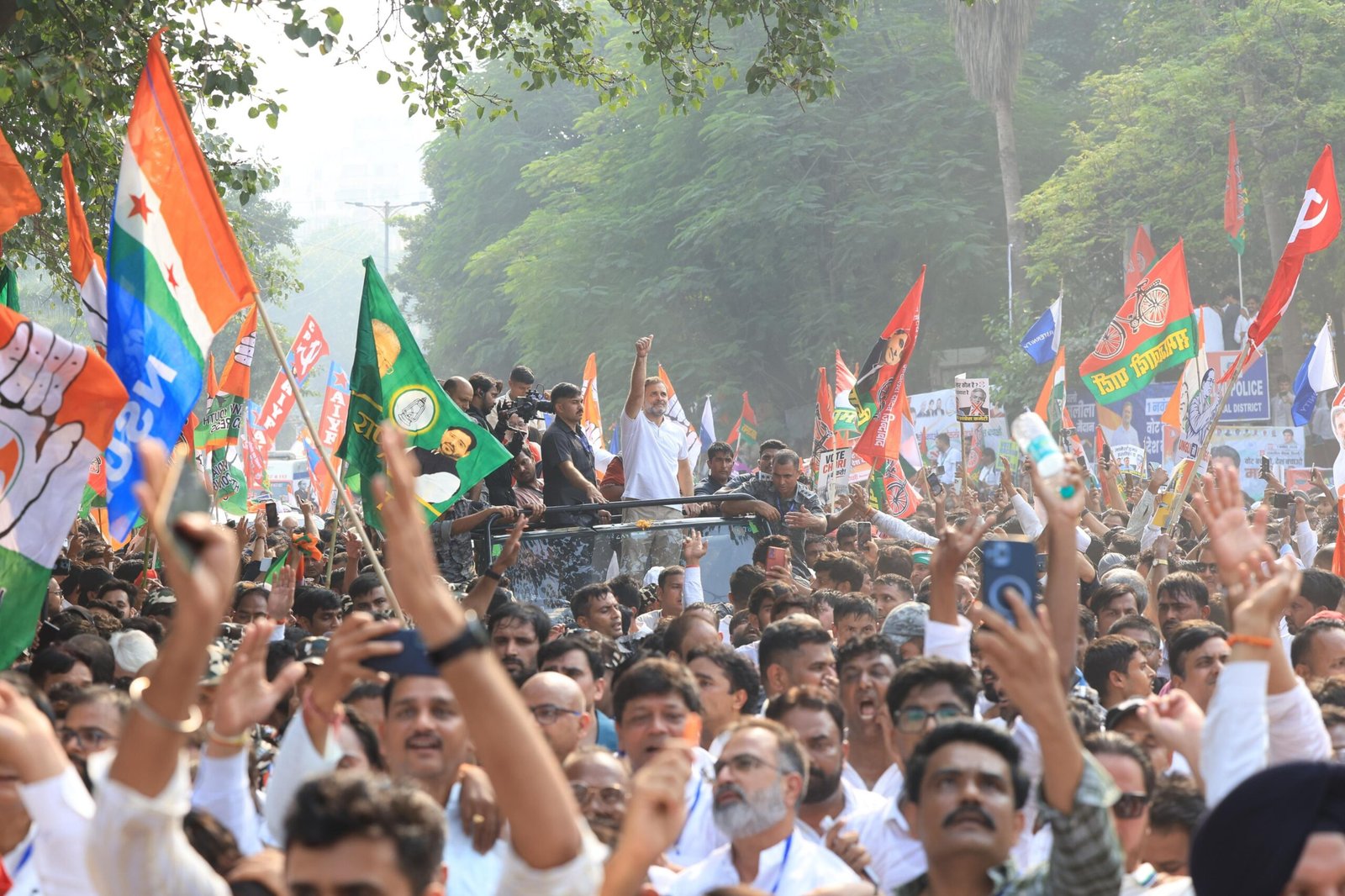
India’s electoral debate has entered another contentious phase, with opposition parties taking their campaign against Chief Election Commissioner Gyanesh Kumar to the streets of New Delhi. A major demonstration organised by the opposition INDIA bloc at Ramlila Maidan on Sunday brought together opposition leaders, student organisations, youth activists and citizens demanding accountability over the ongoing revision of electoral rolls. At the centre of the mobilisation was a demand for Kumar’s resignation and a broader call to safeguard the credibility of the electoral process.
Led by Congress leader Rahul Gandhi, the demonstration represents an escalation in the opposition’s confrontation with Prime Minister Narendra Modi’s government. The immediate dispute concerns the Special Intensive Revision and related changes to voter lists, but the political implications extend considerably further. The controversy has brought into focus questions about the Election Commission’s institutional independence, the transparency of voter registration procedures and the ability of citizens to exercise their constitutional right to vote without administrative obstacles.
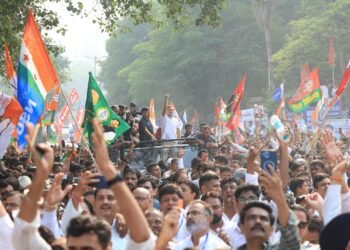
The scale of the mobilisation reflects how electoral administration has become a major political issue. Opposition parties mobilised supporters from several states, while the youth-led Cockroach Janta Party movement joined the campaign. Protesters carried flags, musical instruments and placards, raising slogans against the government and demanding the removal of the Chief Election Commissioner. The gathering followed weeks of demonstrations and a police crackdown in the capital, further intensifying the political atmosphere.
Addressing the rally, Gandhi accused the Election Commission of presiding over an electoral process that, according to the opposition, has systematically undermined voters’ rights. He demanded Kumar’s resignation and warned that the issue would remain central to the opposition’s political campaign. Gandhi also accused the Rashtriya Swayamsevak Sangh (RSS), the ideological parent of the ruling Bharatiya Janata Party (BJP), of expanding its influence across state institutions, including educational and investigative bodies.
These allegations remain contested, but the underlying institutional questions deserve public scrutiny independently of political affiliations. An election commission is not simply an administrative authority responsible for conducting polling. Its credibility rests on public confidence that electoral registration, constituency administration, voting procedures and the counting of ballots are conducted impartially. When significant sections of the political spectrum question the integrity of these processes, the institution faces a challenge that cannot be addressed through political exchanges alone.
The most consequential aspect of the current controversy is the reported deletion of more than 130 million names from electoral rolls since the revision process began last year. The number is substantial, exceeding the population of several major countries. The opposition argues that the deletions risk excluding eligible citizens, with particular concerns raised about minorities and economically disadvantaged communities. The controversy has also generated individual accounts of families discovering that their names have disappeared from voter lists despite continuing to reside at their registered addresses.
One protester, Reena Mahto, associated with the Congress student wing, alleged that four members of her family had been removed from the electoral roll after being incorrectly recorded as having relocated. Her account illustrates the practical consequences that administrative errors can have for ordinary citizens. For a family affected by an incorrect deletion, the issue is not merely political competition between parties; it concerns access to a fundamental democratic right.
The Election Commission, however, maintains that the revision is intended to eliminate duplicate, deceased and otherwise ineligible entries, thereby improving the accuracy of electoral records. It has rejected allegations of political favouritism and stated that individuals whose names have been wrongly deleted can seek re-enrolment. The BJP has similarly defended the exercise, accusing opposition parties of attempting to discredit legitimate electoral procedures.
The central question, therefore, is not whether electoral rolls should be updated. Accurate voter registers are essential to credible elections. The more important question is whether the process is sufficiently transparent, accessible and accountable to ensure that no eligible citizen is excluded. Administrative efficiency cannot come at the expense of electoral inclusion. Equally, allegations of manipulation require verifiable evidence, transparent investigation and institutional responses rather than becoming established conclusions through political repetition.
The concerns have also attracted international attention. Human Rights Watch has raised serious questions about the implications of the voter-roll revision for the fairness of future elections. Its Asia director, Elaine Pearson, called for the process to be reconsidered, arguing that marginalised communities could face disproportionate consequences. Such criticism adds an international dimension to a debate that is fundamentally about India’s constitutional institutions and the protection of citizens’ political rights.
The deployment of thousands of police and paramilitary personnel, supported by extensive surveillance infrastructure, including more than 200 security cameras, drones and body-worn cameras, demonstrated the authorities’ preparations for the rally. While maintaining public order is a legitimate responsibility, democratic governance also requires that peaceful political dissent be facilitated within the framework of the law. The right to assemble and express disagreement is an integral part of democratic participation.

The political context makes the confrontation particularly significant. Modi has been in power for more than 12 years, and the opposition continues to struggle to build a unified political challenge to the BJP. The INDIA bloc, established in 2023, has sought to bring together parties with different ideological and regional interests around a common political platform. The voter-roll controversy has provided the alliance with an issue that connects electoral accountability with broader concerns about institutional independence.
The emergence of the Cockroach youth movement has added another dimension. Initially developing through online satire and youth mobilisation, the movement has increasingly become part of street-level political dissent. Its earlier protests contributed to pressure that preceded the resignation of the education minister in July. Its participation in the latest demonstration indicates how youth-led mobilisation can intersect with established opposition politics, particularly around questions of representation, employment and public accountability.
The government has strongly rejected the opposition’s characterisation of the demonstration. Health Minister Jagat Prakash Nadda described the rally as a calculated attempt to create political instability, arguing that it was being presented as a defence of democracy while potentially encouraging disorder. The BJP has also dismissed suggestions that the voter revision favours the ruling party. These competing positions underline the extent to which electoral administration has become intertwined with the country’s wider political contest.
Nevertheless, the credibility of an election cannot depend exclusively on the assurances of the institution conducting it, just as accusations from political opponents cannot independently establish wrongdoing. Public confidence requires accessible information, clearly documented procedures, independent scrutiny and effective remedies for citizens who believe their voting rights have been affected.
The Election Commission therefore faces an important responsibility: to explain the scale and methodology of the deletions, publish sufficiently detailed information about the revision process, facilitate verification by affected voters and ensure that genuine errors are corrected without unnecessary administrative barriers. Independent examination of disputed cases would also help establish whether the concerns reflect isolated administrative failures or wider procedural shortcomings.
For the opposition, the challenge is to translate public mobilisation into evidence-based institutional accountability. Demands for the resignation of the Chief Election Commissioner may generate political momentum, but the larger democratic question requires more than a change of officeholder. It requires credible answers about how voter lists are prepared, how deletions are authorised, how affected citizens are notified and what safeguards prevent eligible voters from being excluded.
India’s democratic standing has historically been associated with the scale and complexity of its electoral exercise. Its elections involve hundreds of millions of voters across diverse linguistic, religious, economic and regional communities. Preserving that achievement requires institutions capable of commanding confidence across political divisions.
The controversy unfolding in New Delhi is therefore about more than one opposition rally or the future of one election official. It concerns the relationship between electoral administration and democratic legitimacy. Governments have a responsibility to protect the integrity of elections, opposition parties have a responsibility to scrutinise the process with credible evidence, and the Election Commission has an obligation to demonstrate impartiality through transparency and accountability.
Ultimately, the strength of India’s democracy will not be measured only by the number of people who participate in elections, but also by whether every eligible citizen can participate without fear of exclusion. The right to vote must remain protected by institutions that inspire public confidence, regardless of which political party holds power.
-Dr.M Shahid Siddiqui