

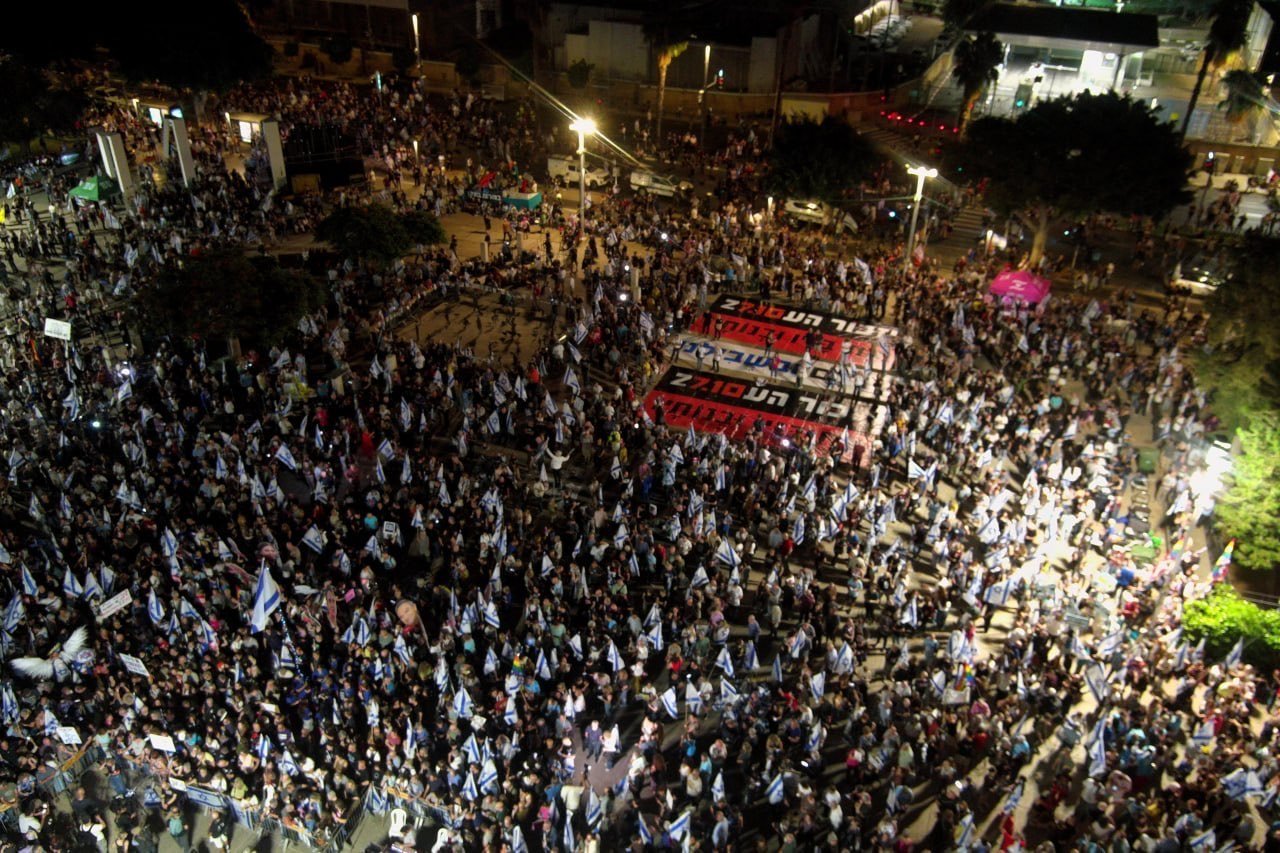
DIMONA: Israel’s October 27, 2026, election is about far more than whether Benjamin Netanyahu remains prime minister. It will test the political consequences of the October 7, 2023, Hamas-led attacks, the direction of Israel’s war policy, the credibility of its security establishment and the ability of a divided opposition to offer a viable alternative. Beneath the contest for 120 seats in the Knesset lies a more consequential question: can Israel change its political leadership without reconsidering the strategic choices that have shaped its recent crises?
Netanyahu enters the election with a deeply established political base, a powerful Likud organisation and experience navigating Israel’s fragmented parliamentary system. His critics, however, continue to demand accountability for the security failures of October 7 and question whether prolonged military campaigns have produced a sustainable political outcome. These competing narratives security through continuity versus security through political reassessment form the central fault line of the campaign.
The latest polling illustrates the uncertainty. On October 24, Israel’s published polls continued to show no clear route for either major political camp to secure the 61 seats required for a Knesset majority. One poll aggregator placed Netanyahu’s bloc at approximately 52 seats and the main Jewish-led opposition parties at around 50, with Arab-led parties and smaller lists potentially holding the balance. Other surveys produced different distributions. These figures are snapshots of voter intentions, not election results, and coalition groupings do not automatically translate into governing agreements.
Israel’s proportional representation system makes this arithmetic decisive. Voters choose party lists, and governments emerge through negotiations among multiple parties. A party can finish first without being able to govern; a rival bloc can win more seats but still fail to assemble a workable majority. Netanyahu’s political survival therefore depends not only on Likud’s performance but also on the strength of his religious-nationalist allies, the behaviour of smaller parties and the opposition’s willingness to compromise.
The October 7 attacks remain the defining test of his leadership. Hamas’s assault exposed serious failures in intelligence, preparedness and the protection of Israeli communities. The war that followed devastated Gaza, caused extensive civilian suffering and intensified international scrutiny of Israel’s conduct. In the International Court of Justice case brought by South Africa, the court ordered provisional measures; these measures are not a final judgment that genocide has occurred. Nevertheless, the legal proceedings and humanitarian crisis have become significant elements of the international debate over Israel’s military campaign. For Netanyahu, the challenge is to demonstrate that military action can produce lasting security rather than another temporary pause before renewed violence. Israel has substantial military capabilities, but force alone cannot settle the question of who governs Gaza, establish a legitimate post-war political arrangement or resolve the broader Israeli-Palestinian conflict. Without a credible answer to these questions, military achievements risk being separated from any durable political settlement.
The opposition faces a different but equally serious test. Former military chief Gadi Eisenkot and his Yashar party have emerged as prominent challengers, drawing attention to security competence and the need for accountability. Eisenkot’s son, Gal Meir Eisenkot, was killed while serving in Gaza in December 2023, a personal loss that has shaped his public story. His military background may appeal to voters seeking a change in leadership without abandoning security as a central priority. But credentials alone cannot substitute for a detailed governing programme.
The opposition’s cooperation agreement may improve its ability to challenge Netanyahu, yet its parties do not share identical positions on judicial reform, religion and state, relations with Palestinian citizens, settlements or the future of the occupied territories. Removing a prime minister is a common objective; governing together requires agreement on budgets, security policy and contentious social questions. A fragmented coalition could struggle to turn electoral momentum into a coherent national strategy. The campaign in traditional Likud strongholds such as Dimona reveals another dimension of the contest: the gradual separation of party loyalty from confidence in a particular leader. Some voters remain committed to Likud because of longstanding political identity, community ties and its record of investment in development. Others argue that the future of their children matters more than inherited political allegiance. Such shifts, where they occur, show how questions of accountability can penetrate even established party strongholds. They do not, however, establish that Likud’s broader support has collapsed.
Arab-led parties could prove pivotal if neither major camp secures a majority. Palestinian citizens make up about one-fifth of Israel’s population, and parties representing them have repeatedly faced barriers to participation in national governing coalitions. Ra’am, led by Mansour Abbas, joined a governing coalition in 2021, demonstrating that cross-community parliamentary cooperation is possible. Abbas has indicated openness to supporting a future coalition in exchange for action on issues affecting Arab communities, including violent crime and housing.
Yet several opposition leaders have rejected a formal coalition with Arab-led parties. This creates a practical contradiction: parliamentary support may be needed to form a government even when political leaders resist recognising that support as legitimate. Whether cooperation occurs through formal membership, outside support or negotiated abstention could influence both the election’s aftermath and the representation of Palestinian citizens in Israeli political life. The regional implications extend beyond domestic coalition building. Israel’s relationship with Iran, the conflict in Gaza, tensions involving armed groups and the future of diplomacy with Arab states will confront whichever government emerges. A leadership change would not automatically alter these strategic realities. Equally, continuity would not guarantee that existing policies can resolve them.
The election should therefore be judged by more than who occupies the prime minister’s office. Will the next government establish credible accountability for October 7? Will it articulate a workable future for Gaza? Can it protect Israeli civilians while addressing the political conditions that perpetuate conflict? And will Israel’s leaders treat diplomacy as a strategic instrument rather than merely a response to military and international pressure?
Netanyahu’s political future remains tied to the complex arithmetic of Israel’s electoral system. But the larger test concerns the country’s capacity to connect security with political purpose. A new coalition could change the tone of policy without changing its substance; an unchanged leadership could face mounting pressure to explain why existing strategies have not delivered a durable settlement.
For Israel, the central question is not simply whether Netanyahu stays or goes. It is whether the election produces a credible direction beyond perpetual crisis one that recognises the security of Israelis, the rights and future of Palestinians, and the reality that military power alone cannot secure lasting regional stability.
-Tamar Lubell
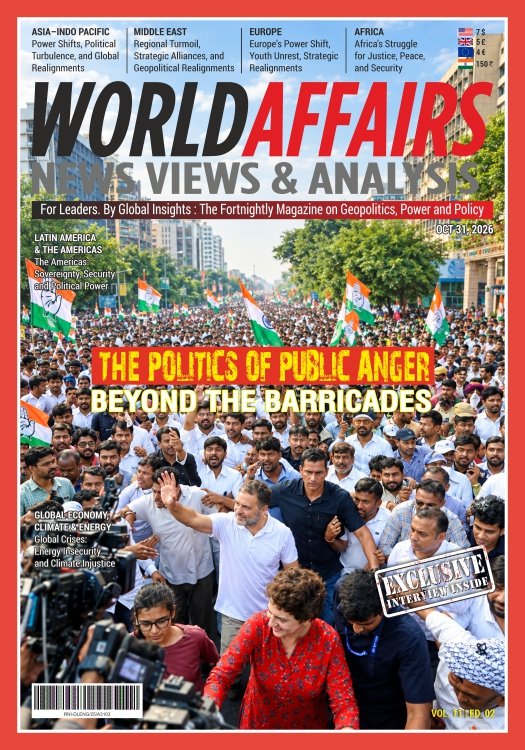
READ THE FULL E-MAGAZINE | WorldAffairs: For Decision-Makers Who Need More Than Headlines