


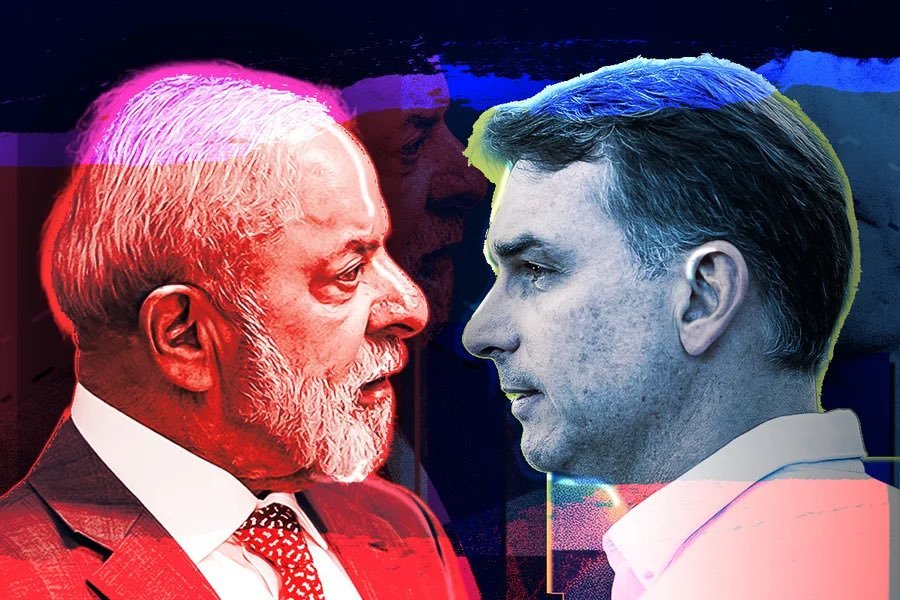
RIO DE JANEIRO: Brazil heads to the polls on Sunday in a presidential election that could reshape the country’s domestic priorities, international partnerships and political direction. Incumbent President Luiz Inácio Lula da Silva faces Senator Flávio Bolsonaro, son of former president Jair Bolsonaro, in a closely watched contest that has become a focal point of political polarisation across Latin America.
Twelve candidates are contesting the presidency, but the campaign has centred on Lula and Flávio Bolsonaro. With nearly 159 million eligible voters and voting compulsory for most citizens aged 18 to 70, Brazil’s election carries implications well beyond its borders. If no candidate wins more than half of the valid votes, the two leading contenders will proceed to a runoff scheduled for 25 October. For Brazil, the choice concerns more than political leadership. It touches on economic opportunity, public security, democratic institutions, environmental protection and the country’s ability to defend its national interests amid intensifying international competition.
Two Political Visions, One Divided Nation
Lula, 80, is seeking a fourth non-consecutive presidential term after returning to power in 2023. A former metalworker and trade union leader, he built his political career around workers’ rights, poverty reduction and social welfare. His comeback followed a period of imprisonment over corruption convictions that were subsequently annulled, allowing him to return to electoral politics. His current administration has placed social protection, employment, environmental enforcement and Brazil’s independent international diplomacy at the centre of its agenda. Yet his government faces public concerns about living costs, public safety and the pace at which economic improvements are being felt by households.
Flávio Bolsonaro, 45, is seeking to extend his family’s political influence after his father, Jair Bolsonaro, left office in 2022. His campaign emphasises conservative values, tougher criminal justice policies, fiscal restraint and a different approach to the relationship between government and the private sector. The contest reflects a broader division over the role of the state. Lula argues for combining economic growth with social inclusion and public investment. Flávio Bolsonaro places greater emphasis on security enforcement, administrative reform and reducing the scope of government intervention in parts of the economy.
Neither political programme can be assessed solely through campaign declarations. The critical questions concern implementation, fiscal sustainability, institutional accountability and the ability to deliver tangible results for Brazilian citizens.
The Election Race: What the Latest Polls Say
The final days of the campaign have reinforced the competitiveness of the contest. A CNT/MDA survey released on 3 October placed Lula at 43.1% and Flávio Bolsonaro at 38% in first-round voting intention. Other published surveys have produced different estimates, underscoring the importance of considering polling methodology, sample size, fieldwork dates and margins of error. These figures are snapshots of voter preferences, not election results. The first round will provide the definitive measure of support, while a potential runoff would create a different contest in which both candidates would seek to attract voters from the other presidential candidates.
The outcome will also be shaped by turnout, regional differences, economic perceptions and the ability of the candidates to persuade undecided voters. Brazil’s electoral authority will publish the official count through its election-results platform.
Crime and Public Security: The Central Test
Public security is among the most consequential issues facing the next Brazilian administration. Organised criminal groups, drug trafficking, illegal weapons, money laundering and violence in urban communities have placed pressure on governments across the country.
Flávio Bolsonaro has proposed a tougher criminal justice approach, including high-security prison infrastructure, lowering the age of adult criminal responsibility to 16 and treating transnational criminal organisations as terrorist entities. His campaign argues that stronger deterrence and more aggressive enforcement are necessary to restore public order. Lula’s government faces pressure to demonstrate that federal coordination, intelligence-led policing and cooperation with state authorities can produce measurable reductions in violence. The challenge is substantial because public security responsibilities are distributed across multiple levels of government.
The policy debate extends beyond whether penalties should become more severe. Brazil’s next president will have to address the financial networks, weapons supply chains and institutional vulnerabilities that allow criminal organisations to operate. Prison capacity, police accountability, judicial efficiency and intelligence-sharing will be equally important to the long-term outcome. The decisive test will be whether policies produce sustained improvements in public safety while preserving due process and the rule of law.
The Amazon: A National Resource With Global Consequences
Brazil’s environmental direction is another major issue in the election. The Amazon rainforest is essential to biodiversity, carbon storage and regional climate systems, making its protection an international concern as well as a domestic responsibility.
Lula’s administration has strengthened environmental enforcement and reported a substantial reduction in Amazon deforestation after taking office in 2023. It has committed to ending illegal deforestation by 2030, although implementation continues to face political and economic challenges.
Flávio Bolsonaro has also pledged to eliminate illegal deforestation, setting a 2029 target, while advocating changes to environmental regulation and a more development-oriented approach to land use. His position must therefore be assessed through both his stated conservation target and the practical implications of the regulatory changes he proposes.
Brazil faces a difficult but not necessarily contradictory task: expanding economic opportunity while protecting the natural systems that sustain agriculture, water security and long-term resilience. Mining, infrastructure and agricultural production generate employment and export revenue, but poorly managed expansion can impose significant environmental and economic costs.
For international partners, the credibility of Brazil’s climate commitments will depend on enforcement, transparent monitoring and consistent results. The next administration will influence not only national environmental policy but also Brazil’s standing in climate diplomacy, sustainable investment and global discussions on forest conservation.
Washington and Brasília: Trade, Tariffs and Sovereignty
Relations with the United States have become a defining international dimension of the campaign. Tariff disputes, disagreements surrounding Jair Bolsonaro’s legal case and Washington’s approach to Brazilian criminal organisations have placed bilateral relations under pressure.
Lula has framed the dispute in terms of Brazilian sovereignty, arguing that economic pressure should not determine the country’s political or judicial decisions. Flávio Bolsonaro has cultivated closer political ties with the Trump administration and has advocated a foreign-policy orientation more compatible with its conservative agenda.
The implications extend beyond political symbolism. The United States remains a major economic partner, while China is central to Brazil’s trade relationships. Brazil must protect access to international markets, sustain investor confidence and retain flexibility in its diplomatic relationships.
Closer alignment with Washington could create opportunities for cooperation in trade, investment and security, but it would not eliminate disagreements over tariffs, industrial policy or Brazil’s independent diplomatic priorities. Conversely, a strategy centred on strategic autonomy would require careful negotiation to prevent international disputes from imposing unnecessary costs on Brazilian businesses and workers.
Sovereignty is therefore both a political principle and an economic question. Brazil must determine how to defend its policy independence while maintaining productive relationships with major powers.
The Economic Challenge: Growth Must Reach Households
Economic concerns will remain central regardless of the election result. The next administration will face demands to strengthen purchasing power, expand employment, support public services and maintain credible public finances. Lula’s programme emphasises social protection, labour rights, public investment and the continuation of programmes such as Bolsa Família. His administration argues that economic development must improve living standards and reduce inequality. However, dissatisfaction over living costs and concerns about security remain challenges for the incumbent.
Flávio Bolsonaro’s programme places greater emphasis on fiscal reform, administrative restructuring, privatisation and a tougher approach to public expenditure. His proposals seek to improve the investment climate and reduce the burden of government, although the eventual effects would depend on the measures adopted and their implementation.
Both approaches confront the same structural questions: how to finance public priorities, improve productivity, encourage private investment and generate sustainable growth. Fiscal decisions will influence borrowing costs, investor expectations and the resources available for infrastructure, education and social protection.
Brazil’s strategic minerals, agricultural capacity, energy resources and industrial potential provide opportunities. Converting these advantages into broad-based prosperity will require stable institutions, predictable regulation, infrastructure investment and a clear long-term economic strategy.
Democracy and Electoral Confidence
Brazil’s political divisions have been intensified by the events surrounding the 2022 election. Jair Bolsonaro repeatedly questioned the reliability of the country’s electronic voting system without substantiating claims of widespread fraud. Brazil’s electoral authorities have maintained established procedures for administering elections and publishing results.
The credibility of the electoral process is essential to political stability. A close result may intensify disputes between supporters of rival candidates, placing additional importance on transparent vote counting, independent scrutiny and respect for lawful procedures. The responsibility of political leaders extends beyond winning votes. It includes recognising legitimate electoral outcomes, respecting constitutional limits and avoiding unsupported allegations that could undermine confidence in democratic institutions.
Brazil’s democratic resilience will be tested not simply by the final tally but by the ability of its institutions and political leadership to manage disagreement within the constitutional framework.
Why Brazil Matters to the Global South
Brazil is a major agricultural exporter, an important energy producer and a significant holder of strategic natural resources. Its diplomatic influence also extends through the BRICS grouping, climate negotiations and discussions about reforming international institutions.
A Lula administration would be expected to continue emphasising strategic autonomy, cooperation with emerging economies and a prominent role for Brazil in multilateral diplomacy. A Flávio Bolsonaro administration could pursue closer political alignment with Washington and a different balance between international partnerships and domestic priorities.
These are potential directions rather than guaranteed outcomes. Congress, economic conditions, international commitments and the interests of Brazil’s diverse trading partners would all influence the next government’s room for manoeuvre.
For countries across Asia, Africa and the Middle East, Brazil’s choices matter in areas including food security, energy cooperation, critical minerals, trade diversification and climate finance. Its future diplomatic posture will help shape the capacity of emerging economies to pursue national development while navigating competition among major powers.
Beyond the Ballot
Brazil’s presidential election is a contest between two sharply differentiated political movements, but the challenges awaiting the winner are shared. Public security demands effective institutions. Economic policy must translate national resources into improved living standards. Environmental commitments require credible enforcement. Foreign policy must defend sovereignty without unnecessarily restricting diplomatic and commercial options.
The first-round vote on 4 October will establish the candidates’ electoral standing. If no candidate receives more than half of the valid votes, the scheduled 25 October runoff will provide a second stage of decision-making.
For WorldAffairs, the broader significance of Brazil’s election lies in the relationship between domestic governance and international influence. Brazil’s size, resources, democratic institutions and diplomatic reach give its decisions consequences that extend across Latin America and beyond.
The ultimate test of the next administration will be whether it can move beyond campaign promises to deliver security, economic opportunity, institutional stability and sustainable development. In a world increasingly shaped by geopolitical rivalry and economic uncertainty, Brazil’s ability to balance these priorities will matter far beyond Brasília.
-Simon Jessop