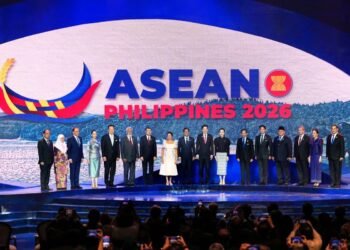


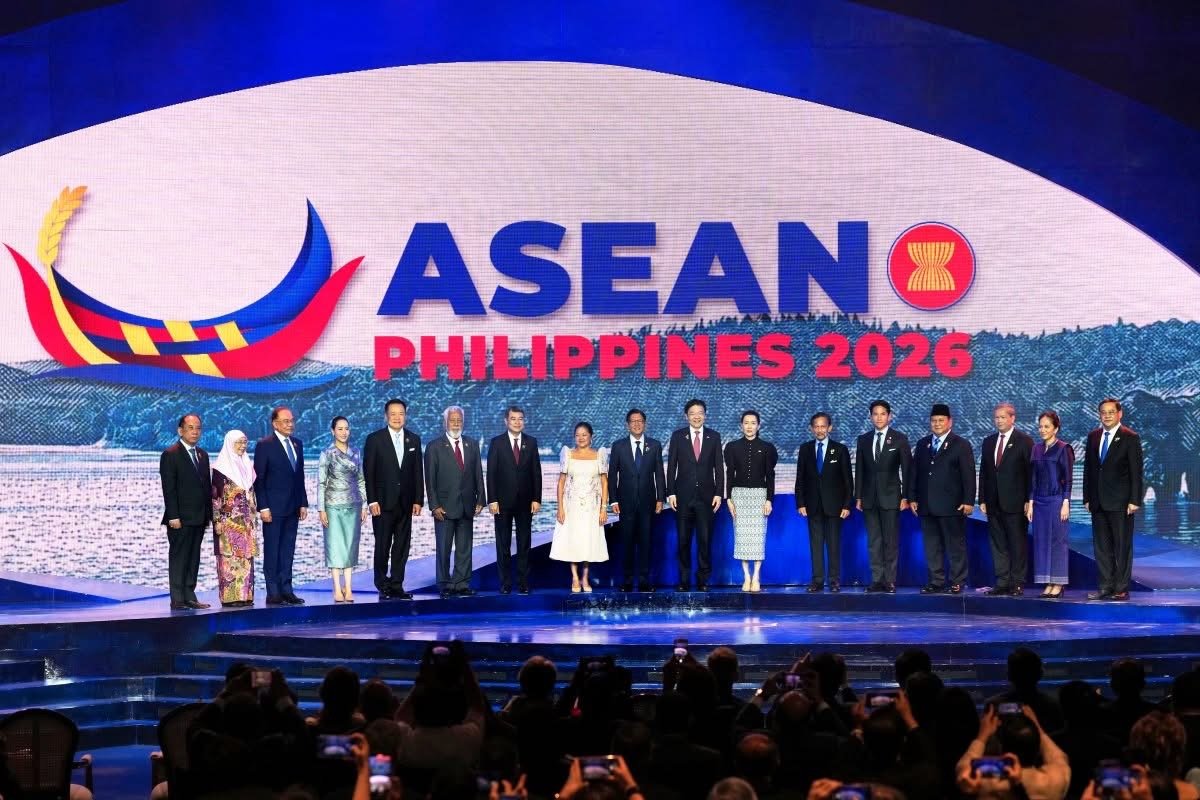
MANILA, PHILIPPINES: The Indo-Pacific is entering a consequential phase of strategic transformation, where maritime security, technological competition, economic resilience and diplomatic cooperation are becoming increasingly interconnected. The November 16–17 regional summits in Manila have offered a revealing picture of how major powers and Southeast Asian nations intend to navigate this changing geopolitical landscape. The convergence of the Quad Leaders’ Summit, the 21st East Asia Summit (EAS) and the 23rd ASEAN-India Summit during Indian Prime Minister Narendra Modi’s visit to the Philippines demonstrated a growing recognition that regional stability cannot be secured through military arrangements alone. It requires resilient supply chains, secure maritime infrastructure, technological cooperation, energy connectivity, stronger institutions and an inclusive regional diplomatic framework. At the centre of this emerging equation lies a critical question: Can the Indo-Pacific strengthen its collective security without becoming divided into competing geopolitical blocs? The outcomes from Manila suggest that regional governments are attempting to develop precisely such a balance.
The Quad’s Strategic Evolution: Beyond Traditional Security
On November 17, US President Donald Trump, Australian Prime Minister Anthony Albanese, Indian Prime Minister Narendra Modi and Japanese Prime Minister Takaichi Sanae convened the Quad Leaders’ Summit in Manila.The meeting carried considerable symbolic significance, marking nearly a decade since the revival of the Quadrilateral Security Dialogue and ten years since former Japanese Prime Minister Shinzo Abe articulated the vision of a Free and Open Indo-Pacific in 2016.
The leaders reaffirmed their opposition to unilateral attempts to change the regional status quo through force or coercion. They also expressed serious concern about economic coercion, particularly arbitrary export restrictions, reflecting growing anxiety over the weaponisation of trade, technology and supply chains.
The Quad’s priorities are increasingly extending beyond conventional security cooperation. Its agenda now encompasses critical supply chains, freedom of navigation and overflight, trusted artificial intelligence, maritime surveillance, cybersecurity, disaster response and resilient regional infrastructure.
An important development was the announcement of the inaugural Quad Business Leaders’ Forum, scheduled for early 2027. Bringing together business leaders, government officials and policy experts, the initiative seeks to encourage commercial agreements, private-sector partnerships and investment opportunities across the Indo-Pacific. This reflects an important strategic shift: the Quad increasingly recognises that sustainable regional influence depends not only on diplomatic coordination but also on economic participation and commercial connectivity. Technology represents another important pillar. The leaders welcomed the Super Intelligence Accelerator, announced earlier by Quad foreign ministers in Atlanta. The initiative aims to coordinate and finance access, deployment and technical assistance for trusted artificial intelligence across the Indo-Pacific. The participating governments clarified that Super Intelligence, in this context, refers to artificial intelligence.
The objective is to expand technological capabilities while strengthening trusted digital ecosystems and regional cooperation.
Maritime Security and Undersea Infrastructure: The New Strategic Frontline
The Indo-Pacific’s maritime geography gives the region exceptional economic and strategic importance. Its sea lanes transport energy, commodities and manufactured goods, while submarine cables carry the digital communications that sustain modern economies.
Recognising these vulnerabilities, the Quad welcomed the new Indo-Pacific Maritime Surveillance Collaboration to strengthen information-sharing and maritime domain awareness. A particularly significant development is the planned participation of Quad P-8 and P-3C maritime patrol aircraft in a maritime exercise in 2027. It will mark the first such aircraft exercise in a Quad context, strengthening the partners’ capacity to monitor maritime activity and improve regional awareness.
The leaders also welcomed progress under the Quad Partnership for Cable Connectivity and Resilience. Australia’s expanded contribution will now include electricity cables, while forthcoming Indian Ocean undersea cable projects are expected to strengthen regional communications and energy connectivity. This development highlights a broader understanding of maritime security. Protecting shipping routes is important, but safeguarding submarine cables, electricity connections and other critical underwater infrastructure is equally essential. The Quad also announced enhanced cybersecurity cooperation in response to the increasing frequency and scale of cyber incidents. Counterterrorism remains another shared priority. The leaders unequivocally condemned terrorism and violent extremism in all their forms, including cross-border terrorism, and committed to strengthening cooperation against these threats.
ASEAN Centrality: The Political Foundation of Indo-Pacific Stability
While the Quad strengthens coordination among four strategic partners, ASEAN remains the central diplomatic institution connecting the region’s diverse geopolitical interests. Both the Quad and the East Asia Summit reaffirmed ASEAN’s centrality and unity. The EAS declaration recognised ASEAN as its driving force, regional anchor and global convenor, reinforcing its importance in maintaining an inclusive regional order. The ASEAN Outlook on the Indo-Pacific provides an important framework for this approach. Rather than establishing an exclusive geopolitical arrangement, it seeks to strengthen ASEAN Community-building while complementing cooperation with external partners. The EAS also reaffirmed its position as a leaders-led forum at the apex of ASEAN-centred regional processes. Its members committed to dialogue, candid discussions, coordination, renewed friendships and implementation of the EAS Plan of Action 2023–2028. The Manila declaration reaffirmed the principles of the United Nations Charter, ASEAN Charter, Treaty of Amity and Cooperation in Southeast Asia, 2005 Kuala Lumpur Declaration and 2011 Bali Principles. Its emphasis on multilateralism, international law, peaceful settlement of disputes without the threat or use of force, transparency, predictability, mutual trust and responsible conduct reflects ASEAN’s preference for a rules-based regional environment. This diplomatic architecture matters because the Indo-Pacific is not a uniform strategic space. Its countries have different political systems, economic capabilities, security concerns and relationships with major powers.
ASEAN’s convening role therefore offers a platform where strategic competition can be managed without forcing smaller and middle-sized countries into exclusive geopolitical alignments. However, diplomatic centrality must translate into practical outcomes. ASEAN’s credibility will increasingly depend on its ability to turn consensus into implementation.
Economic Security and Supply Chains: Resilience as a Strategic Priority
The Manila outcomes demonstrate that economic security has become inseparable from regional stability.
The EAS declaration calls for stronger trade and investment, resilient supply chains, reliable access to essential goods and energy, and transparent and predictable trading arrangements. Particular attention is given to critical minerals, which have become indispensable to renewable energy, electric mobility, advanced manufacturing, semiconductors and emerging technologies. The concentration of mineral resources, processing capabilities and technological infrastructure in limited geographical areas creates strategic vulnerabilities. Diversifying supply chains and developing regional industrial partnerships will therefore be essential.
Connectivity is another major priority. The declaration supports stronger air, land and maritime networks, reliable infrastructure, the ASEAN Power Grid and implementation of the ASEAN Connectivity Strategic Plan. Energy cooperation requires more than political commitments. It depends on technology transfers, policy dialogue, capacity-building, financing and investment in functioning markets. The broader resilience agenda extends across healthcare, agriculture, food security, financial systems, industrial production, the digital economy, environmental protection, commodities and minerals. The underlying message is that economic vulnerabilities can rapidly become national security challenges. A disruption in shipping, energy supplies, critical minerals or digital infrastructure can affect the entire regional economy.
Artificial Intelligence, Digital Governance and the Battle Against Cybercrime
Technology is becoming one of the most consequential dimensions of Indo-Pacific competition.
The EAS declaration recognises the importance of workforce development through skilling, reskilling and upskilling. It also acknowledges ASEAN’s AI governance initiatives, including ASEAN AI Safe, the 2024 ASEAN Guide on AI Governance and Ethics and its 2025 expansion addressing generative artificial intelligence.
Regional cooperation is encouraged in science and technology, digital services, creative industries, innovation and the lawful movement of cross-border data.
The declaration also emphasises empowering micro, small and medium-sized enterprises (MSMEs), expanding digital literacy and ensuring that technological connectivity reaches both urban and rural populations. However, digital expansion brings significant security challenges.
Online exploitation, fraudulent recruitment, scam centres, human trafficking, sexual abuse, violence and child exploitation increasingly operate across national boundaries.
In an important development, the 21st East Asia Summit adopted a separate Leaders’ Statement on Strengthening Cooperation Against Online Scams and Related Offences. This recognises that online fraud is no longer merely a consumer-protection issue. It is a transnational security challenge requiring coordinated law enforcement, financial intelligence, digital regulation and international cooperation.
India announced an East Asia Summit Cyber Crime Conference at the National Forensic Science University to address emerging threats, including cross-border online fraud and cybercrime. The Quad’s enhanced cybersecurity cooperation complements this broader regional response.
Together, these initiatives reflect an emerging recognition that digital sovereignty, cyber resilience and technological governance must become integral components of regional security.
India-ASEAN Partnership: From Strategic Dialogue to Practical Cooperation
Prime Minister Narendra Modi’s Manila visit gave India an opportunity to translate its Act East Policy and Indo-Pacific vision into a wider programme of practical regional engagement. Addressing the 23rd ASEAN-India Summit, Modi reaffirmed India’s commitment to the Comprehensive Strategic Partnership and ASEAN’s unity and centrality.
He emphasised that India supports a free, open, inclusive and rules-based Indo-Pacific, arguing that the region’s future depends on cooperation rather than competition.
He also highlighted the complementary aspirations of ASEAN Community Vision 2045 and Viksit Bharat 2047. An important message concerned technological development. India and ASEAN, Modi argued, should not remain merely consumers of emerging technologies but should work together to co-create them and develop the skills needed for the future. The summit produced an extensive agenda covering maritime affairs, technology, energy, education, youth engagement and economic cooperation.
The proposed long-term ASEAN-India Maritime Cooperation Plan will strengthen maritime connectivity, scientific research, disaster management, Coast Guard cooperation, maritime domain awareness and seafarers’ security. A Joint Cyber Forensics Training Programme will support regional capacity-building against digital crime.
India also proposed ASEAN-India Nuclear Energy Technical Exchanges, an ASEAN-India Space Hackathon and cooperation on mining and critical minerals.
These initiatives are particularly significant because they connect India’s technological capabilities and industrial ambitions with ASEAN’s expanding economic and infrastructure requirements. People-to-people engagement received considerable attention. ASEAN-India Youth Connect will include a Youth Summit, exchanges involving young parliamentarians and start-up hackathons. India will enhance scholarships for ASEAN students at Nalanda University and establish an ASEAN-India Creative Partnership Pavilion at WAVES 2027. The announcement of free e-visas for tourists from ASEAN countries is another practical measure intended to facilitate tourism, cultural exchanges and business connectivity. The year 2027 will carry additional significance, marking 35 years of ASEAN-India dialogue relations and five years of their Comprehensive Strategic Partnership.
Disaster Resilience and Maritime Heritage: Cooperation Beyond Geopolitics
The Manila summits also placed considerable emphasis on disaster preparedness and humanitarian cooperation.
The ASEAN-India Joint Statement on Cooperation in Disaster Management reaffirmed the two sides’ commitment to strengthening regional resilience.
The EAS declaration emphasised disaster-risk reduction, prevention, preparedness, localised anticipatory action, early-warning systems, data-driven innovation, institutional capacity-building and technical cooperation. These priorities are particularly important for a region exposed to typhoons, earthquakes, floods, tsunamis and other climate-related hazards. The Quad also reaffirmed its commitment to providing life-saving disaster assistance. India announced a Seafarers’ Safety Initiative under the EAS framework, focusing on joint training and emergency response. Two additional initiatives seek to deepen the region’s educational and cultural connections: an EAS Maritime Heritage Festival at Lothal and a University Conclave at Nalanda. These initiatives demonstrate that regional cooperation need not be confined to strategic competition. Shared maritime histories, academic exchanges, cultural connections and humanitarian preparedness can also strengthen long-term trust.
Inclusive Growth, Labour Mobility and Development Gaps
The EAS declaration recognises that regional economic integration must benefit communities across different levels of development. It addresses labour-market gaps and the importance of migrant workers’ skills, mobility, recognition, professional development and welfare. The declaration also supports narrowing ASEAN’s development gap through the Initiative for ASEAN Integration Work Plan V (2026–2030). Strengthening regional competitiveness, economic integration and poverty reduction remains essential to building a more balanced ASEAN Community. Its broader vision includes prosperous communities, environmental protection, resilient families and safeguards for vulnerable populations.This dimension is strategically important. Economic growth that concentrates benefits among a limited section of society can create social inequalities and undermine political stability. An inclusive Indo-Pacific must therefore connect infrastructure investment and technological progress with employment, education, social protection and sustainable livelihoods.
India’s Strategic Autonomy and the Emerging Indo-Pacific Balance
The significance of the Manila summits extends beyond their individual announcements. Collectively, they illustrate how different regional institutions can contribute to a shared strategic framework without becoming identical or competing arrangements. The Quad provides a platform for strategic coordination among four partners. The East Asia Summit offers a broader and more inclusive forum for political, security and economic dialogue. ASEAN-India mechanisms translate diplomatic commitments into practical cooperation across maritime affairs, education, technology, energy, trade and disaster management. For India, participation in all three frameworks reinforces its position as an important Indo-Pacific stakeholder. New Delhi’s approach reflects strategic autonomy: building partnerships with major powers while retaining independent policy choices and supporting an inclusive regional architecture that respects the priorities of smaller states. India’s engagement with the Quad does not replace its commitment to ASEAN centrality. Similarly, its support for ASEAN-led mechanisms does not diminish its interest in maritime security, technological partnerships or resilient supply chains. This multi-layered diplomacy allows India to engage with different partners according to specific interests while avoiding dependence on any single geopolitical arrangement. For Southeast Asian countries, this balance is equally important. Their economic prosperity depends on maintaining access to multiple markets, investment sources, technologies and maritime routes. The future regional order will therefore depend less on rigid geopolitical alignments and more on the ability to sustain practical cooperation amid strategic differences.
Manila’s Real Test: Turning Commitments into Regional Outcomes
The Manila summits have established an ambitious framework for the Indo-Pacific’s next phase. But declarations alone cannot guarantee stability or prosperity. The Quad’s maritime surveillance initiatives must translate into effective information-sharing and operational cooperation. Its planned patrol-aircraft exercise must demonstrate tangible benefits for regional maritime security. Undersea cable connectivity requires investment, technical standards, protection mechanisms and coordinated responses to infrastructure disruptions.The AI Accelerator must expand meaningful technological access, while the Quad Business Leaders’ Forum must generate commercial partnerships rather than remain another diplomatic platform. ASEAN must strengthen its ability to implement collective decisions, address economic disparities and maintain diplomatic cohesion. India’s proposals will similarly require sustained institutional engagement, adequate financing, business participation and measurable progress. The challenges are substantial. Strategic competition, economic coercion, cybercrime, maritime disputes, climate vulnerabilities and technological inequalities will continue to test regional cooperation. Nevertheless, Manila has demonstrated that the Indo-Pacific’s future need not be determined exclusively by rivalry between major powers. A regional order built around international law, secure maritime corridors, economic interdependence, technological cooperation and ASEAN centrality remains a viable alternative. The emerging Indo-Pacific equation is therefore not simply about the Quad, ASEAN or India individually. It is about how these overlapping partnerships can reinforce one another without compromising regional inclusiveness or national strategic autonomy. Manila has outlined the architecture of a more connected, secure and resilient Indo-Pacific. Its lasting significance will depend on whether regional leaders can convert diplomatic commitments into economic opportunities, collective security and tangible benefits for their people.
-Eileen Ng Megerian