


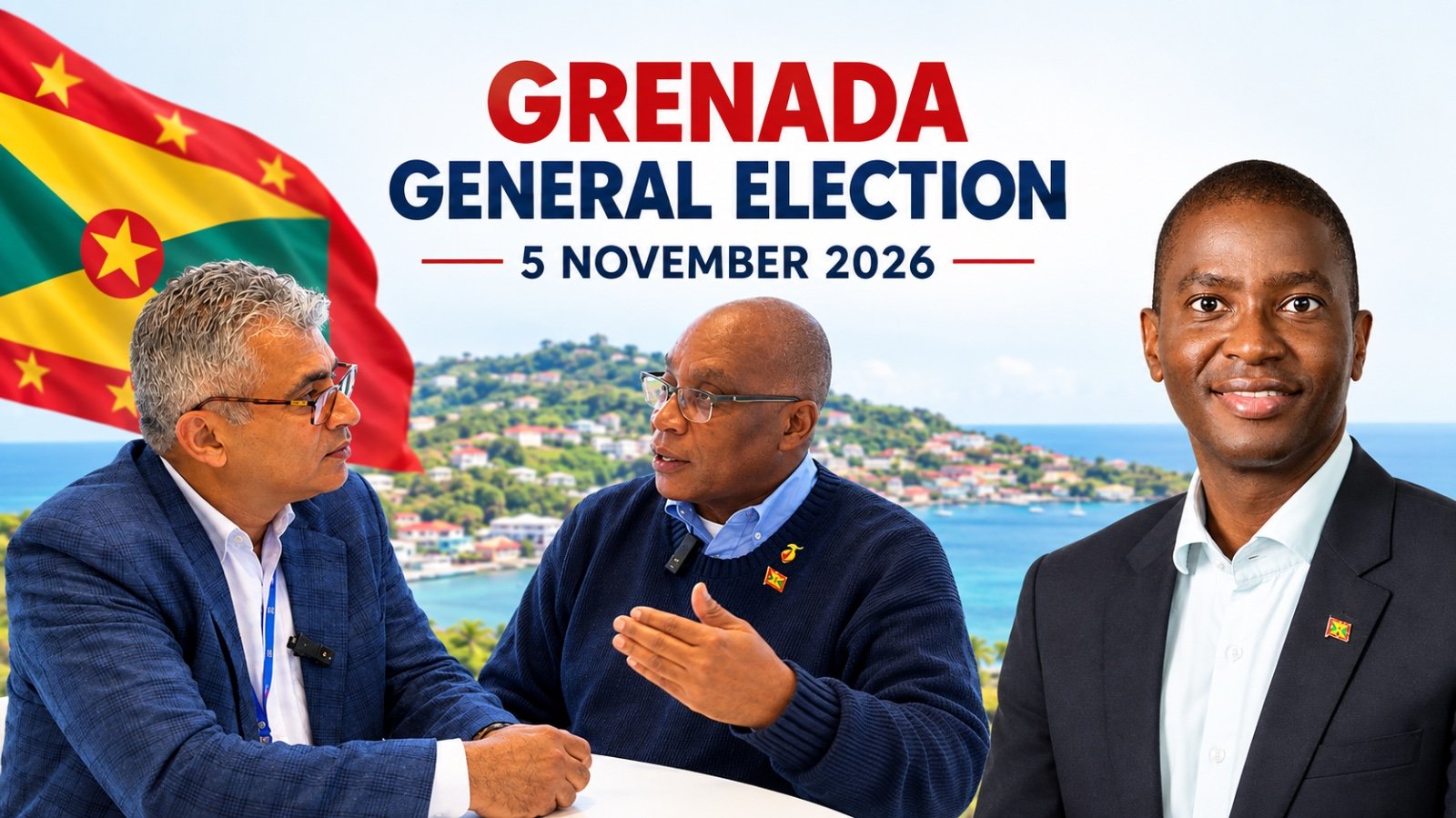
ST. GEORGE’S: Grenada approaches its 5 November 2026 general election at a consequential moment in its political and economic journey. With Parliament dissolved on 2 October and nomination day scheduled for 15 October, the country is preparing to decide not only who will govern but also which economic priorities will shape its next development cycle. For this small Caribbean island state, the election carries implications extending well beyond political leadership: it will determine how the next administration balances economic growth, public finances, climate vulnerability and the expectations of its citizens.
The central question facing voters is whether Grenada can convert its recent economic progress into lasting resilience. Tourism, construction and international investment have supported economic activity, but the country’s structural vulnerabilities remain significant. A relatively narrow economic base, dependence on imported energy and food, exposure to external financial conditions and recurring climate disasters continue to place pressure on public finances. The next government will need to demonstrate that economic growth can translate into stronger domestic capabilities, better employment opportunities and greater security for ordinary households.
Climate resilience is likely to remain among the most consequential issues in the electoral debate. Hurricane Beryl, which struck Grenada in July 2024, caused extensive destruction, particularly in Carriacou and Petite Martinique. The World Bank estimated direct physical damage at approximately US$218 million, equivalent to around 16.5 per cent of the country’s 2023 GDP. The devastation affected homes, infrastructure, agriculture, tourism and livelihoods, demonstrating how a single extreme-weather event can reverse years of development progress in a small island economy.
Grenada’s experience with Hurricane Ivan in 2004 had already established the scale of this vulnerability. Beryl reinforced the urgency of moving from disaster response towards comprehensive disaster preparedness. The next administration will have to prioritise climate-resilient infrastructure, stronger coastal protection, improved emergency systems and sustainable reconstruction. Equally important will be ensuring that vulnerable communities, farmers and small businesses have the financial and institutional support required to recover when disasters strike.
The country’s response to Beryl also demonstrated the importance of financial preparedness. Grenada accessed approximately US$55.5 million through the Caribbean Catastrophe Risk Insurance Facility, alongside a US$20 million World Bank Catastrophe Deferred Drawdown Option and provisions for deferring certain international bond payments following a disaster. These arrangements helped provide immediate liquidity and reduce pressure on public finances during an exceptionally difficult period. Maintaining and strengthening such safeguards will be an important responsibility for the incoming government. Fiscal discipline will therefore be another major test of the next political mandate. Grenada needs continued investment in healthcare, education, infrastructure and social development, but these priorities must be supported by a credible medium-term fiscal framework. The challenge is to finance development without creating unsustainable liabilities or compromising the government’s ability to respond to future emergencies. The 2027 national budget will provide an early indication of how the new administration intends to translate electoral commitments into practical economic policy.
The broader economic outlook provides grounds for cautious optimism. The World Bank estimated economic growth of 4.5 per cent in 2025 and projected 3.1 per cent for 2026. Construction, tourism and major development initiatives have supported economic activity. The proposed US$250 million Project Polaris hospital initiative, for instance, reflects the scale of infrastructure ambitions confronting the country. However, large projects must be assessed not only by their financial size but also by their long-term economic contribution, affordability, transparency and impact on public debt.
Investment policy will consequently feature prominently in determining Grenada’s future economic direction. The country needs international capital to modernise infrastructure, expand tourism and create new economic opportunities. Yet investment must deliver more than construction activity or immediate financial inflows. Its long-term value will depend on employment generation, skills development, local procurement and stronger linkages with domestic businesses.
Tourism, agriculture, renewable energy and agro-processing offer opportunities for a more interconnected economic model. A stronger agricultural sector can supply hotels and restaurants, while agro-processing can increase the value of domestic production and create opportunities for small enterprises. Investment in renewable energy and storage could reduce exposure to imported fuel prices, improve energy security and support the country’s climate commitments. Such diversification would help Grenada develop a broader economic foundation without losing the advantages of its existing tourism industry.
Citizenship by Investment (CBI) will also remain an important policy consideration. The programme has provided a source of non-debt revenue for public investment and economic development. However, its sustainability depends on international confidence, transparent administration and rigorous due diligence. European concerns regarding investor-citizenship programmes in the Eastern Caribbean underline the importance of maintaining robust screening and compliance standards. The next government will need to ensure that CBI receipts support long-term development rather than become a substitute for a diversified revenue base. The wider international environment adds another dimension to the election. Disruptions to global shipping, fluctuations in energy prices, changing tourism demand and tighter international financing conditions can directly affect Grenada’s economic stability. For a small island state, economic security is inseparable from access to affordable energy, reliable food supplies, resilient transport infrastructure and predictable international partnerships. Strengthening these foundations will be essential to reducing the country’s exposure to external shocks.
These issues also formed part of the wider economic discussion during a WorldAffairs conversation with Grenada’s Finance Minister Dennis Cornwall on the sidelines of the 81st United Nations General Assembly in New York. The discussion highlighted the importance of fiscal preparedness, investment and resilience as Grenada navigates the pressures confronting small island economies. Ultimately, however, the responsibility for translating these priorities into policy will rest with the government elected in November.
For Grenadian voters, the election presents an opportunity to assess competing political commitments against the country’s economic realities. The next administration will inherit both opportunities and constraints: a recovering economy, substantial infrastructure requirements, continuing climate risks and the need to maintain international investor confidence. Its success will depend on the ability to turn these challenges into a coherent national development strategy. The implications extend beyond Grenada. Across the Caribbean and the wider community of Small Island Developing States, governments face the same fundamental dilemma: how to pursue economic development while remaining financially and environmentally resilient in an increasingly uncertain world. Grenada’s experience demonstrates that national strength cannot be measured by economic growth alone. It must also be measured by the ability of institutions, communities and public finances to withstand crises without sacrificing future development.
On 5 November, Grenadians will choose their next political leadership. But the larger decision concerns the country’s economic direction for years to come. The next government must build an economy that is more diversified, financially responsible, investment-friendly and climate-resilient. For Grenada, the real electoral test will not end with the counting of ballots; it will begin with the delivery of a more secure and sustainable future for its people.
The election is about more than political leadership; it is about Grenada’s economic resilience and future security.
Gergely Trujillo