


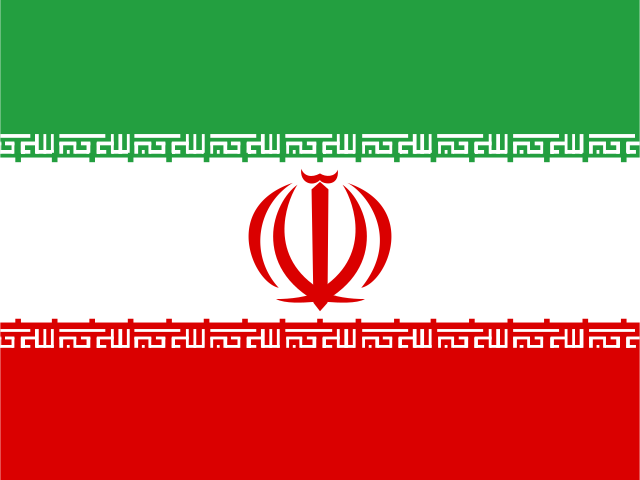
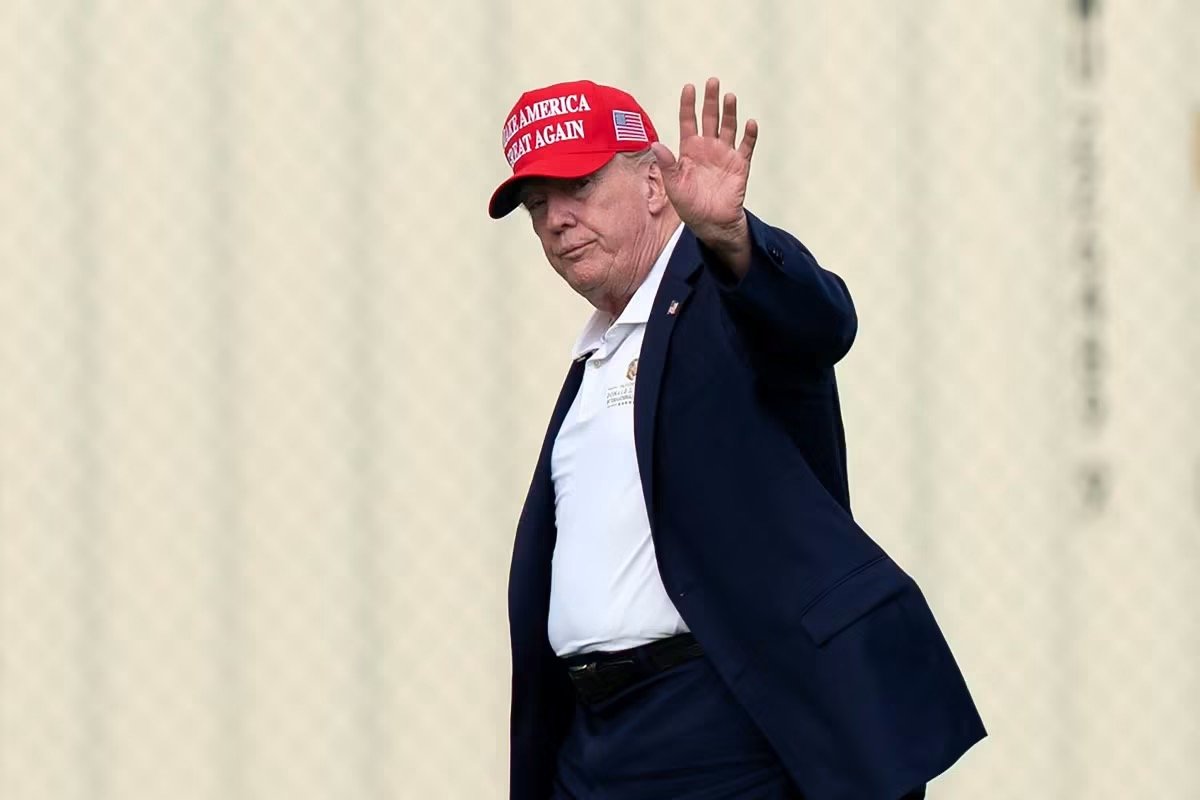
WASHINGTON: The latest warning from U.S. President Donald Trump is aimed at Iran, but its real audience may be much larger. Any country that provides Tehran with what he calls “any type of lifeline” through banks, businesses, airports or government institutions could face what Trump described as “TREMENDOUS Economic Consequences.”
It is a familiar Trump strategy: raise the economic cost so dramatically that the other side eventually concludes that negotiation is preferable to confrontation. But Iran is not an unfamiliar target. It has lived under American sanctions for almost half a century. The question now is whether another escalation of economic pressure can achieve what previous campaigns could not compel Tehran to accept a fundamentally new political and nuclear settlement.
The warning comes at an extraordinarily fragile moment. The war involving Iran, the United States and Israel has already killed thousands and shaken the wider Gulf. More importantly for the global economy, the conflict has disrupted shipping through the Strait of Hormuz, one of the world’s most important energy chokepoints. Before the conflict, roughly one-fifth of globally traded oil passed through the waterway.
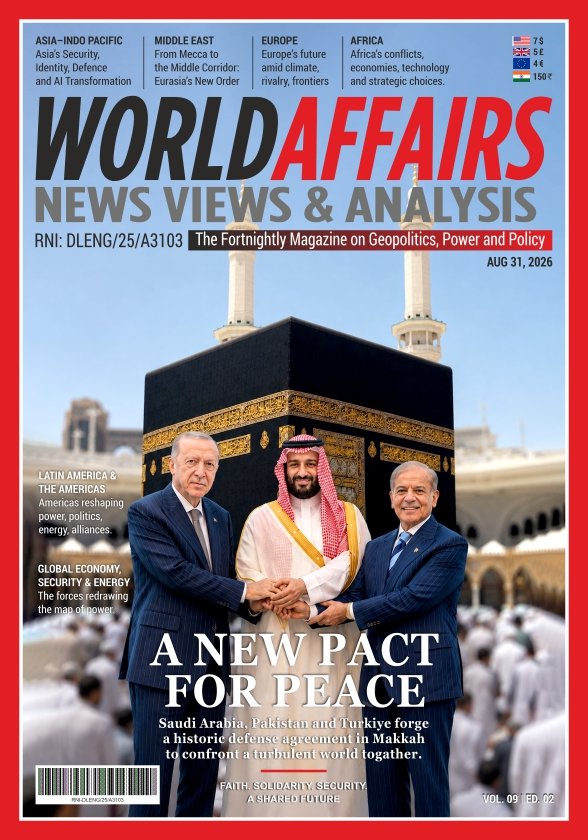
That makes the Iran crisis impossible to treat as simply another Middle Eastern confrontation. Every missile fired near the Gulf, every tanker delayed and every threat against commercial shipping has the potential to become an energy and inflation story for economies thousands of kilometres away.
Washington has already tried to convert military pressure into diplomacy. Ceasefire arrangements announced in April and June were intended, among other objectives, to restore shipping through Hormuz and create space for negotiations. Both arrangements quickly collapsed. Israel has largely withdrawn from direct fighting, but the underlying dispute remains unresolved.
Now Trump is raising the economic stakes. The problem is that sanctions work differently against Iran than they did against many smaller or more isolated economies. Tehran has spent decades learning how to survive restrictions, build alternative trading networks and operate through intermediaries. Its economy has been damaged by sanctions, but sanctions have not persuaded the Islamic Republic to abandon its core strategic positions.
China is particularly important. Kpler data cited by WorldAffairs indicates that China bought more than 80% of Iran’s shipped oil in 2025. That relationship is one of the biggest challenges for Washington’s maximum-pressure strategy.
The United States can threaten secondary sanctions against Chinese companies, banks and intermediaries, but attempting to economically isolate China is an entirely different proposition from pressuring smaller countries. China is one of America’s largest trading partners and a major supplier of strategically important goods, including rare-earth materials. A campaign that pushes Beijing harder could invite retaliation and transform the Iran dispute into another front in the broader U.S.-China economic confrontation.
That is where Trump’s latest threat becomes strategically complicated.
Washington wants every country to calculate the cost of doing business with Iran. But countries calculate their own interests too. Gulf states, European governments and Asian economies have different levels of exposure to Iran, American markets and the consequences of a prolonged disruption in the Gulf.
The United Arab Emirates provides a revealing example. The UAE, despite hosting a major U.S. military presence, announced on August 18 that it was suspending trade activities, commercial exchanges and financial transactions with Iran until further notice. The announcement followed the UAE Defense Ministry’s claim that it had detected two Iranian-launched missiles that fell into the sea — a claim Tehran rejected.
For Gulf governments, this is not an abstract geopolitical debate. Iran is across the water. American military power is present in the region. Global commerce moves through their ports. Their economies depend on stability. They therefore have to manage relationships with Washington and Tehran simultaneously, even when those relationships become increasingly difficult to reconcile.
Iran, meanwhile, appears determined not to present negotiations as capitulation. Mohammad Mokhber, an adviser to Iran’s supreme leader, said Tehran remains open to dialogue but does not equate negotiations with surrender. That position captures the central diplomatic problem.
Trump wants a stronger agreement than the 2015 nuclear deal, from which he withdrew the United States in 2018. His administration is seeking tighter restrictions on Iran’s nuclear programme and has expressed an interest in securing Iran’s highly enriched uranium stockpile.
Iran insists that its nuclear programme is peaceful. Yet its accumulation of highly enriched uranium has created serious international proliferation concerns because enrichment at high levels brings a country technically closer to weapons-grade material. The International Atomic Energy Agency’s monitoring and verification role therefore remains crucial to any sustainable settlement.
But diplomacy requires more than pressure. It requires a pathway for the other side to accept an agreement without believing that it has surrendered its sovereignty.
That is the weakness in the current approach. If Washington threatens every potential economic intermediary while simultaneously demanding a much more restrictive nuclear agreement, Tehran may conclude that there is little economic or political benefit in compromise. Instead, it could accelerate its search for alternative markets, deepen its relationship with China and Russia, and strengthen the very networks that American sanctions are designed to dismantle.
There is another risk: economic warfare can become self-defeating when it begins to damage the wider system.
A prolonged disruption in Hormuz would affect oil prices, shipping costs, insurance premiums and inflation. Pressure on Iran’s oil exports could tighten global energy markets even as Washington attempts to weaken Tehran’s economy. In other words, the weapon being used against Iran could also impose costs on America’s allies and the wider global economy.
Trump’s threat is therefore powerful as a signal, but its practical impact will depend on what comes next. His social-media declarations do not always translate directly into durable policy, and the latest statement offered few details about which countries, companies or transactions would actually trigger punishment.
The larger question is whether Washington can turn maximum pressure into maximum diplomacy. Iran has demonstrated that it can absorb considerable economic pain. China has demonstrated that it can provide Tehran with an important economic lifeline. Gulf states have demonstrated that they cannot afford an open-ended regional conflict. And global markets have demonstrated that Hormuz remains too important for the world to ignore.
Trump can increase the price of helping Iran. He cannot, by sanctions alone, determine how Iran, China, the Gulf states or global markets respond.
The real test of American strategy will therefore not be how severe the next sanction is. It will be whether Washington can use its economic power to create a negotiated exit from the conflict before economic warfare, military escalation and disruption around Hormuz become mutually reinforcing.
-Davis Allen