


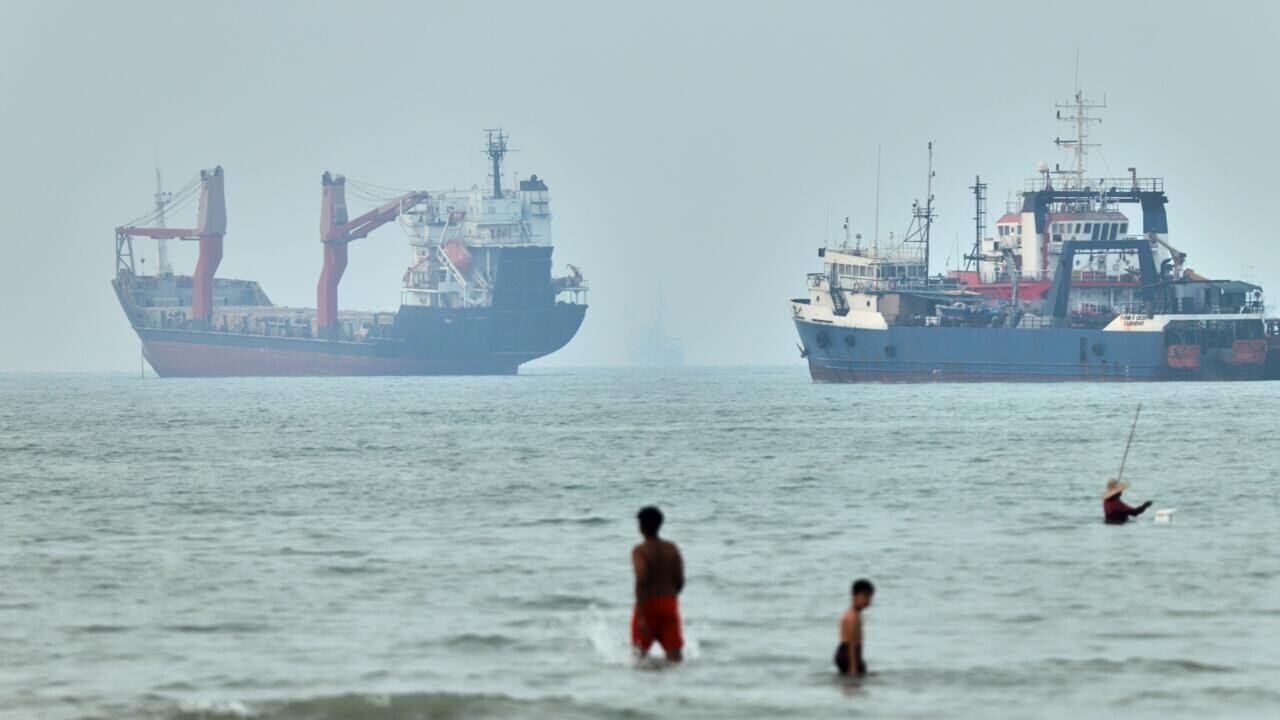
BAGHDAD, Iraq: Iran’s decision to permit a number of Iraqi oil tankers to pass through the Strait of Hormuz offers Baghdad a narrow but strategically important lifeline as the conflict around the waterway continues to disrupt one of the world’s most critical energy corridors. The move, reported by Iranian state news agency IRNA on Saturday, follows repeated Iraqi requests and underscores how the effective disruption of Hormuz is forcing even neighbouring states to negotiate individually for access.
According to IRNA, securing special permission for Iraqi oil tankers was among Baghdad’s principal demands during Iranian Parliament Speaker Mohammad Baqer Qalibaf’s recent visit to Iraq. Iraqi President Nizar Amedi separately said that Iran had facilitated the movement of vessels carrying Iraqi crude through the strait in recent days, while acknowledging that the broader issue of exporting Iraqi oil through Hormuz remained complicated.
The significance extends well beyond a limited number of tanker movements. Iraq is among the countries most exposed to the disruption because its economy and public finances remain heavily dependent on crude exports. Before the outbreak of the Iran war, Iraq was producing roughly 4 million barrels of oil per day. With maritime traffic through Hormuz still substantially below pre-war levels and vessels facing continuing security risks in the surrounding waters, Baghdad has been confronted with an uncomfortable strategic reality: possessing oil reserves and production capacity does not guarantee the ability to deliver that oil to international markets.
Iran’s decision to grant passage to selected Iraqi tankers therefore represents both an economic concession and a demonstration of geopolitical leverage. Tehran is effectively showing that access through Hormuz can be differentiated according to political circumstances. For Iraq, the immediate priority is keeping crude exports moving; for Iran, selectively facilitating Iraqi shipments can reinforce its influence over the region’s energy arteries while demonstrating that the strait remains subject to political and security calculations.
That dependence is pushing Baghdad to accelerate alternatives. Prime Minister Ali al-Zaidi said on Friday that Iraq was working to expand oil exports through Turkey’s Ceyhan port while exploring shipments through Syria’s Baniyas port and Jordan’s Aqaba port. These routes cannot instantly replace the volumes traditionally moved through the Gulf, but the urgency surrounding them reflects a fundamental shift in Iraq’s energy strategy.
Ceyhan is particularly important because it provides Iraq with an established northern export corridor to the Mediterranean. Yet expanding alternative routes involves infrastructure, security, political agreements and sufficient pipeline capacity. The proposed Syrian and Jordanian corridors similarly face logistical and geopolitical constraints. Iraq’s challenge is consequently not simply to find another port; it is to construct a resilient export network capable of functioning when the Gulf becomes strategically contested.
The Hormuz crisis is exposing a wider vulnerability across the global energy system. The strait is a crucial transit route for oil and gas exports from the Gulf, and prolonged disruption can affect producers, consumers, shipping companies, insurers and governments far beyond the Middle East. Even countries that are not directly involved in the conflict can face higher energy costs and supply uncertainty when tanker movements become restricted.
For Iraq, however, the consequences are particularly acute. The country has spent years seeking to increase oil production and export capacity, but the crisis demonstrates that production growth without diversified export infrastructure creates another form of strategic dependency. Every additional barrel requires a reliable route to international buyers.
Iran’s selective permission for Iraqi tankers should therefore be viewed as more than a temporary arrangement. It is a warning about the emerging politics of energy corridors in a region where geography is becoming an increasingly powerful instrument of statecraft. Baghdad’s negotiations with Tehran, alongside its push toward Turkey, Syria and Jordan, indicate that Iraq is being compelled to diversify not merely its markets but the physical geography through which its economy reaches the world.
The immediate objective is to keep Iraqi oil flowing. The longer-term lesson is more consequential: energy security is ultimately inseparable from transport security. Iraq’s experience could accelerate a broader regional effort to build alternative pipelines, terminals and trading routes capable of reducing exposure to chokepoints.
The Strait of Hormuz has long been described as a global energy artery. The current crisis is demonstrating that whoever can influence access to that artery can exert influence far beyond its immediate waters. Iraq’s search for alternative routes is therefore not simply an economic response to an emergency. It is becoming a strategic necessity.
-Emelia Abouhassira
READ THE FULL E-MAGAZINE | WorldAffairs: Understand the World Before It Shapes You