
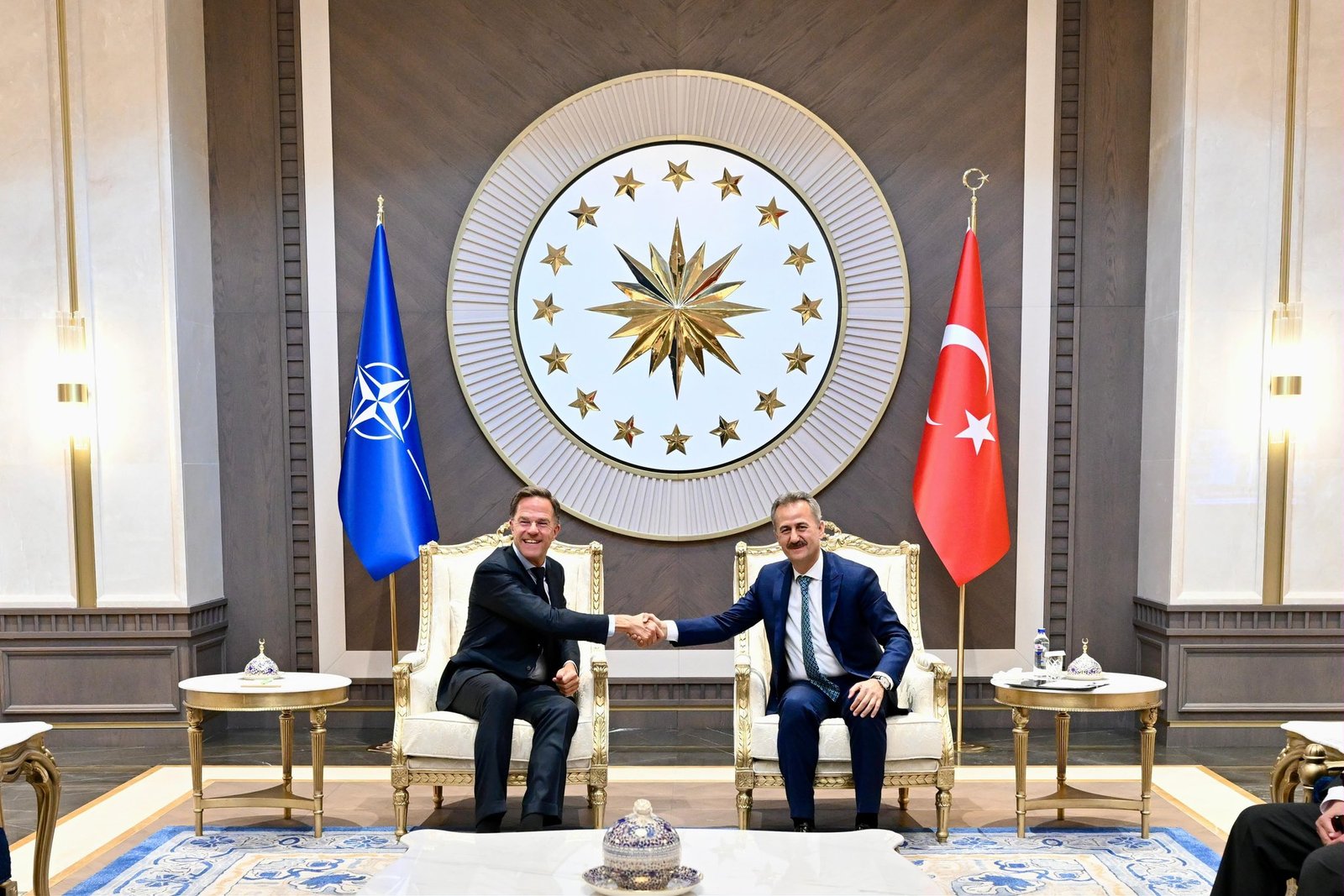
ANKARA: When NATO leaders gather in Ankara for the Alliance’s 2026 Summit, they will not simply be reviewing another year of collective security. They will be confronting a defining question for the transatlantic alliance: can NATO remain strategically coherent when its members increasingly disagree on burden-sharing, regional priorities, and the future of American leadership?
For much of its post-Cold War history, NATO expanded its membership and mission with relative confidence. Today, however, the Alliance faces simultaneous pressures from Russia’s prolonged war in Ukraine, instability in the Middle East, growing defence industrial demands, and political uncertainty surrounding the United States’ long-term commitment. The summit therefore represents less a demonstration of unity than an attempt to manage widening strategic divergences before they become structural fractures.
At the centre of the discussions is the evolving relationship between Europe and the United States. President Donald Trump has repeatedly questioned whether Washington should continue carrying the primary burden of Europe’s defence, arguing that many allies have relied excessively on American military capabilities while underinvesting in their own security.
The agreement to raise defence expenditure toward 5 percent of GDP by 2035 reflects an acknowledgement that Europe’s security architecture requires substantial reinforcement. Yet the challenge extends well beyond spending targets. Defence budgets alone cannot rapidly produce military readiness, industrial capacity, advanced technologies, trained personnel, or integrated command structures. Without addressing these structural gaps, higher expenditure risks becoming more symbolic than transformational.
NATO Secretary General Mark Rutte has described the summit as the beginning of a transatlantic “defence industrial revolution.” While politically compelling, the ambition faces practical constraints. Europe’s defence industry remains fragmented, procurement systems differ widely among member states, and production capacity continues to lag behind operational requirements exposed by the war in Ukraine.
The most immediate test of NATO’s credibility remains Russia’s continued military campaign against Ukraine. President Volodymyr Zelenskyy is expected to seek additional air defence systems and sustained military assistance as Russian missile and drone attacks continue to target Ukrainian cities. For Eastern European allies, continued support for Kyiv is viewed as essential to deterring further Russian aggression. Yet growing political fatigue in parts of Europe and the United States raises difficult questions about how long such support can be maintained at current levels.
Beyond Ukraine, the Alliance faces another strategic dilemma in the Middle East.
Recent tensions involving Iran have highlighted the absence of a shared NATO approach toward crises outside the Euro-Atlantic theatre. While the United States has urged greater allied participation in securing maritime routes, particularly the Strait of Hormuz, several European members have remained cautious, arguing that such operations fall outside NATO’s traditional mandate or exceed their available military capabilities.
This divergence reflects a broader identity crisis within the Alliance. NATO was established as a collective defence organisation focused on territorial security. Increasingly, however, it is expected to respond to cyber threats, hybrid warfare, energy security, supply chain vulnerabilities, maritime disruption, space security, and emerging technologies. Expanding responsibilities without corresponding political consensus risks stretching the Alliance beyond its institutional coherence. Another underappreciated challenge is political. Public support for NATO remains broadly favourable across much of Europe, but domestic political debates are becoming increasingly polarised over defence spending, military assistance abroad, and national economic priorities. Governments face growing pressure to balance ambitious security commitments with rising fiscal constraints and public demands for domestic investment.
Hosting the summit places Türkiye at the centre of NATO’s evolving strategic geography. Situated at the intersection of Europe, the Middle East, the Black Sea, and the Caucasus, Türkiye has become indispensable to discussions on regional security, defence production, energy corridors, and diplomatic engagement. Ankara’s role demonstrates that NATO’s future increasingly depends on members capable of linking multiple theatres of strategic competition rather than focusing solely on the European continent.
Perhaps the greatest challenge facing the Alliance is not military but political. NATO has always depended less on uniform capabilities than on a shared strategic vision. Today, that consensus is under strain. Allies broadly agree that Russia poses a long-term threat, yet differ on burden-sharing. They recognise instability in the Middle East, yet disagree on NATO’s operational role. They support stronger European defence, yet remain divided over how much strategic autonomy Europe should pursue without weakening the transatlantic partnership. The Ankara Summit is therefore unlikely to resolve these contradictions. Instead, it will reveal whether NATO can adapt to an era in which geopolitical competition is becoming more complex while political cohesion within the Alliance is becoming more difficult to sustain.
The summit’s ultimate success should not be measured by the number of communiqués issued or defence pledges announced. Its real significance will lie in whether NATO can translate political declarations into credible military capability, restore confidence in collective deterrence, and redefine burden-sharing without undermining the unity that has remained its greatest strategic asset for more than seven decades.
For NATO, Ankara is not merely another summit. It is a test of whether the Alliance can evolve from an organisation built for the twentieth century into one capable of managing the geopolitical realities of the twenty-first.
-Husein Hayatsever