

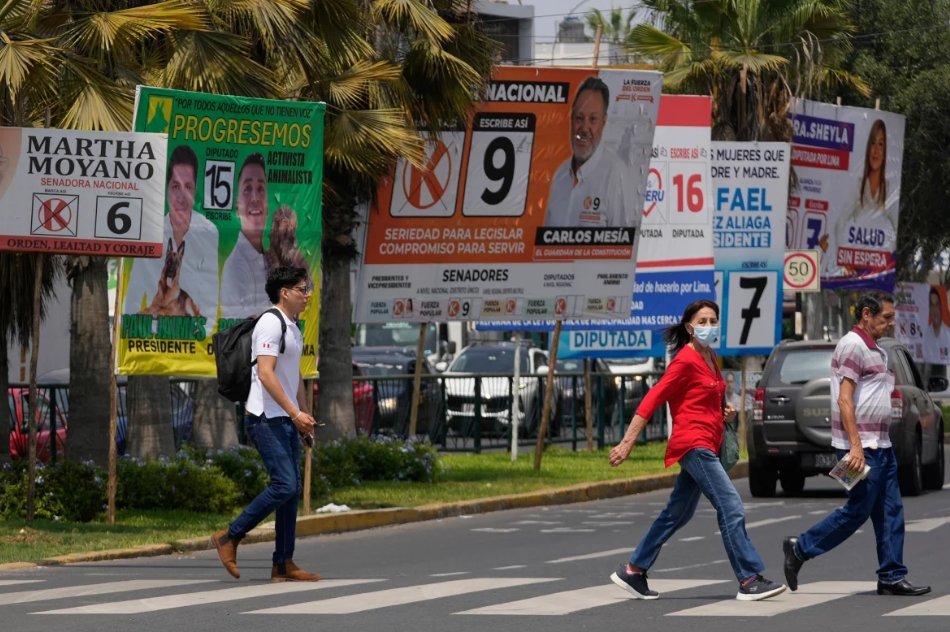
LIMA: Peru’s presidential election has evolved into far more than a statistical deadlock, it is a structural confrontation between two competing visions of the state, the market, and representation itself. As the razor-thin margin between Keiko Fujimori and Roberto Sanchez persists, the real story is not merely who wins, but what kind of political economy will define Peru in the decade ahead.
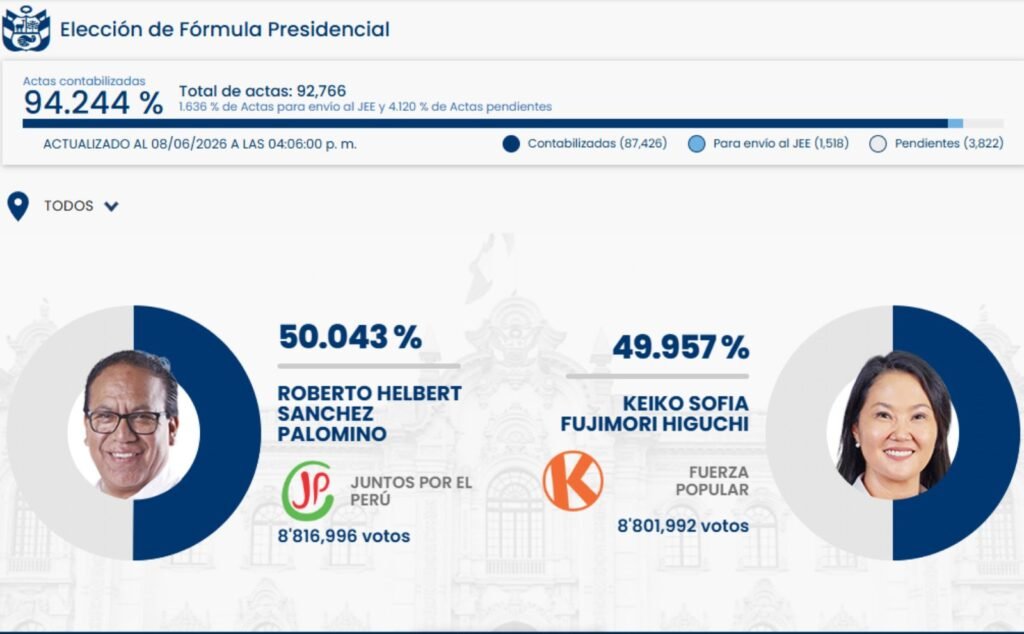
With Sanchez holding a marginal lead of just over 40,000 votes and less than 4% of ballots remaining, the electoral arithmetic underscores a nation split along geographic, economic, and institutional lines. Urban Peru, integrated into global capital flows and financial markets, has leaned toward Fujimori. Rural Peru historically excluded from the benefits of growth has rallied behind Sanchez.
Markets have responded with predictable sensitivity. The rebound in Peru’s stock index, currency, and U.S.-listed equities signals not confidence in stability, but a speculative bet on policy continuity. Investors are not merely reacting to electoral trends; they are pricing in the probability of regulatory disruption. Sanchez’s proposals ranging from constitutional reform to windfall taxation on mining strike at the core of Peru’s export-driven growth model.
Yet to frame this solely as a market-versus-populism narrative would be analytically insufficient. Sanchez’s rise reflects a deeper legitimacy crisis. For decades, Peru’s economic success story has coexisted with persistent inequality, weak state capacity, and limited redistribution. The current election exposes the limits of technocratic governance in a society where growth has not translated into equitable opportunity.
Fujimori’s candidacy, while reassuring to investors, carries its own structural baggage. Her political identity remains inseparable from the legacy of Alberto Fujimori a period marked by economic stabilization, but also authoritarian consolidation and human rights violations. This dual legacy complicates her claim to democratic continuity, even as she positions herself as the guarantor of order and stability.
The unresolved ballots particularly those from overseas and contested urban precincts, introduce a final layer of uncertainty. While these votes may tilt the outcome, they do not alter the underlying reality: Peru’s electorate is almost perfectly polarized. This is not a temporary political fluctuation, but a durable cleavage.
What emerges, therefore, is a governance paradox. A narrow victory for either candidate will lack a robust mandate, constraining policy execution while amplifying political contestation. In such an environment, even incremental reforms risk triggering disproportionate backlash, whether from markets, institutions, or the public.
From a geopolitical perspective, the stakes extend beyond Peru. The election reflects a broader Latin American recalibration, where post-pandemic economic strain, commodity dependence, and social inequality are reshaping political alignments. Whether Peru shifts toward resource nationalism or maintains its investor-friendly framework will have implications for global supply chains, particularly in mining.
Ultimately, the lesson of Peru’s knife-edge election is not uncertainty, it is exposure. The vote has revealed the structural tensions embedded within the country’s development model. The next administration, regardless of its ideological orientation, will be forced to confront a fundamental question: can Peru reconcile growth with inclusion, or will it continue to oscillate between competing extremes?
For now, the numbers remain unresolved. But the deeper verdict is already clear.
-Marco Villegas
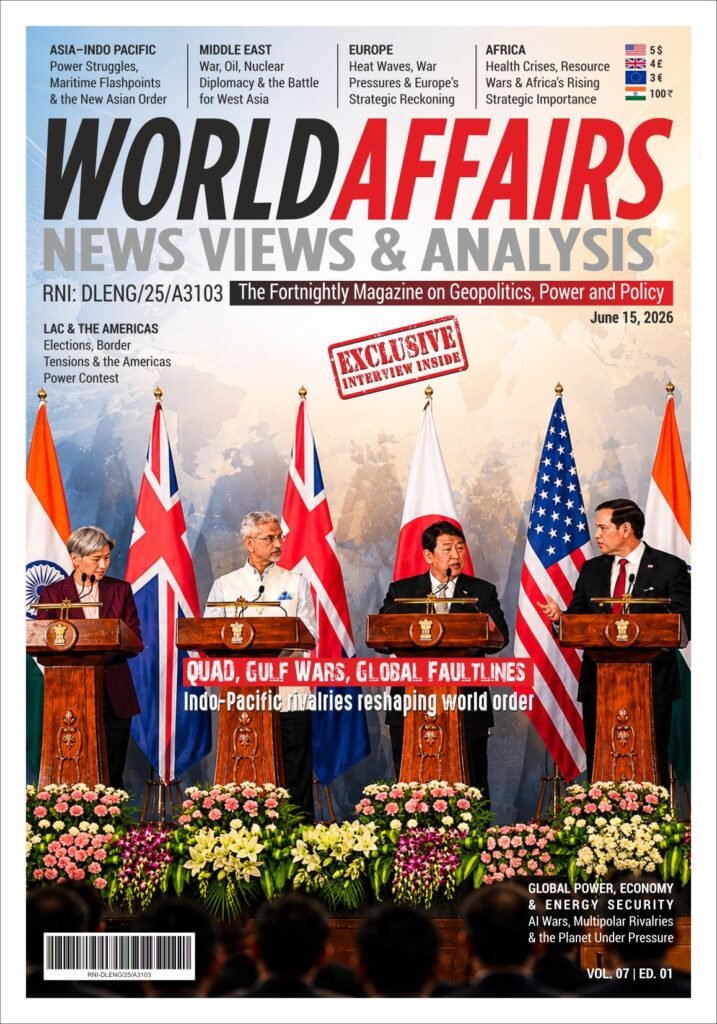
READ THE FULL E-MAGAZINE | WorldAffairs: For Decision-Makers Who Need More Than Headlines