


LIMA : Peru’s presidential run-off is more than a contest between two sharply contrasting candidates; it is a referendum on the country’s political direction at a time when Latin America appears to be tilting decisively to the right.
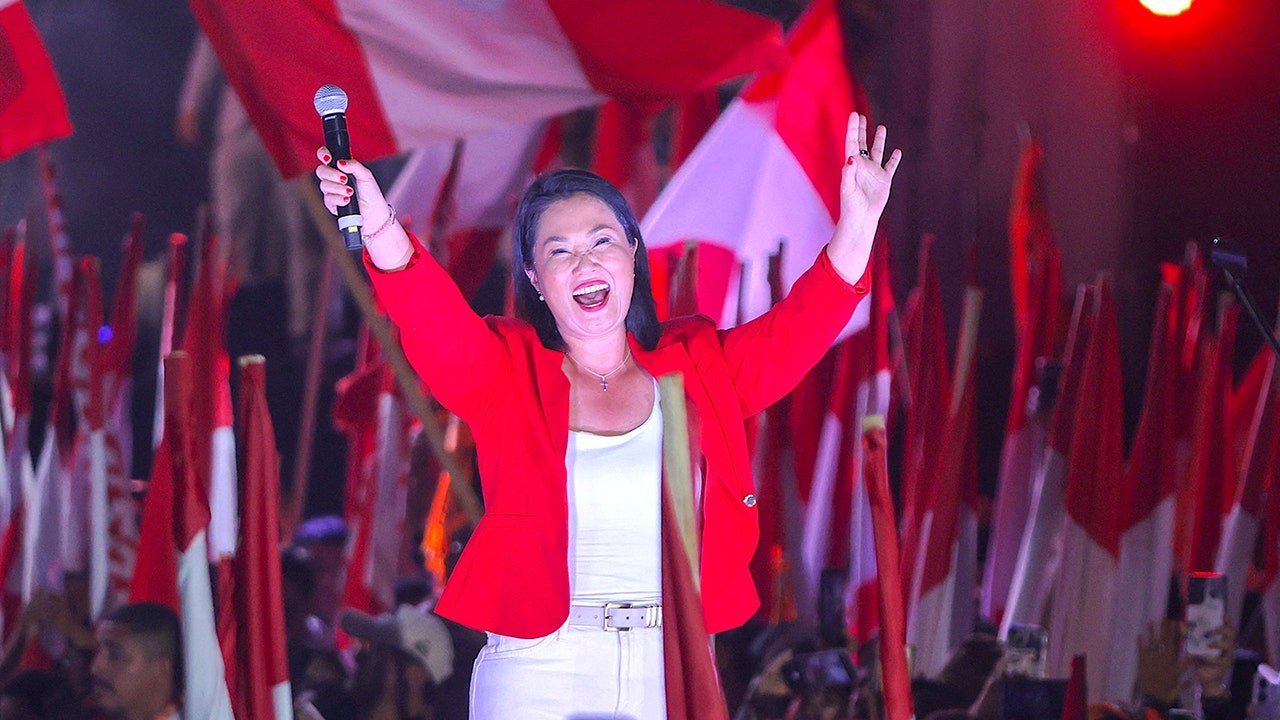
Voters head to the polls amid deep uncertainty, choosing between conservative Keiko Fujimori and leftist challenger Roberto Sánchez. The race is exceptionally tight, reflecting a nation split not only by ideology, but by geography, class, and lived experience.
Across the region, recent electoral outcomes in Chile, Argentina, Costa Rica, and Ecuador suggest a growing preference for right-leaning leadership. These shifts have been driven less by ideological enthusiasm and more by public frustration over crime, economic stagnation, and governance failures. Peru, long plagued by political volatility, now stands at the epicenter of this regional recalibration.
Keiko Fujimori’s candidacy is inseparable from the legacy of her father, former President Alberto Fujimori. His tenure remains one of the most polarizing chapters in Peru’s history credited by supporters with defeating Maoist insurgency and stabilizing the economy, yet condemned by critics for authoritarianism and human rights abuses. In this election cycle, Fujimori has leaned more openly into that legacy, reframing it as a model for tackling Peru’s current crisis of organized crime.
That message resonates with a public increasingly alarmed by rising homicide rates, extortion rackets, and lawlessness. The removal of former President Dina Boluarte following protests tied to insecurity has only deepened the sense that Peru is drifting without effective leadership. For many voters, stability even if rooted in a controversial past appears preferable to continued chaos.
Yet Roberto Sánchez represents a countercurrent that cannot be dismissed. Drawing on the populist appeal of former President Pedro Castillo, Sánchez has positioned himself as the voice of Peru’s marginalized rural population. His campaign speaks directly to the enduring divide between Lima and the country’s interior an economic and social gap that has widened despite years of resource-driven growth.
Sánchez’s proposals, including a new constitution, reforms to mining concessions, and increased rural investment, strike a chord with those who feel excluded from Peru’s development story. However, they have also unsettled financial markets, underscoring the persistent tension between reformist ambition and economic stability.
This election is therefore not merely about policy preferences, it is about competing visions of the state itself. One prioritizes order, continuity, and market confidence; the other seeks structural transformation and redistribution.
Complicating matters further is Peru’s fragmented political system. The next president will inherit a deeply divided congress that has already ousted three leaders in five years. Governance, regardless of who wins, will be an uphill battle, raising the risk of continued institutional paralysis.
The stakes are high. A Fujimori victory would align Peru more closely with the region’s rightward drift, reinforcing a broader shift toward security-first governance. A Sánchez win, by contrast, could disrupt that trajectory and revive leftist politics grounded in social justice and economic restructuring.
Ultimately, the outcome will hinge on which anxiety weighs more heavily on voters: the fear of insecurity or the frustration of inequality.
Peru’s choice will not only shape its domestic future but also signal whether Latin America’s political pendulum is firmly swinging right or if resistance to that trend still holds.
-Alexander Aquino