


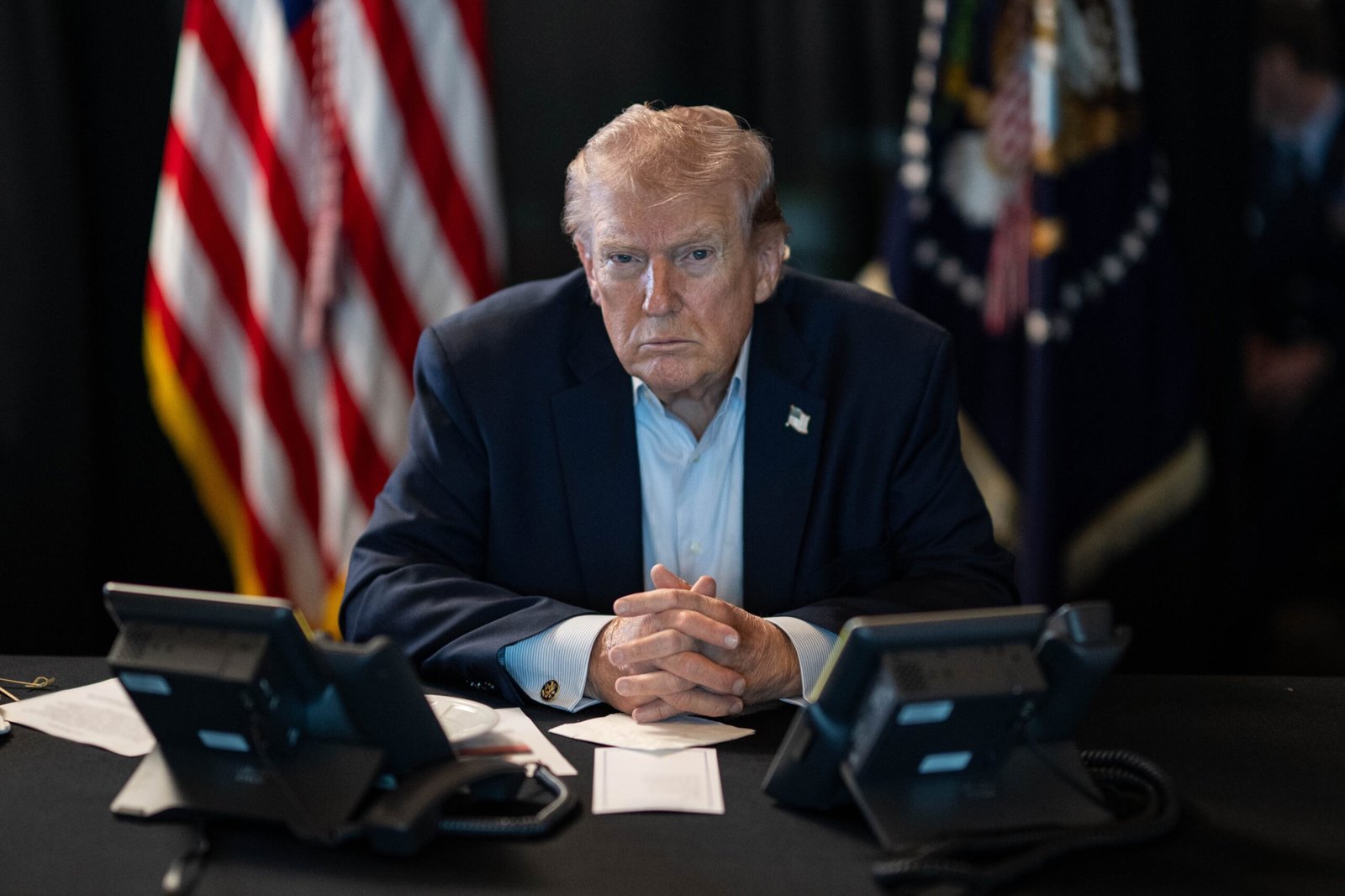
WASHINGTON: More than two months into a conflict that was expected to be swift and decisive, Donald Trump now finds himself confronting a far more dangerous reality: a war that refuses to end, a strategy that lacks closure, and a geopolitical landscape increasingly tilted against Washington’s interests.
What began as a bold assertion of American power risks calcifying into a prolonged standoff with Iran, one that may ultimately leave the United States weaker, not stronger. As reported by WorldAffairs, the absence of a clear military or diplomatic victory has created a vacuum where uncertainty thrives and costs steadily mount.
At the heart of the crisis lies a fundamental miscalculation: the belief that overwhelming force would quickly coerce Tehran into submission. While U.S. and Israeli strikes have undoubtedly degraded aspects of Iran’s military infrastructure, they have not achieved the administration’s core objectives. Iran’s nuclear trajectory remains unresolved, its regional proxy networks intact, and its political leadership more hardened than before.
Worse still, Tehran has demonstrated an ability to weaponize geography with alarming effectiveness. By constricting access to the Strait of Hormuz, through which roughly a fifth of the world’s oil supply flows, Iran has triggered a global energy shock that reverberates far beyond the Middle East. Oil markets have reacted sharply, and American consumers are feeling the consequences at the pump, an economic pressure point that carries profound political implications.
For President Trump, the domestic fallout is becoming increasingly difficult to ignore. With approval ratings slipping and gasoline prices climbing, the political cost of an open-ended conflict is mounting ahead of critical midterm elections. The war, once framed as a demonstration of strength, is now being scrutinized as a potential liability that could reshape congressional dynamics and weaken Republican prospects.
Yet the most troubling dimension of this standoff is its apparent lack of an off-ramp. Diplomatic efforts remain stalled, with Washington insisting that Iran’s nuclear program be addressed upfront, while Tehran seeks sequencing that prioritizes de-escalation. Recent proposals, even when revised through intermediaries, have failed to bridge this divide. The result is a strategic deadlock where both sides project confidence, but neither appears willing or able to compromise.
This impasse raises the specter of a “frozen conflict,” a scenario in which active hostilities subside but no durable resolution emerges. Such an outcome would trap the United States in a costly and indefinite commitment, forcing it to maintain military pressure while absorbing ongoing economic and diplomatic fallout. It would also grant Iran a lasting strategic advantage: the proven ability to disrupt global energy flows at will, even under sustained military pressure.
Compounding the challenge are the fractures within the Western alliance. European partners, sidelined in the initial decision-making, have grown increasingly wary of Washington’s approach. Tensions within NATO have surfaced, with disagreements over burden-sharing and strategic priorities further complicating the path forward. The erosion of transatlantic unity is not merely a diplomatic inconvenience, it is a structural weakening of the very coalition that underpins Western influence.
Meanwhile, Iran’s internal dynamics have shifted in ways that make de-escalation even more elusive. The consolidation of power by hardline elements, particularly within the Islamic Revolutionary Guard Corps, signals a leadership less inclined toward compromise and more committed to strategic resistance. In this environment, calls for regime change ring hollow, and expectations of internal collapse appear increasingly detached from reality.
There is also the unresolved question of Iran’s nuclear capabilities. Despite extensive strikes, significant stockpiles of enriched uranium are believed to remain intact, buried and recoverable. This reality undermines one of the central justifications for the conflict and raises uncomfortable questions about its long-term efficacy.
For Trump, the options are narrowing. Escalation risks deeper entanglement in a region he once vowed to disengage from. A unilateral withdrawal could be interpreted as a strategic retreat, emboldening adversaries and unsettling allies. A flawed agreement, rushed under political pressure, might offer short-term relief but leave the underlying threat unresolved.
In each scenario, the outcome carries significant costs.
What makes this moment particularly consequential is not just the trajectory of the conflict, but its broader implications for global order. A prolonged U.S.-Iran standoff threatens to normalize instability in one of the world’s most critical energy corridors, undermine confidence in American leadership, and accelerate the fragmentation of international alliances.
The war with Iran was intended to reshape the strategic balance in Washington’s favor. Instead, it risks doing the opposite, leaving behind a more volatile region, a more resilient adversary, and a United States grappling with the limits of its own power.
History rarely judges conflicts by their intentions. It judges them by their outcomes. And unless a credible path to resolution emerges soon, this standoff may well be remembered not as a demonstration of strength, but as a cautionary tale of strategic overreach.
-Don Nickel