

BERLIN: Reza Pahlavi, son of Mohammad Reza Shah Pahlavi, used his visit to Berlin to deliver a pointed message: Western hesitation on Iran is no longer passive diplomacy but an active choice shaping outcomes on the ground. Framing the current unrest as irreversible, he argued that the central question is no longer whether change will come, but how costly that transition will be in human terms.
Invoking the legacy of the 1979 revolution led by Ayatollah Ruhollah Khomeini, Pahlavi cast today’s protests as part of a deeper historical cycle, now intensified by global visibility and geopolitical stakes. His remarks carried a direct critique of Germany, highlighting the decision by Chancellor Friedrich Merz’s government not to meet him—an absence he framed as emblematic of Europe’s broader reluctance to engage emerging opposition figures.
While Pahlavi has re-emerged as a recognizable voice following last year’s protests, Iran’s opposition landscape remains fragmented, complicating efforts by external actors to identify a unified interlocutor. This internal division continues to shape Western caution, even as calls for a more assertive stance grow louder.
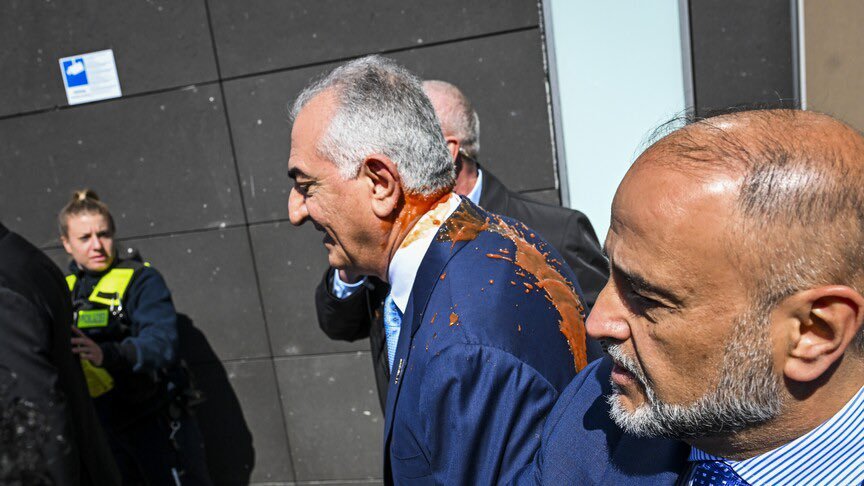
His presence in Berlin exposed these divisions beyond Iran’s borders. Demonstrations by both supporters and critics highlighted the contested nature of his leadership claim, with tensions briefly escalating when he was splashed with red liquid during a public appearance and a suspect was detained.
The geopolitical environment surrounding his appeal remains volatile. European governments have resisted aligning militarily with the United States and Israel, whose actions have already reshaped the regional balance. Meanwhile, heightened friction in the Strait of Hormuz- a corridor critical to global energy flows has expanded the implications of the crisis beyond regional politics into the realm of economic security.
Pahlavi’s intervention ultimately reframes the debate confronting Western capitals: whether continued caution preserves stability, or whether it risks prolonging both the internal crisis within Iran and the broader geopolitical strain now radiating across the region.
-J Richardson