


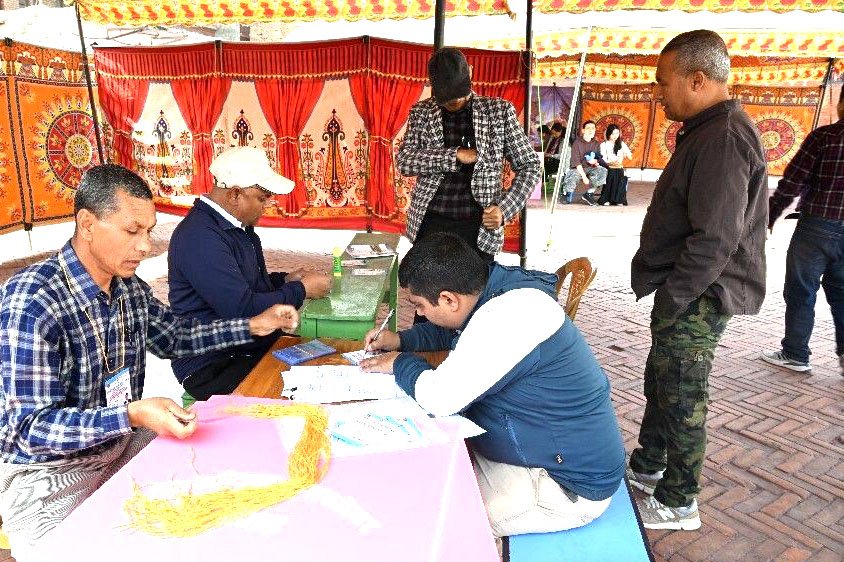
KATHMANDU, Nepal: Polls opened across Nepal on Thursday in the country’s first nationwide election since last year’s violent, youth-led uprising forced the government from power, marking a pivotal moment in the Himalayan nation’s political transition.
Security forces patrolled streets and guarded polling stations as voters lined up to cast ballots. Authorities imposed strict restrictions, banning vehicles from roads and prohibiting political rallies and public gatherings. Campaigning of any kind is barred on election day. Vote counting is set to begin later Thursday, with results expected over the weekend.
Nearly 19 million people are eligible to vote, according to the Election Commission, in a country of roughly 30 million. Voters are directly electing 165 members to the 275-seat House of Representatives, the lower chamber of Parliament. The remaining 110 seats will be allocated through a proportional representation system, under which parties nominate lawmakers based on their share of the national vote.
The election is widely seen as a three-way contest shaped by public frustration over corruption and demands for greater accountability. The National Independent Party, founded in 2022, has emerged as a strong challenger to the long-dominant Nepali Congress and the Communist Party of Nepal (Unified Marxist–Leninist).
Its prime ministerial candidate, 35-year-old rapper-turned-politician Balendra Shah, rose to prominence after winning Kathmandu’s mayoral race in 2022 and later became a leading figure in the protests that toppled former Prime Minister Khadga Prasad Oli in 2025. Shah has ridden a wave of public anger toward traditional parties, centering his campaign on improving health care and education access for poorer Nepalis.
The unrest that led to the government’s fall began with opposition to a social media ban but quickly escalated into a broader revolt against corruption and governance failures. Dozens were killed and hundreds injured during clashes between protesters and security forces after demonstrators attacked government buildings and police opened fire.
While the Congress and Communist parties retain loyal voter bases, Shah’s party has drawn large crowds on the campaign trail, reflecting growing support among younger voters seeking political change.
The next administration will inherit significant challenges, including delivering reforms demanded by last year’s protests, tackling entrenched corruption, and carefully managing Nepal’s strategic relationships with neighboring India and China.
– Bhuwan Thapa