

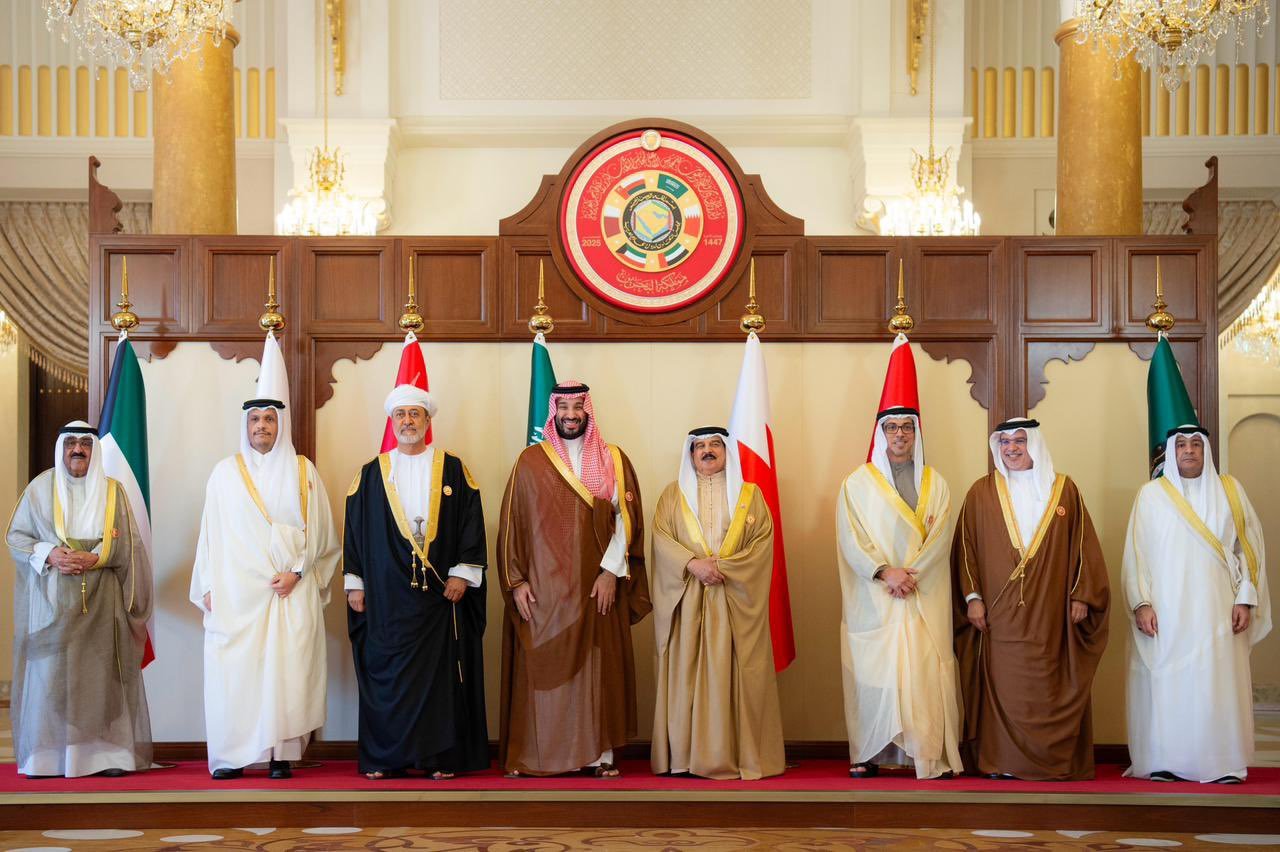
As missiles streak across Middle Eastern skies and regional tensions threaten to spiral out of control, six oil-rich nations have quietly charted a course toward unprecedented unity. The 46th Gulf Cooperation Council Summit, held on December 3, 2025, in Manama, Bahrain, delivered the Sakhir Declaration, a comprehensive roadmap that signals the Gulf states’ determination to forge ahead as a cohesive bloc while the broader region remains mired in conflict.
The timing could not be more critical. With Gaza still smoldering, tensions between Iran and Israel reaching dangerous heights, and drone attacks increasingly targeting GCC member states, the Gulf monarchies have concluded that their survival depends not on individual strength, but on collective resilience. The summit’s most striking achievement was the commitment to finalize a common Gulf defense and air-defense shield, a project that has gained urgent momentum following recent missile and drone strikes on member territories.
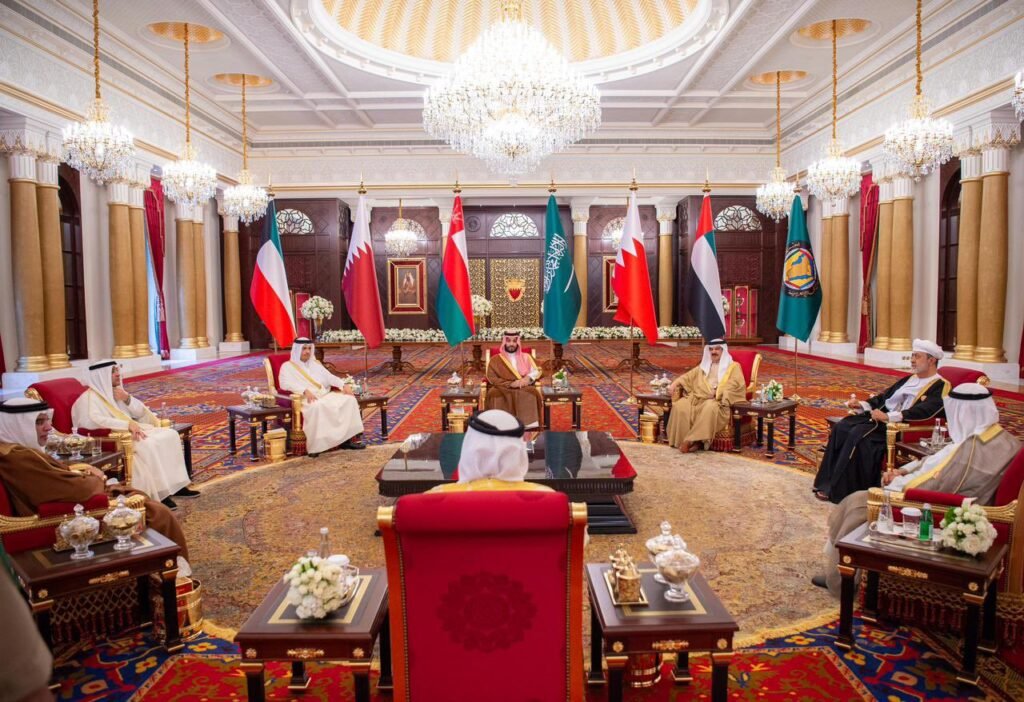
GCC leaders reaffirmed that the security and prosperity of all member states are indivisible, emphasizing joint defense and collective solidarity. This isn’t mere diplomatic rhetoric; it represents a fundamental shift toward treating any threat against one member as a threat against all. The leaders stressed unwavering respect for sovereignty and non-interference in internal affairs, creating a protective umbrella that extends across the six nations. This unified defense posture sends a clear message to regional adversaries that the Gulf states will no longer face threats in isolation.
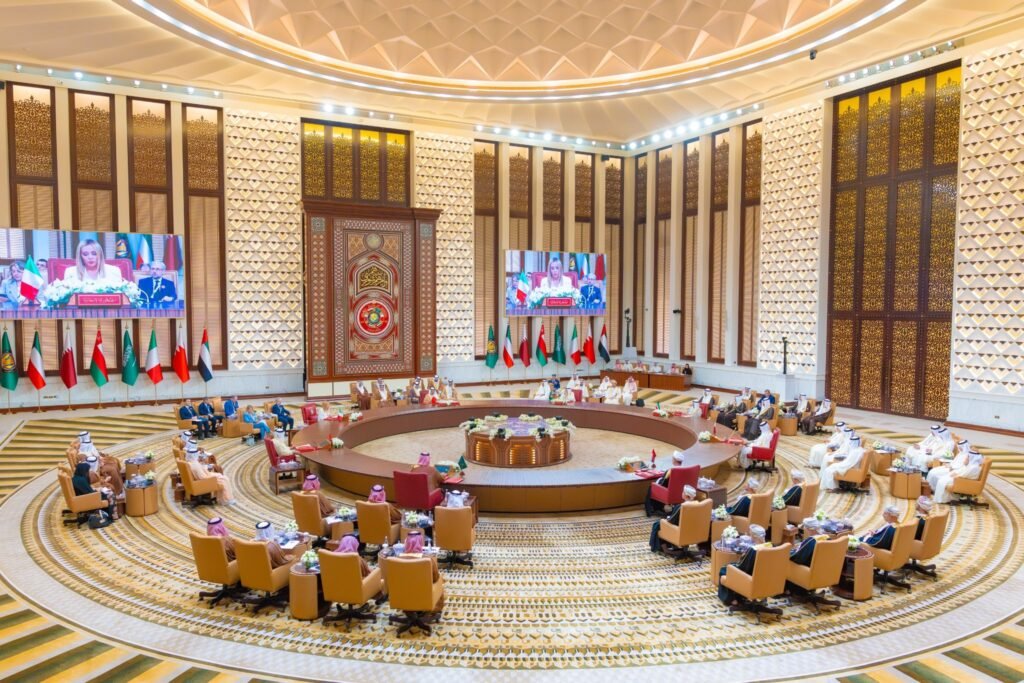
Economic integration received equally dramatic attention, with the summit underscoring the goal of completing the GCC Common Market and Customs Union. These aren’t abstract economic concepts, they represent the Gulf’s ambitious vision of seamless integration, enhanced trade, and freer movement across borders. Investment priorities were clearly defined, focusing on strategic sectors including infrastructure, energy, water security, food security, digital economy initiatives, and renewable energy projects. This comprehensive approach suggests the GCC is building the foundation for long-term prosperity beyond oil revenues.
The digital transformation agenda proved particularly forward-looking, emphasizing cooperation in artificial intelligence, cybersecurity, and digital payment systems. The summit specifically highlighted encouraging youth and women’s participation in this new knowledge-economy push, signaling a social transformation alongside the technological one. This dual focus on innovation and inclusion could reshape Gulf societies while maintaining their traditional values.
Regional diplomacy took center stage as GCC leaders outlined their vision for Middle East stability. The council restated its unwavering support for a two-state solution to the Israeli-Palestinian conflict, backing a sovereign Palestinian state with East Jerusalem as its capital, aligned with international legitimacy and the Arab Peace Initiative. Member states committed to resolving regional disputes through dialogue and diplomacy, explicitly rejecting the use or threat of force. The summit reaffirmed the GCC’s dedication to non-proliferation of weapons of mass destruction in the Middle East and preventing regional arms races, a stance that positions the Gulf as a stabilizing force amid escalating military tensions.
Environmental responsibility emerged as a key priority, with the Sakhir Declaration including comprehensive commitments to environmental protection, climate change mitigation, carbon emission reduction, and clean energy pursuit. The call for sustainable development aligned with global frameworks demonstrates the GCC’s recognition that economic growth must be balanced with ecological responsibility,a significant evolution for traditionally oil-dependent economies.
External partnerships received strategic emphasis, with the GCC signaling openness to deepening political, security, and economic cooperation with friendly nations and international blocs. The collaboration encompasses maritime security, anti-terrorism efforts, and expanded trade relationships. A noteworthy diplomatic moment occurred with the participation of Italian Prime Minister Giorgia Meloni, resulting in a joint strategic partnership roadmap covering trade, energy, technology, and maritime cooperation. This European engagement suggests the Gulf states are diversifying their international relationships beyond traditional allies.
The summit’s backing for Bahrain’s role as a non-permanent United Nations Security Council member for 2026-27 underlines confidence in the kingdom’s capacity to represent Gulf and Arab interests on the global stage. This support reflects the GCC’s growing ambition to project influence beyond regional boundaries.
The strategic significance of these outcomes extends far beyond the Gulf region. The summit reaffirms that the GCC, operating amid a volatile Middle East marked by the Gaza conflict and Iran-Israel tensions, is determined to present a united front through collective security, enhanced diplomatic weight, and accelerated integration. The emphasis on economic integration, clean energy development, and digital modernization signals that Gulf states are rapidly diversifying away from oil dependency, a transformation with profound long-term global economic implications.
By strengthening external partnerships with European powers like Italy while committing to sustainable development and weapons of mass destruction non-proliferation, the GCC appears to be pursuing a more expansive global role. The organization is positioning itself as a stable bloc capable of balancing regional upheaval with progressive governance, offering an alternative model of development and diplomacy in an increasingly chaotic Middle East.
The Sakhir Declaration represents more than diplomatic consensus; it embodies the Gulf states’ recognition that their future prosperity and security depend on unity, innovation, and global engagement. As regional conflicts rage around them, these six nations have chosen integration over isolation, cooperation over competition, and forward-looking policies over reactive responses. In a region where traditional alliances are fracturing and new threats emerge daily, the GCC’s commitment to collective action and sustainable development offers a compelling vision of stability and progress that could reshape Middle Eastern geopolitics for decades to come.
–Dr. Shahid Siddiqui | Follow on X @shahidsiddiqui