


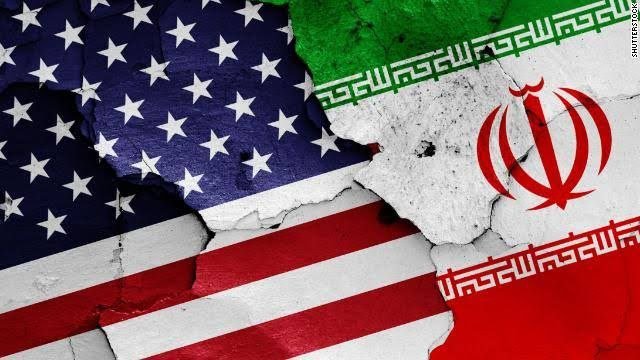
WASHINGTON/ TEHRAN: The confrontation between the United States and Iran has entered a phase of heightened unpredictability after U.S. President Donald Trump warned that “a whole civilization will die tonight” if Tehran failed to reopen the strategically vital Strait of Hormuz. The statement reflects not only escalating rhetoric but also a widening gap between coercive signaling and workable diplomacy.
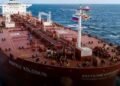
At the center of the crisis lies one of the most sensitive arteries of the global economy. Roughly one-fifth of the world’s oil supply normally transits the Strait of Hormuz, making it less a regional maritime route and more a structural pillar of international energy stability. Any disruption there inevitably transforms a bilateral confrontation into a global economic event.
Simultaneously, the intensification of airstrikes across Iranian infrastructure including bridges, rail networks, and military-linked sites such as Kharg Island signals a shift toward targeting logistical depth rather than purely symbolic or tactical objectives. Israeli strikes on transport corridors across cities including Tehran, Karaj, Tabriz, Kashan, and Qomfurther reinforce the emerging pattern of infrastructure-centered warfare.
At the same time, Iranian responses including missile launches toward Saudi Arabia and Israel and the tightening of maritime pressure in the Strait of Hormuz, demonstrate Tehran’s reliance on asymmetric leverage rather than conventional parity with U.S. or Israeli airpower. Iran’s strategy appears designed less to win battlefield dominance than to reshape the cost calculations of its adversaries by expanding the geographic and economic consequences of the conflict.
Inside Iran, authorities urged young citizens to form human chains around power plants, while President Masoud Pezeshkian stated that millions had volunteered to defend the country. Messaging from the Islamic Revolutionary Guard Corps calling for civilian participation in checkpoint activities reflects the extent to which the confrontation is being framed domestically as a national survival issue rather than a limited military dispute.
At the same time, the United States has continued strikes on strategic locations including Kharg Island, though officials indicated these operations were not directed at oil infrastructure itself. The distinction is significant but fragile. In conflicts involving energy corridors, perceptions often matter as much as operational intent.
The regional dimension of the confrontation is expanding rapidly. Iran’s missile activity toward Saudi Arabia triggered the temporary closure of the King Fahd Causeway linking the kingdom with Bahrain, where the United States Fifth Fleet maintains a major operational presence. Meanwhile, cross-border escalation involving Lebanon and Hezbollah continues to widen the conflict’s geographic footprint.
The economic consequences are already visible. Benchmark Brent crude prices rose above $108 per barrel, roughly 50 percent higher than levels recorded before the conflict intensified. This increase reflects not only immediate supply concerns but also market anticipation of prolonged instability along one of the world’s most sensitive maritime corridors.
Diplomatic efforts remain active but constrained. Mediators from Pakistan, Egypt, and Turkey are reportedly engaged in indirect communication channels between Washington and Tehran. Iran has linked reopening maritime traffic in the Strait of Hormuz to sanctions relief, particularly affecting its oil exports, while the United States appears willing to consider limited adjustments in response to energy-market volatility.
These exchanges suggest negotiation space exists, but it remains narrow and politically sensitive on both sides.
Equally significant are the legal and humanitarian concerns emerging alongside the military escalation. Statements by Jean-Noël Barrot and António Guterres emphasized that large-scale attacks on civilian energy infrastructure could violate international humanitarian law and trigger broader retaliatory cycles. Such warnings underscore how quickly infrastructure warfare risks shifting conflicts from tactical confrontation into systemic destabilization.
Casualty figures illustrate the widening humanitarian cost. More than 1,900 people have reportedly been killed inside Iran since hostilities began. In Lebanon, over 1,500 deaths and more than one million displaced persons reflect the expanding regional impact of parallel conflict dynamics involving Hezbollah and Israel. Additional fatalities have been reported across Israel, the Gulf region, the West Bank, and among U.S. service members deployed in the theater.
Within Iran itself, public sentiment appears increasingly uncertain rather than unified. A teacher in Tehran told WorldAffairs, speaking anonymously for safety reasons, that while some initially expected external pressure to produce rapid political change, fears are now growing that prolonged strikes on electricity, communications, and transport infrastructure could generate deeper instability rather than transformation.
The central strategic issue in the crisis is no longer limited to reopening the Strait of Hormuz. It is whether infrastructure warfare, maritime disruption, and sanctions bargaining are becoming normalized tools of confrontation between major regional and global actors.
As rhetoric intensifies and deadlines approach, the risk is not only that escalation may continue. It is that the conflict’s operational logic may gradually shift toward economic coercion and infrastructure denial strategies whose consequences extend far beyond the immediate battlefield.
-David Price and Michelle McGuirk
READ THE FULL E-MAGAZINE | WorldAffairs: For Decision-Makers Who Need More Than Headlines