


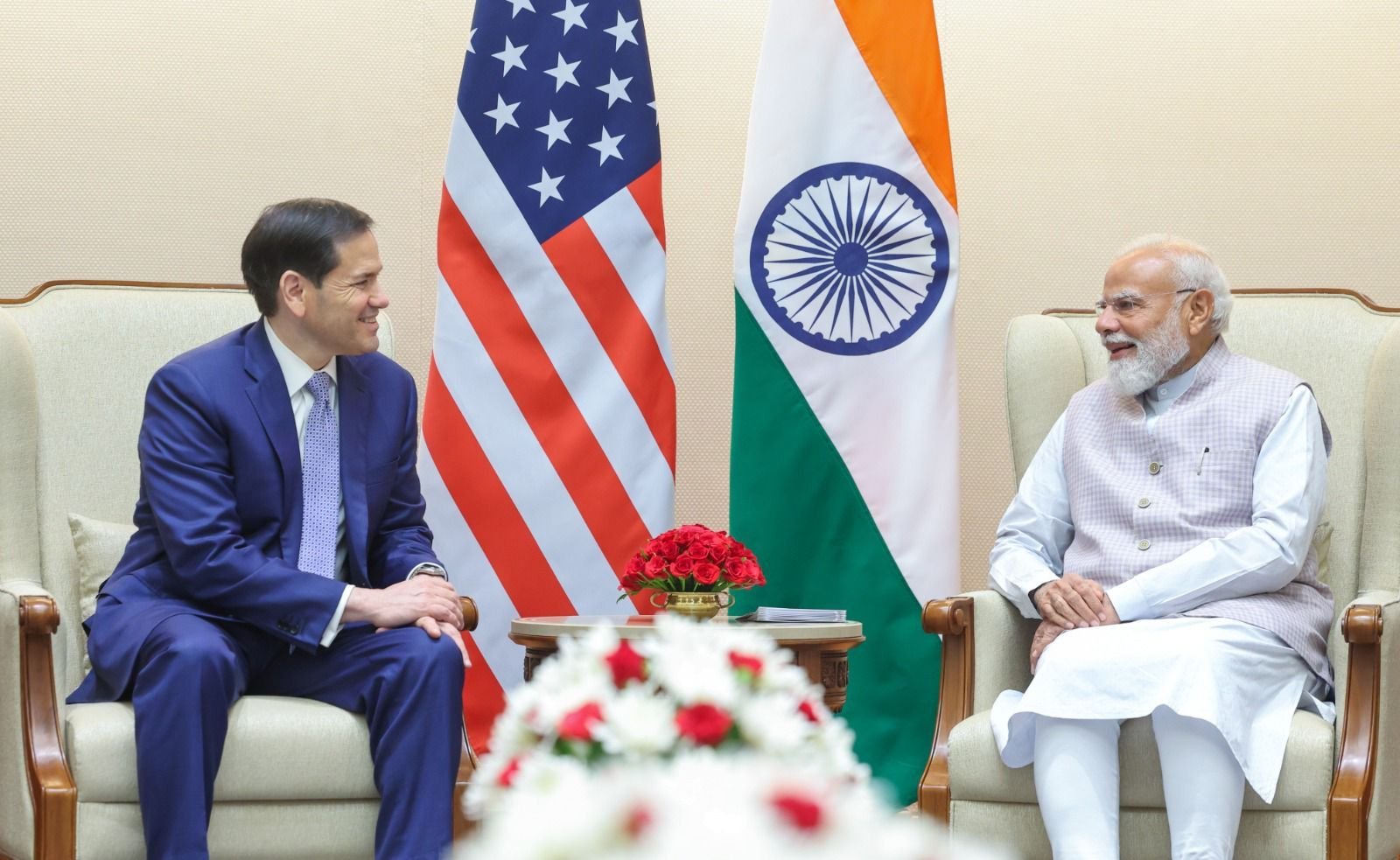
WASHINGTON/NEW DELHI : The arrival of U.S. Secretary of State Marco Rubio in India this week is far more than a routine diplomatic visit. It reflects a growing realization in Washington that one of America’s most consequential strategic partnerships has entered a period of visible strain and that urgent efforts are needed to stabilize ties with New Delhi.
Rubio’s first official trip to India comes at a sensitive geopolitical moment marked by tariff disputes, diverging regional priorities, and uncertainty surrounding President Donald Trump’s evolving Indo-Pacific strategy. Once hailed as the defining strategic partnership of the 21st century, U.S.-India relations are now navigating a phase of distrust and recalibration.
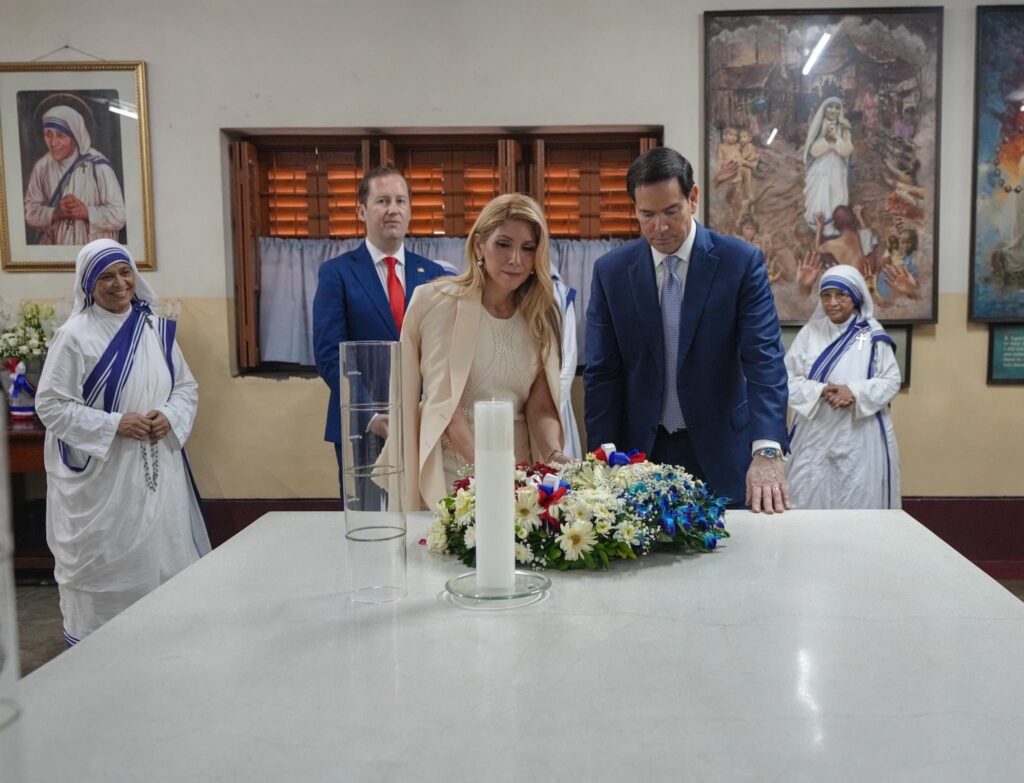
After arriving in Kolkata and visiting the humanitarian mission established by Mother Teresa, Rubio traveled to New Delhi for talks with Prime Minister Narendra Modi and senior Indian officials. While trade, defense, and energy cooperation officially dominate the agenda, the broader objective appears unmistakable: restoring strategic confidence.
For more than two decades, successive American administrations have sought to position India as a central pillar of the Indo-Pacific order and a counterweight to China’s expanding influence. Under former President Joe Biden, Washington invested heavily in elevating ties, culminating in Modi’s high-profile state visit to the United States in 2023. Trump himself, during his first term, strongly emphasized strategic alignment with India as part of a broader effort to balance Beijing.
Yet that momentum has weakened considerably since Trump’s return to office.
The imposition of steep tariffs on Indian exports among the harshest faced by any major U.S. partner generated deep unease in New Delhi. Although both sides later reached an interim arrangement reducing some duties, the absence of a comprehensive trade agreement continues to overshadow the relationship.
For India, the tariff dispute represents more than a trade disagreement. It has become symbolic of broader unpredictability in American policymaking.
Compounding Indian concerns is Washington’s renewed engagement with Pakistan amid efforts to manage the regional fallout from the U.S.-Israeli confrontation with Iran. Islamabad’s growing relevance in regional diplomacy has revived longstanding fears within India that Washington may once again revert to a Pakistan-centric security framework in South Asia.
Trump’s recent diplomatic outreach to Beijing has further intensified strategic anxieties in New Delhi.
India has consistently viewed the Quad comprising India, the United States, Japan, and Australia, as a critical platform for balancing China’s rise in the Indo-Pacific. However, the absence of sustained leader-level momentum within the grouping has raised doubts about Washington’s long-term strategic commitment.
Against this backdrop, Rubio’s visit carries significance beyond ceremonial diplomacy. The United States is attempting to reassure India that despite recent turbulence, Washington still sees New Delhi as an indispensable strategic partner. Energy cooperation has emerged as one potential area for renewed engagement. Rubio openly stated before his visit that Washington wants to expand U.S. energy exports to India. But geopolitical realities complicate that ambition. The global energy disruptions caused by tensions involving Iran have made it increasingly difficult for India to reduce its reliance on discounted Russian oil imports.
Trade negotiations remain another major obstacle.
Discussions over a broader trade agreement have slowed amid legal uncertainty surrounding Trump-era tariffs after interventions by the U.S. Supreme Court. Indian negotiators appear cautious, while American officials reportedly believe New Delhi is reluctant to make significant concessions.
This growing frustration risks spilling over into wider strategic cooperation.
Many analysts now argue that despite the language of partnership, both countries are entering a more transactional phase in bilateral relations. The optimism that once defined U.S.-India engagement is increasingly being replaced by strategic hedging and calibrated diplomacy.
Nevertheless, neither side can afford a prolonged deterioration.
For Washington, India remains central to any credible Indo-Pacific strategy aimed at countering China’s influence. For New Delhi, the United States continues to be an indispensable partner in defense, technology, energy, and investment despite persistent disagreements.
Rubio’s challenge, therefore, extends beyond managing immediate disputes. His mission is to restore confidence that the U.S.-India relationship retains long-term strategic depth and is not merely vulnerable to temporary political and economic turbulence.
Ultimately, the success of this visit will depend not on diplomatic symbolism, but on whether both countries can move beyond tariffs, regional irritants, and strategic uncertainty toward a more stable and predictable partnership.
What is at stake is not simply bilateral relations between Washington and New Delhi, but the future balance of power across the Indo-Pacific region.
–Michael Brunnstrom, Lewis Trevor with Dr. Shahid Siddiqui in New Delhi