



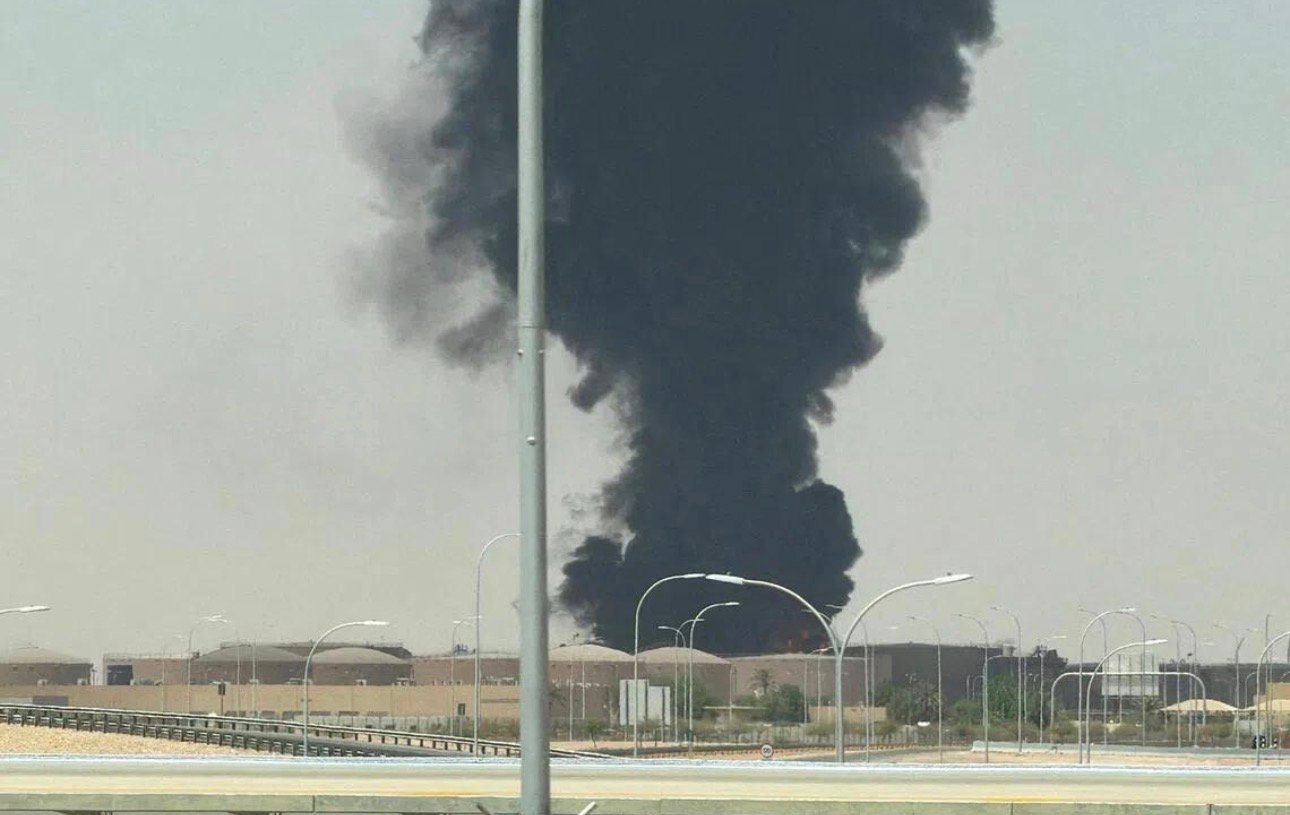
RIYADH: The latest attack on King Khalid International Airport has transformed Saudi Arabia’s security challenge into a question with consequences far beyond the kingdom’s borders: how can a country sustain its ambitions as a global investment, aviation and energy hub when its principal capital airport becomes a repeated target of military strikes?
On October 10, Saudi Arabia’s General Authority of Civil Aviation confirmed that an attack on the airport in Riyadh had wounded several people and forced a temporary suspension of operations while authorities assessed the damage. The incident followed attacks earlier in the week that had already caused fatalities and disrupted aviation services. At the time of the latest incident, the Houthis had not publicly claimed responsibility for that specific attack, although they had claimed earlier strikes against Saudi airport infrastructure.
The immediate human cost is only one dimension of the crisis. An international airport is not merely a transport facility. It is a critical node connecting diplomatic missions, military logistics, commercial supply chains, tourism, investment and emergency response. Repeated attacks on such infrastructure can generate consequences disproportionate to the physical damage inflicted, particularly when uncertainty over the next strike begins to shape the behaviour of airlines, travellers, businesses and foreign governments.
The latest incident therefore demands attention not only as another episode in the Saudi–Houthi confrontation but as a warning about the changing geography of regional warfare. The ability of an armed group operating from Yemen to threaten aviation in the Saudi capital challenges assumptions about strategic depth, air defence and the protection of civilian infrastructure.
Saudi Arabia has invested heavily in presenting itself as a stable destination for international business and a central gateway between Asia, Europe and Africa. Riyadh’s airport is integral to that ambition. When flights are diverted, operations suspended and foreign embassies advise their nationals to avoid the surrounding area, the disruption reaches beyond aviation schedules. It begins to affect confidence in the wider operating environment.
The attacks earlier in the week reportedly killed three Saudi citizens, including an airline pilot, according to Saudi aviation authorities. The subsequent incident reinforced concerns about the vulnerability of a facility whose uninterrupted operation is essential to the kingdom’s domestic connectivity and international engagement.
The central strategic question is not simply whether Saudi Arabia can intercept individual missiles or drones. It is whether its defence architecture can consistently protect critical infrastructure against repeated, potentially low-cost attacks designed to impose high economic and psychological costs. Modern air defence must contend with multiple threats, uncertain launch locations, compressed warning times and the possibility that an attacker can achieve strategic disruption without inflicting extensive physical destruction.
Reports that the latest incident occurred without an early-warning alert, if confirmed through an authoritative technical assessment, would raise further questions about detection, warning and emergency-response systems. However, the precise circumstances of the incident and the performance of individual defence systems require independent verification. It would be premature to draw definitive conclusions about the cause of any warning failure before Saudi authorities release their findings.
The aviation consequences were immediate. International carriers cancelled or disrupted services to Riyadh, while diplomatic missions from the United States, the United Kingdom, Ireland and Canada issued warnings concerning the airport and surrounding areas. Kuwait Airways announced cancellations, and Etihad Airways and Qatar Airways also disrupted services. Flight-tracking information showed extensive disruption as airlines responded to the evolving security situation.
For the global aviation industry, such incidents create a difficult calculation. Airlines must weigh passenger and crew safety, insurance exposure, airspace risk assessments, operational costs and the availability of alternative routes. Even when an airport reopens, uncertainty can continue to affect scheduling and commercial confidence. Repeated interruptions may also raise costs for cargo operators and businesses dependent on predictable movement of people and goods.
The timing adds another layer of concern. Riyadh was preparing to host major energy and investment conferences, events designed to attract international executives and reinforce the kingdom’s economic transformation agenda. Organisers said the conferences would proceed as planned and sought to reassure participants about security. Yet the contrast between the kingdom’s ambitions as a global business destination and the risks confronting its transport infrastructure is difficult to ignore.
Saudi Arabia’s economic diversification strategy depends on more than investment incentives, new infrastructure and international partnerships. It also depends on the perception that the kingdom can offer continuity, predictability and protection against regional shocks. No country can eliminate every security threat, but the repeated targeting of its capital’s airport raises the price of maintaining that confidence.
The broader danger lies in the potential expansion of the conflict. Following the latest attack, US President Donald Trump said Washington might consider joining Saudi strikes against the Houthis. He indicated that a decision would be made after reviewing the latest incident, but his remarks did not constitute a commitment to military intervention.
That distinction is crucial. A direct US role could strengthen Saudi Arabia’s military capabilities and increase pressure on the Houthis. It could also widen the conflict, expose additional American personnel and assets to retaliation, and create incentives for further attacks against regional infrastructure. The consequences would depend on the objectives, scale and duration of any intervention, as well as the Houthis’ response and the wider regional balance.
Washington must therefore consider whether additional strikes would reduce the threat sustainably or merely create another cycle of retaliation. Destroying launch sites and military facilities may degrade an armed group’s capabilities, but military action alone cannot guarantee the long-term security of civilian aviation. A durable response requires intelligence cooperation, resilient air-defence systems, coordinated civil aviation protocols, credible early-warning arrangements and diplomatic efforts to prevent further escalation. The Houthis’ threat to Saudi airspace must also be understood in the context of Yemen’s prolonged conflict. The movement has fought the internationally recognised Yemeni government and has repeatedly challenged Saudi interests. The renewed offensive by Saudi-backed Yemeni forces has added to the confrontation, increasing the risk that fighting inside Yemen will spill over into a wider campaign against regional infrastructure.
This creates a dangerous strategic equation. The more pressure Saudi Arabia and its partners apply on the ground, the greater the potential incentive for the Houthis to strike targets that carry economic, diplomatic or psychological significance. Conversely, continued attacks on civilian infrastructure strengthen arguments for military retaliation and reduce the political space for de-escalation. Neither side benefits from an uncontrolled cycle in which civilian aviation becomes an instrument of coercion.
The international community must also recognise the wider implications for the Gulf and the Red Sea. These interconnected spaces are essential to global energy flows, commercial shipping and international transport. Instability affecting Saudi infrastructure can influence airline operations, business confidence and the security calculations of neighbouring states. If the confrontation broadens, the consequences could reach markets and supply chains far removed from the immediate battlefield.
For Saudi Arabia, the immediate priorities are clear: protect civilians, establish the precise circumstances of the attacks, restore safe airport operations and strengthen the resilience of critical infrastructure. Transparent communication will be essential. Travellers, airlines, investors and diplomatic missions need reliable information to make decisions in an environment where rumours and uncertainty can magnify the effects of an attack.
For Washington, the challenge is to distinguish between demonstrating resolve and entering a conflict without a clear endgame. Any military response should be assessed against specific objectives, proportionality, regional consequences and a credible strategy for preventing further attacks. Deterrence that produces only repeated retaliation is not strategic success.
For the wider international community, the protection of civilian aviation must remain a priority. Airports cannot become acceptable instruments of pressure in regional conflicts. Attacks that endanger passengers and airport workers undermine basic principles of civilian protection and threaten the reliability of the international transport system.
The Riyadh airport crisis is ultimately about more than missiles, flight cancellations or a possible American military response. It is a test of Saudi Arabia’s ability to protect its economic transformation, of Washington’s judgment in a volatile regional conflict and of the international community’s capacity to prevent critical civilian infrastructure from becoming a recurring battlefield.
The kingdom’s ambitions as a global investment and connectivity hub will depend not only on how quickly it restores operations after each incident, but on whether it can reduce the likelihood of the next one. And Washington must recognise that the easiest decision may be to strike back, while the harder task is to ensure that retaliation does not produce an even more dangerous conflict.
If the repeated targeting of Riyadh’s airport becomes the new normal, the consequences will extend far beyond Saudi Arabia. The warning is unmistakable: in an increasingly interconnected world, the vulnerability of a single critical hub can become a regional security crisis, an economic shock and a test of international strategic leadership.
-Shirlen Gebeily
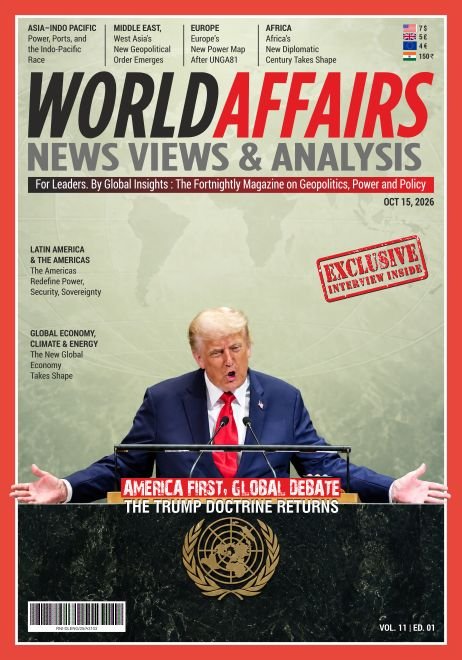
READ THE FULL E-MAGAZINE | WorldAffairs: See the Power Shifts Coming Before They Reshape the World