




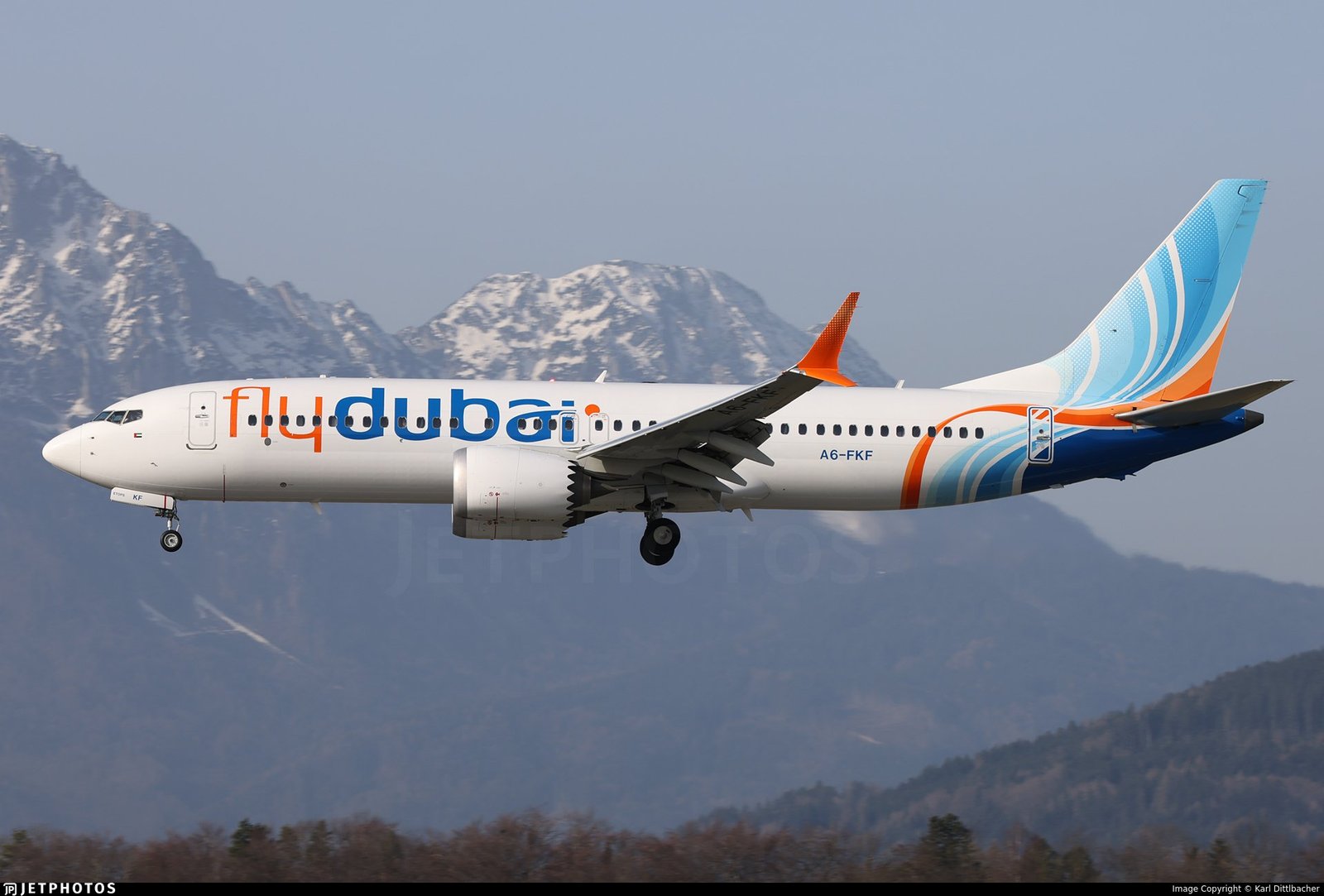
TEL AVIV | DUBAI | TABUK: A routine commercial flight from Dubai to Tel Aviv turned into a major aviation and security incident on Wednesday after a violent altercation involving the aircraft’s pilots triggered emergency signals and forced the plane to divert to Saudi Arabia.
Flydubai flight FZ1073, operating from Dubai International Airport to Ben Gurion International Airport, landed safely at Tabuk Airport in northwestern Saudi Arabia after experiencing what the airline described as an “incident” while en route. Flydubai said all passengers were safe and accounted for and that its teams were working with the relevant authorities.
The episode initially generated fears of a possible hijacking because the aircraft transmitted emergency signals while flying toward Israel. Israeli authorities responded by scrambling fighter aircraft amid concerns that a passenger aircraft carrying Israeli citizens could have come under hostile control. Subsequent reporting from Israeli officials indicated that the emergency arose from a physical confrontation between the pilots rather than a confirmed external hijacking. The investigation remains ongoing.
The flight’s trajectory intensified the alarm. Publicly available flight-tracking data showed the aircraft cruising at roughly 33,000–34,000 feet before descending sharply, with reports indicating that it lost approximately 14,000–17,000 feet in a short period. The aircraft then made an unusual maneuver near the Jordanian-Saudi region before diverting toward Tabuk.
The significance of the incident extends beyond an extraordinary cockpit confrontation. An aircraft carrying scores of passengers operates within an exceptionally narrow margin for error: any physical confrontation among flight crew can immediately become an aviation-security emergency because the cockpit is simultaneously the aircraft’s command center, navigation hub and primary point of operational control. In this case, the apparent conflict between members of the flight crew rapidly translated into an event that authorities initially had to treat as potentially hostile.
That distinction is critical. Aviation authorities cannot assume that an emergency signal from an aircraft bound for a country facing heightened security threats is merely a technical malfunction or personnel dispute. The response must account for the possibility of unlawful interference until credible information establishes otherwise. The Israeli military response therefore reflected the uncertainty surrounding the aircraft’s status at the time rather than confirmation that the flight had actually been hijacked.
The choice of Tabuk as the diversion point also underscored the unusual geography of the incident. Saudi Arabia does not maintain formal diplomatic relations with Israel, yet the Kingdom has previously permitted emergency landings involving Israeli-bound or Israeli-operated aircraft. In a rapidly developing aviation emergency, operational safety can temporarily override the political sensitivities surrounding airspace and diplomatic relations.
For the passengers, the incident was both frightening and highly unusual. Reports indicated that people aboard the aircraft experienced a sudden descent and confusion as the emergency unfolded. Flydubai subsequently confirmed that the aircraft reached Tabuk safely and that passengers and crew were accounted for.
The incident also raises broader questions about cockpit security and crew-management procedures. Pilot disputes severe enough to become physical are exceptionally rare, but aviation history has recorded previous cases of cockpit altercations. In 2022, two Air France pilots were suspended after a physical confrontation during a flight between Geneva and Paris; that aircraft continued its journey and landed normally.
What makes Wednesday’s incident particularly consequential is the convergence of crew conflict, emergency signaling, a rapid altitude change, international airspace and heightened regional security concerns. A situation that may ultimately prove to have originated as an internal cockpit dispute briefly acquired the operational characteristics of a potential hijacking.
The investigation will therefore have to establish precisely what happened inside the cockpit, who initiated the emergency procedures, why the aircraft descended so rapidly, how control of the aircraft was maintained and what safeguards prevented the incident from escalating further. Those answers will matter not only to the passengers and crew involved but also to aviation regulators and airlines operating across an increasingly sensitive Middle Eastern airspace.
For Israel, the incident was another reminder of the difficulty of distinguishing an aviation emergency from a security threat when an aircraft is approaching the country during a period of heightened regional tensions. For Saudi Arabia, the safe diversion demonstrated the practical importance of emergency aviation coordination even in the absence of formal diplomatic relations. And for the wider aviation industry, the episode illustrates an uncomfortable reality: sometimes the most serious threat aboard an aircraft can emerge not from outside the plane, but from inside the cockpit.
The passengers are safe, the aircraft landed without further incident, and authorities are investigating. But the unanswered questions surrounding the cockpit confrontation, the emergency signals and the dramatic flight-path deviation will determine whether Wednesday’s episode remains an extraordinary aviation incident or becomes a case study in how airlines and governments prepare for unexpected security threats in the skies.
-William James