

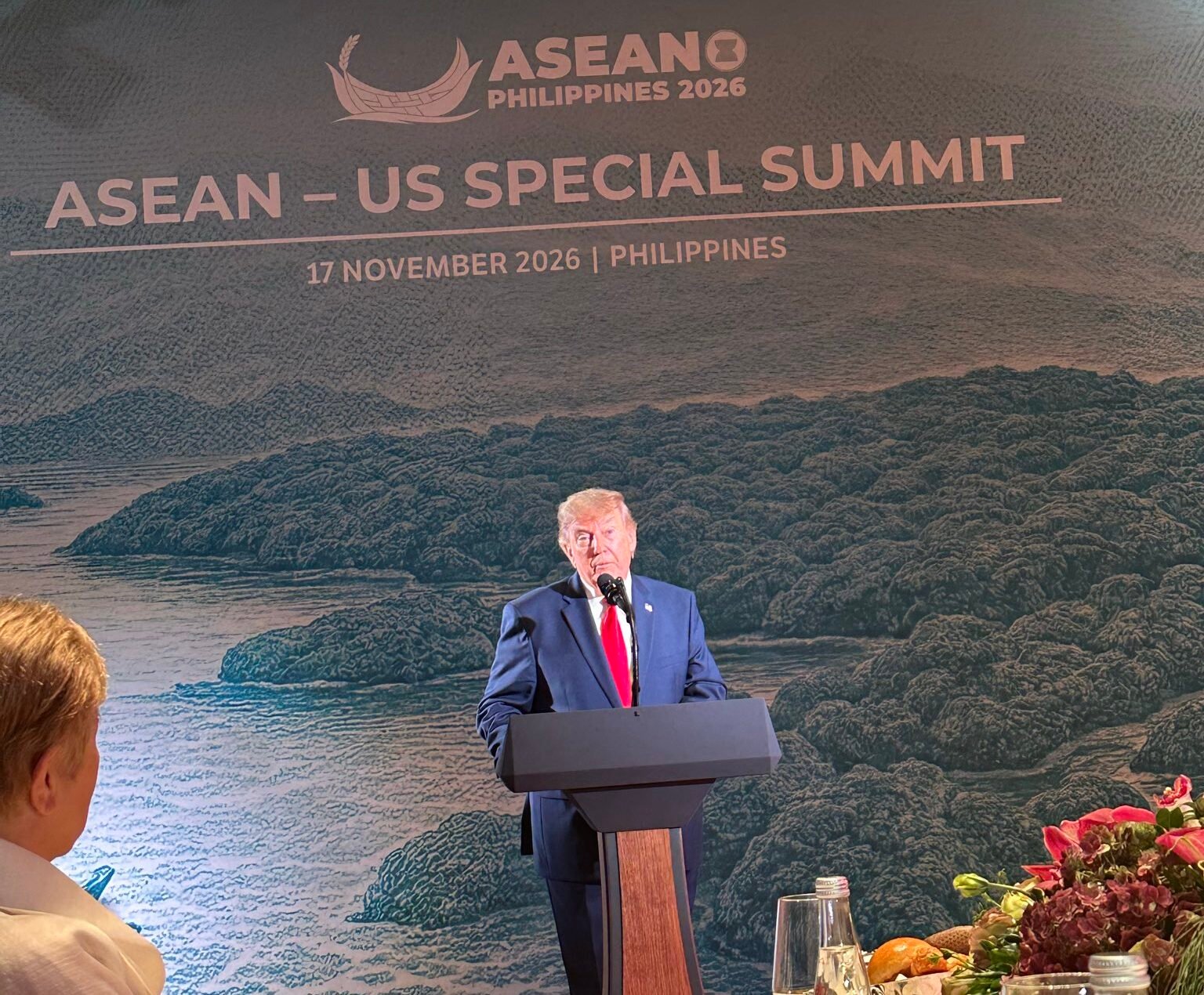
MANILA, Phillipines: From Washington’s internal policy divisions and trade diplomacy to strategic competition with China, ASEAN centrality and the possibility of renewed engagement with North Korea, Donald Trump’s Asian tour exposes the contradictions shaping America’s Indo-Pacific strategy. As regional leaders reaffirm multilateralism in Manila, the emerging contest is no longer simply about American and Chinese influence, but about who will shape the rules of an increasingly multipolar Asia.
The Indo-Pacific is rapidly emerging as the principal theatre in which the future balance of global power will be determined. Economic interdependence, military competition, technological rivalry and maritime security are converging to redefine international relationships. Against this backdrop, US President Donald Trump’s Asian tour represents considerably more than a diplomatic exercise. It is a test of Washington’s ability to preserve its strategic influence in a region where China’s economic weight, ASEAN’s diplomatic relevance and the growing ambitions of regional powers are reshaping the international order.
Trump’s engagements in Manila, his anticipated high-level diplomacy in China with President Xi Jinping and Russian President Vladimir Putin, and the possibility of renewed contact with North Korean leader Kim Jong Un illustrate an American foreign policy increasingly characterised by personalised diplomacy, economic bargaining and strategic unpredictability. Yet beneath the diplomatic spectacle are significant contradictions within the administration itself. Disagreements over China policy, competing approaches to international trade and speculation about the Republican Party’s future leadership reveal that Washington’s external ambitions are accompanied by unresolved domestic political and strategic questions.
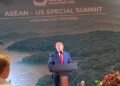
The 21st East Asia Summit (EAS), held in Manila on November 17, 2026, provides an important regional context for understanding these developments. Its declaration, Navigating Our Future, Together: Stability and Renewal, reaffirms ASEAN centrality, multilateralism, maritime security and economic resilience. At a time when major powers are increasingly relying on economic leverage and strategic competition, the declaration represents a regional commitment to diplomacy, institutional cooperation and international law. The fundamental question is whether American engagement will strengthen this cooperative architecture or intensify the uncertainties confronting the Indo-Pacific.
China remains the defining strategic challenge of Trump’s Asian diplomacy. His anticipated meeting with Xi Jinping carries implications far beyond bilateral trade negotiations. Semiconductor exports, artificial intelligence, critical minerals, investment restrictions, supply-chain security and regional influence have transformed the US-China relationship into a contest over the technological and economic foundations of future global power.
However, the disagreement between Treasury Secretary Scott Bessent and Commerce Secretary Howard Lutnick exposes the absence of a consistent approach within Washington. Bessent supports stronger restrictions against companies suspected of diverting advanced Nvidia chips to China, reflecting concerns that access to advanced computing technology could strengthen Beijing’s military and strategic capabilities. Lutnick, meanwhile, has cautioned against measures that could reignite a damaging trade confrontation with Beijing.
This disagreement represents a fundamental dilemma in American foreign policy: whether China should be treated primarily as an economic competitor requiring managed coexistence or a strategic rival requiring sustained technological containment. Both approaches carry economic and geopolitical consequences. Excessive restrictions could accelerate China’s efforts to establish independent technological ecosystems, while unrestricted commercial engagement could expose sensitive American technologies to strategic vulnerabilities. Trump’s willingness to act as the ultimate referee may temporarily contain the dispute, but Beijing will be assessing whether Washington can negotiate consistently when its own senior policymakers disagree over the objectives of engagement.
The semiconductor controversy also illustrates how economic interdependence has become a strategic instrument. Technology is no longer simply a commercial commodity; it determines industrial competitiveness, military modernisation and national security. The country capable of controlling critical technologies, manufacturing capabilities and supply chains will possess considerable influence over the emerging international economic architecture.
Trade diplomacy provides another insight into Trump’s transactional approach. His announcement of a major trade agreement with the Philippines, described by him as the biggest trade deal concluded by the United States, was subsequently characterised by Manila as an understanding on economic cooperation. The Philippine ambassador also confirmed that no agreement had been signed. Trump highlighted prospective benefits for American farmers and the energy sector, but the absence of a formal document and publicly detailed commitments raises questions about market access, tariffs, implementation and reciprocal obligations.
His separate announcement that Thailand would remove tariffs and substantial non-tariff barriers on American imports similarly reflects Washington’s emphasis on securing commercial concessions. However, Southeast Asian countries cannot organise their economic futures exclusively around American priorities. China remains deeply integrated into regional manufacturing, trade and investment networks, while the United States continues to be an important source of technology, capital and security cooperation. Their preference for diversified partnerships is therefore not diplomatic indecision but a strategy for protecting economic sovereignty.
The long-term credibility of American economic diplomacy will depend not simply on the concessions Washington secures, but on whether its commitments remain predictable, reciprocal and institutionally sustainable. Trade announcements can generate immediate political momentum, but lasting influence requires agreements that deliver measurable economic benefits.
The Manila Declaration carries particular significance because it offers a regional perspective beyond the traditional Washington-Beijing rivalry. By reaffirming ASEAN centrality, participating countries have underscored the importance of maintaining an inclusive regional architecture in which dialogue, international law and peaceful dispute resolution remain central to managing geopolitical competition. The declaration recognises that regional stability cannot be secured through bilateral relationships alone when maritime disputes, technological vulnerabilities, economic uncertainties and transboundary security challenges increasingly overlap.
Its reaffirmation of the United Nations Charter, ASEAN Charter and Treaty of Amity and Cooperation, alongside adherence to the 1982 United Nations Convention on the Law of the Sea, reflects the continuing importance of rules-based mechanisms. Maritime security is especially consequential because the Indo-Pacific contains some of the world’s most important shipping routes, connecting manufacturing centres, energy suppliers and international markets. Any disruption to freedom of navigation, overflight or lawful maritime commerce could generate economic consequences extending far beyond Southeast Asia.
Equally significant is the declaration’s recognition that security is no longer exclusively military. Energy interconnectivity, critical minerals, food security, healthcare, digital infrastructure and artificial intelligence have become essential components of regional resilience. Support for the ASEAN Power Grid, improved transport connectivity, responsible AI governance, digital literacy and secure cross-border data flows reflects an understanding that economic security and strategic stability are increasingly inseparable. Cooperation against online scams, human trafficking, cybercrime and digital exploitation also demonstrates the expanding definition of regional security.
The declaration’s emphasis on narrowing development gaps, protecting migrant workers, eradicating poverty, strengthening disaster preparedness and expanding climate resilience adds an important developmental dimension. Regional stability cannot be sustained through strategic arrangements alone; it must also deliver employment, infrastructure, energy access and economic opportunities. Nevertheless, ASEAN’s greatest challenge remains implementation. Centrality cannot be maintained through diplomatic declarations without institutional unity, practical cooperation and the ability to manage differences among member states. Southeast Asia is not merely a geographical arena for American competition with China. It is an increasingly influential region with its own priorities, institutions and strategic agency.
The possibility of a meeting between Trump and Kim Jong Un introduces another dimension to the tour. During his first presidency, Trump held three high-profile meetings with the North Korean leader, creating unprecedented diplomatic visibility but failing to produce a comprehensive agreement on North Korea’s nuclear weapons programme. Renewed personal engagement could reopen communication channels, but a meaningful breakthrough would require a credible framework addressing nuclear capabilities, sanctions, security guarantees and regional stability. Kim’s apparent lack of interest in the proposed initiative, with reports placing him at a ski resort near the Chinese border, also highlights the limitations of presidential diplomacy. A summit requires strategic incentives on both sides, not merely an invitation from Washington. China’s political and economic influence over Pyongyang would remain indispensable to any sustainable arrangement.
Meanwhile, Trump’s repeated public praise of Secretary of State Marco Rubio has introduced another political dimension. Speculation about a possible 2028 Republican presidential contest between Rubio and Vice President JD Vance reflects a broader debate about the future direction of American foreign policy. Rubio’s diplomatic experience, international profile and connections with traditional American allies offer a different political proposition from Vance’s association with economic nationalism, domestic priorities and scepticism towards overseas commitments. Neither has formally announced a presidential campaign, but their contrasting profiles illustrate an unresolved question: will the Republican Party continue Trump’s personalised transactional diplomacy or move towards a more conventional internationalist approach? Trump’s public praise of Rubio may indicate political confidence, but it should not automatically be interpreted as a succession decision.
The domestic developments accompanying the tour also expose the vulnerabilities of modern interconnected societies. Widespread service outages affecting flights, online banking, Microsoft and other services prompted concern among Trump’s political allies and calls from congressional Republicans for greater government transparency. While Trump dismissed the disruptions as manageable, the concerns expressed by former White House press secretary Karoline Leavitt and Vice President Vance demonstrated how deeply digital infrastructure has become embedded in everyday economic and national security systems. Financial services, transportation, communications and government operations increasingly depend on interconnected platforms. Their vulnerability raises important questions about cybersecurity, technological resilience and critical infrastructure protection.
The unexpected appearance of a Harry Houdini documentary on Air Force One television screens during the flight to Manila offered a lighter but revealing glimpse into the personalised atmosphere surrounding Trump’s presidential journey. The Hungarian-born escape artist, who died in 1926 and is buried in Trump’s native Queens, New York, became an unusual television feature before the screens returned to Fox News coverage. Although anecdotal, the episode reflects how Trump’s public diplomacy frequently combines political messaging, personal interests and media spectacle. Yet international credibility cannot rest on spectacle. It requires institutional coordination, policy consistency and confidence among international partners.
Perhaps the most consequential development is the growing determination of Asian countries to protect their strategic autonomy. The Indo-Pacific can no longer be adequately understood through a simplistic American-versus-Chinese framework. India, Japan, Australia, South Korea and ASEAN member states possess independent economic interests, security priorities and diplomatic calculations. India’s expanding economic influence, maritime interests and commitment to strategic autonomy make it particularly important to the emerging regional balance. For New Delhi, engagement with Washington remains valuable, but constructive relations with ASEAN, Russia, Japan, Australia and other international partners are equally relevant.
The Manila Declaration reinforces this diversified diplomatic architecture through its emphasis on resilient supply chains, energy connectivity, infrastructure development, food security and technological partnerships. Its developmental priorities also recognise that smaller and middle-income economies are often more concerned with investment, employment, affordable energy, trade access and economic security than with choosing sides in great-power competition. Their diplomatic calculations will increasingly depend on which partnerships deliver sustainable development rather than political pressure.
Ultimately, Trump’s Asian tour captures the contradictions of contemporary international politics. Washington seeks to preserve its influence, secure favourable trade arrangements, manage competition with China and retain diplomatic flexibility towards North Korea. Yet disagreements within the administration complicate the development of a coherent long-term strategy. The Manila Declaration, meanwhile, advances a vision of regional stability based on ASEAN centrality, multilateral engagement, international law and interconnected economic resilience.
The decisive test for Trump will not be the number of leaders he meets or the agreements he announces, but whether diplomatic visibility can be translated into durable economic partnerships, credible security arrangements and predictable international engagement. Similarly, ASEAN’s credibility will depend on converting its declarations into practical outcomes.
The Indo-Pacific is entering a defining period in which power is increasingly distributed, alliances are becoming more complex and economic interdependence is both an opportunity and a vulnerability. The most influential actors will not necessarily be those dominating international headlines, but those capable of building trust, managing differences and delivering shared outcomes. The future of Asia will not be determined by Washington and Beijing alone. It will increasingly be shaped by the strategic choices, collective leadership and diplomatic independence of regional powers in an emerging multipolar world.
– Khanh Vu