

DOHA, Qatar: The World Investment Forum 2026 has placed a growing contradiction at the centre of the global development debate: international investment is recovering, yet the economies that need capital most continue to face substantial barriers to financing infrastructure, energy, healthcare, food systems and digital transformation. The forum’s proposals on risk-sharing, artificial intelligence infrastructure and investment policy reform seek to address this imbalance, but their ultimate impact will depend on whether they generate additional investment rather than simply new commitments and institutional partnerships.
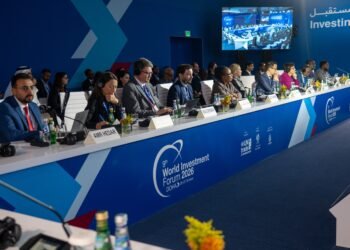
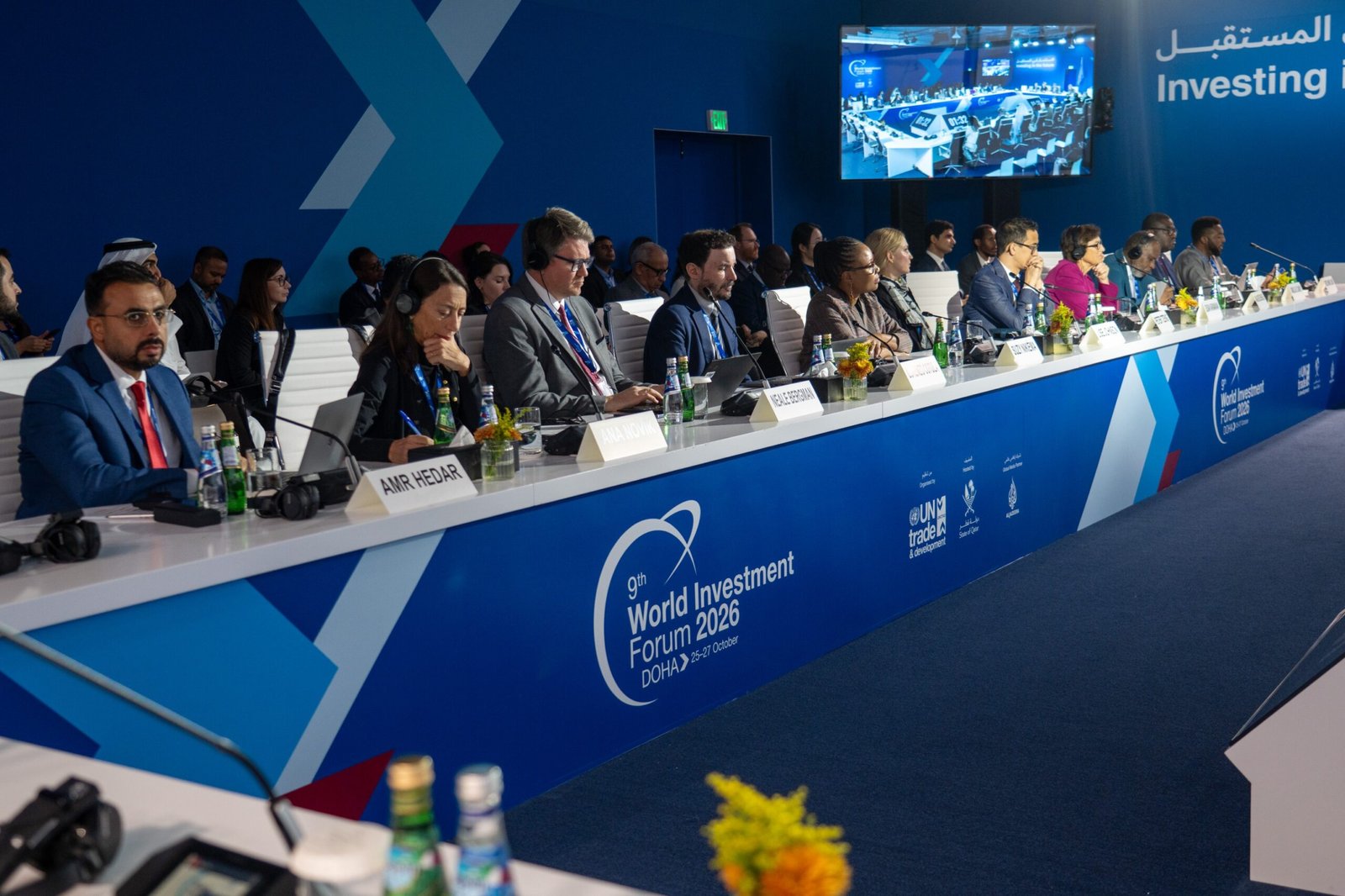
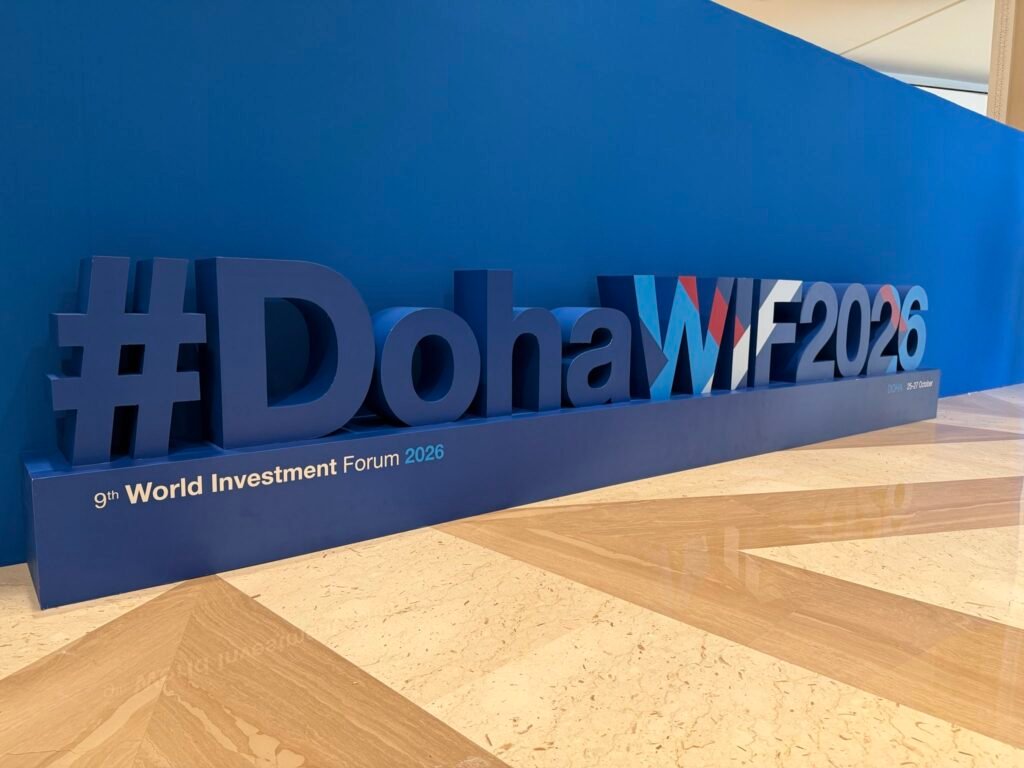
Organised by UN Trade and Development (UNCTAD) and hosted by Qatar, the ninth World Investment Forum brought together more than 7,000 participants, including government leaders, ministers, investors, development finance institutions and business representatives. Its deliberations took place against a backdrop of increasingly concentrated capital flows, geopolitical uncertainty and rising competition among countries to attract investment in strategic sectors.
UNCTAD’s World Investment Report 2026 provides an important measure of the challenge. Global foreign direct investment (FDI) increased by 6% to $1.6 trillion in 2025, ending two years of decline. However, the recovery was uneven: developed economies recorded an 11% increase in inflows, while developing economies experienced growth of only 2%, reaching $901 billion. More than 80% of global FDI went to just 20 economies, highlighting how international capital continues to favour established financial centres and markets with stronger infrastructure, deeper capital pools and more predictable investment environments.
The latest investment trends underline the difference between a recovery in headline figures and a recovery in development opportunities. UNCTAD’s Global Investment Trends Monitor No. 51, released on October 25, 2026, reported a 37% increase in international investment during the first half of the year compared with the average half-year level in 2025. Yet announcements of new projects in sectors critical to sustainable development fell by more than 25% in developing countries, based on annualised 2026 figures. The contrast suggests that stronger financial flows are not automatically translating into a broader pipeline of productive projects.
This distinction matters because development depends on more than the movement of capital between financial markets. New factories, electricity networks, renewable energy installations, transport links, hospitals and digital infrastructure require long-term investment that creates productive capacity and employment. When financial transactions increase but new project announcements decline, countries can experience an apparent investment recovery without securing the infrastructure needed for sustained economic growth.
One of the principal outcomes of the Doha forum was a proposed Global Initiative for Investment Risk Sharing, intended to improve the availability of instruments that reduce risks and make projects in underserved markets more attractive to investors. The proposal encourages cooperation among governments, development finance institutions, export credit agencies, insurers and private investors. A separate declaration of intention between UNCTAD and the Berne Union, the international association of export credit and investment insurers, seeks to strengthen cooperation on investment insurance and risk mitigation.
The underlying problem is structural. Investors assess potential returns alongside currency volatility, political instability, regulatory uncertainty, borrowing costs and the ability of governments or project operators to meet contractual obligations. These risks can make otherwise valuable projects financially unviable, particularly in smaller and lower-income economies. Risk-sharing instruments can help bridge the gap by distributing exposure among institutions better equipped to absorb it.
However, guarantees and insurance are not substitutes for sound economic governance. If public institutions assume excessive risks to attract private investors, governments may inherit significant liabilities when projects fail. The critical question is therefore whether these mechanisms mobilise genuinely additional investment at a reasonable public cost, while ensuring that projects deliver measurable benefits to host economies.
The forum also addressed the growing concentration of investment in artificial intelligence infrastructure. Data centres, computing facilities and associated energy systems are becoming central to the digital economy, but their development requires substantial capital, reliable electricity, advanced telecommunications and skilled labour. Economies lacking these foundations risk becoming consumers of technologies developed elsewhere rather than participants in the industries shaping the next phase of global growth.
UNCTAD’s latest monitoring report indicated that announced investment in data centres in developing economies fell by $32 billion. In response, the Digital Infrastructure Investment Catalyser, convened by UNCTAD, the International Telecommunication Union and the World Bank, expanded its partnerships and introduced resources to help countries prepare projects and attract financing. A forthcoming Digital and AI Infrastructure Investment Playbook is intended to assist low- and lower-middle-income countries in assessing infrastructure requirements, developing investment plans and preparing financeable projects.
The initiative recognises that attracting technology investment requires more than offering incentives to international companies. Governments must assess electricity capacity, water availability, connectivity, cybersecurity, skills development and the potential economic returns from digital infrastructure. Without these considerations, data centres could impose substantial demands on local resources while generating limited employment or technological spillovers. The development objective must be to build domestic capabilities and enable local businesses to participate in digital value chains, not simply to host foreign-owned infrastructure.
Vulnerable economies face a different but equally persistent challenge. Small island developing States often combine limited domestic markets with high financing costs, climate exposure and dependence on a narrow range of industries. The expanded UNCTAD Ocean Economy and Small Island Developing States Fund aims to support investment in ocean-related activities. Its first funded project, in São Tomé and Príncipe, will focus on marine and coastal tourism and related environmental and digital services. Additional partnerships seek to develop opportunities in emerging ocean industries, including seaweed production and value addition.

Such projects could support economic diversification, but their success will depend on environmental safeguards, local ownership, workforce development and the distribution of revenues. Coastal tourism or marine industries cannot provide lasting resilience if investment damages ecosystems or leaves communities with only a limited share of the economic gains. For vulnerable countries, the quality and structure of investment can be as important as its volume.
The forum’s policy agenda also included guiding principles for reforming international investment agreements. The objective is to strengthen predictability for investors while preserving governments’ ability to pursue development priorities and regulate in the public interest. This balance is increasingly consequential as international competition intensifies around critical minerals, renewable energy and strategic technologies. Countries need investment rules that encourage long-term commitments without unnecessarily restricting policies designed to develop domestic industries, protect the environment or improve economic resilience.
Additional agreements announced in Doha cover regional investment promotion, tourism, creative industries and technical assistance. New reports on investment trends in the Caribbean, the Eurasian Economic Union and the Gulf Cooperation Council are intended to provide evidence for policy decisions. Together, these initiatives form part of the Doha Global Investment Action Framework, which brings together more than 20 outcomes across six priority areas.
The wider challenge, however, cannot be solved through institutional announcements alone. Developing countries need a stronger pipeline of well-prepared projects, reliable regulatory frameworks, capable investment agencies and coordination between foreign investment and domestic industrial strategies. International institutions can provide expertise and financing mechanisms, but national governments must ensure that projects align with economic priorities and produce measurable outcomes.
The Doha forum has therefore identified important barriers to development finance, but the decisive test will be implementation. Risk-sharing mechanisms must mobilise additional capital without creating unsustainable public liabilities. Digital investment must strengthen local capabilities, while ocean-economy projects must generate inclusive and environmentally responsible growth. Investment reforms must also preserve the policy space needed for long-term development.
As geopolitical competition increasingly shapes where capital flows, developing economies face the danger of being excluded from the sectors that will define future prosperity. The World Investment Forum’s central proposition is that international cooperation can help correct this imbalance. Whether it succeeds will depend not on the volume of declarations made in Doha, but on whether countries that remain underserved by global capital begin to secure more productive investment, stronger infrastructure and lasting economic opportunities.
-With Input from WNN, Doha, Dr. Shahid Siddiqui
READ THE FULL E-MAGAZINE | WorldAffairs: The Forces Reshaping Power, Markets, and the Global Order