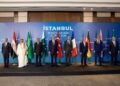


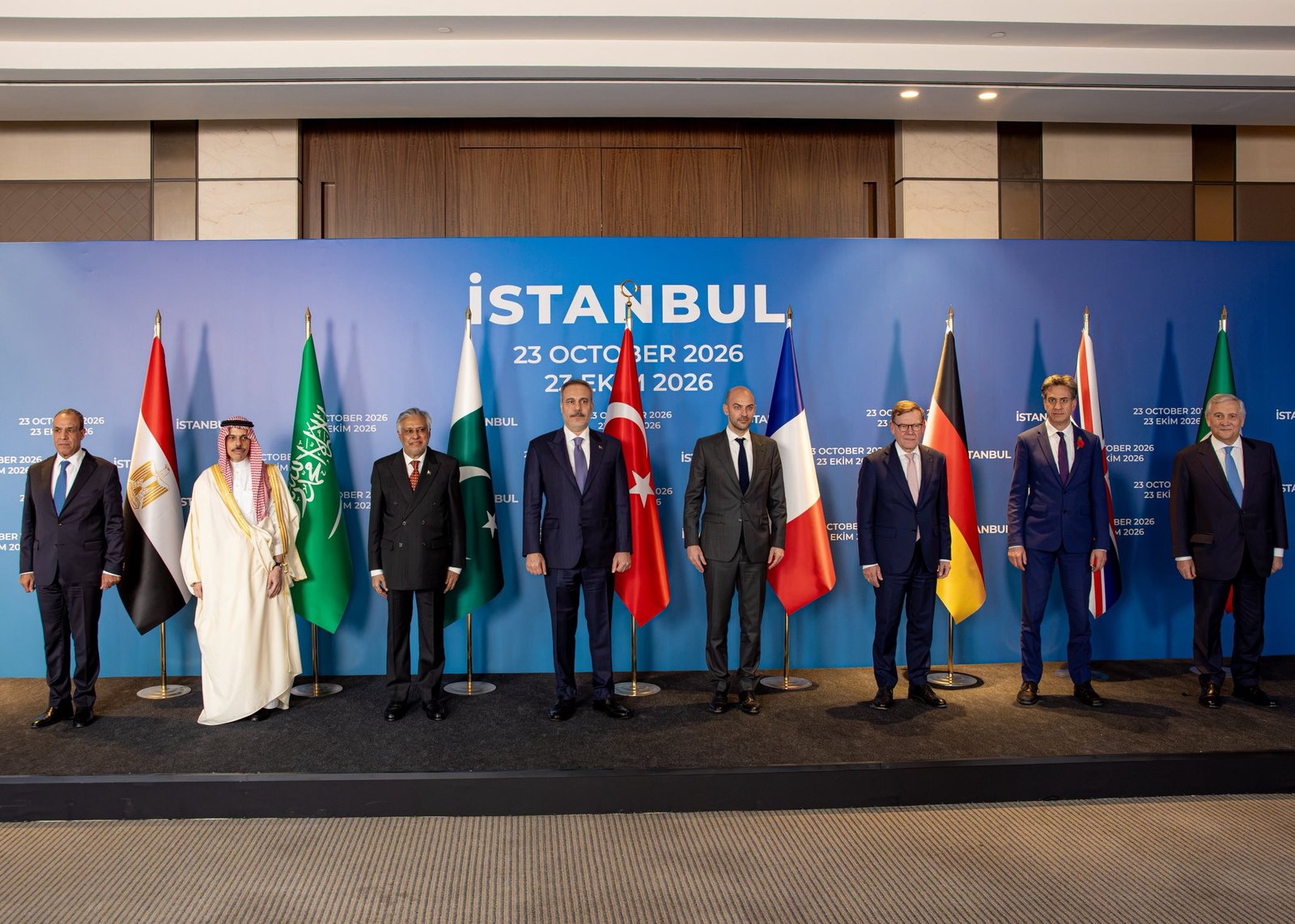
ISTANBUL | Turkiye: The significance of the Istanbul diplomatic meeting on 23 October lies not simply in the presence of Saudi Arabia’s foreign minister alongside his European counterparts, but in the emergence of a wider diplomatic arrangement connecting four regional powers with four major European countries at a moment of acute geopolitical instability. Saudi Foreign Minister Prince Faisal bin Farhan Al Saud joined representatives of Türkiye, Egypt and Pakistan for discussions with the foreign ministers of the United Kingdom, France, Germany and Italy. Their agenda ranged from the US–Israel–Iran conflict and the Israeli–Palestinian question to attacks affecting Saudi Arabia and Yemen, freedom of navigation through the Strait of Hormuz and Bab el-Mandeb, and growing risks to Black Sea security. The meeting’s stated commitment to continued dialogue raises a larger question: can this cross-regional format translate diplomatic coordination into tangible progress on conflicts that threaten energy supplies, international trade and regional stability?
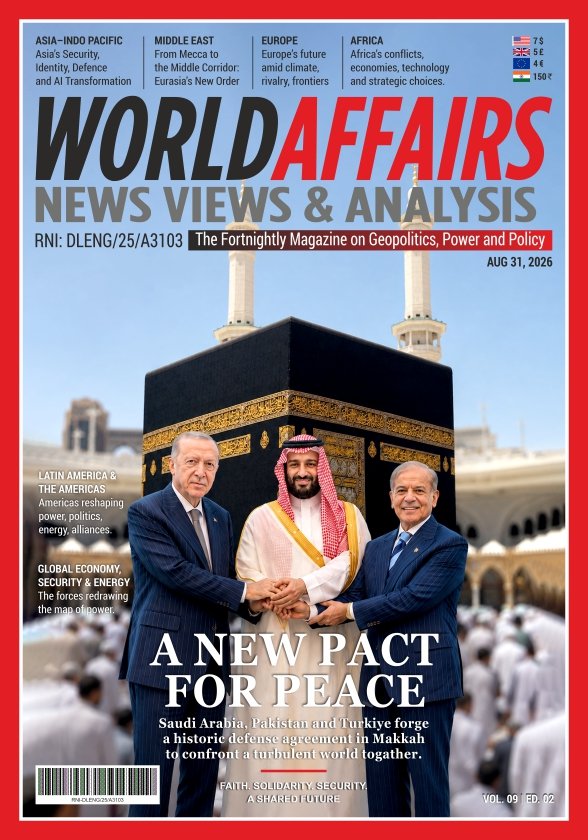
The meeting marks an important development in the relationship between European powers and influential Middle Eastern and neighbouring countries. Yet its importance must be understood precisely. This was not merely a gathering of Saudi Arabia and four European states. It brought together the R4 grouping—Saudi Arabia, Türkiye, Egypt and Pakistan—with the four European participants, creating an expanded diplomatic format capable of connecting regional perspectives with European economic and security interests.
That distinction matters. Europe’s ability to influence developments in the Middle East depends partly on its engagement with countries that possess direct regional relationships, diplomatic access and their own security concerns. Conversely, regional powers face economic and strategic consequences from conflicts that cannot be contained within their immediate neighbourhoods. The Istanbul meeting recognised this interdependence, although recognition alone does not guarantee a common approach.
The immediate urgency comes from the growing connection between regional conflict and the security of international shipping. The Strait of Hormuz is a critical passage for global oil and gas supplies, while Bab el-Mandeb links the Red Sea with the Gulf of Aden and the wider maritime routes leading towards the Suez Canal. Disruption at either chokepoint can raise transport costs, complicate energy deliveries, increase insurance premiums and place additional pressure on global supply chains. Instability in the Black Sea creates a parallel risk for grain shipments and other essential commodities.
Germany’s Foreign Office highlighted these interconnected vulnerabilities ahead of the meeting, noting that approximately one-fifth of global oil consumption is transported through the Strait of Hormuz and that attacks and insecurity around Bab el-Mandeb threaten a significant share of maritime trade. These routes are not simply regional concerns: their security affects import-dependent economies, manufacturers, consumers and food markets worldwide.
For Saudi Arabia, the stakes are especially direct. The kingdom is a major energy producer whose economic transformation requires predictable trade, investment and regional security. Its Vision 2030 ambitions depend on the confidence of investors, the reliability of commercial networks and the ability to maintain economic development despite geopolitical uncertainty. Escalation around the Gulf can therefore threaten not only energy exports but also tourism, logistics, infrastructure investment and the broader economic diversification agenda.
The kingdom also faces a security challenge closer to home. The Istanbul joint statement condemned Houthi attacks affecting Saudi Arabia and the Yemeni government, while the participants discussed the wider implications for regional stability and maritime navigation. Their response reflected a shared interest in preventing attacks and conflict from expanding into a broader confrontation.
Saudi Arabia consequently has a strong incentive to combine deterrence and security cooperation with diplomatic efforts to prevent further escalation. But Riyadh cannot secure its interests through European engagement alone. Regional diplomacy, communication with opposing parties and credible mechanisms for reducing the risk of renewed hostilities remain essential.
This is where the R4–E4 format could become more consequential. Its value lies in bringing together countries that occupy different positions within the regional and international system. Britain, France, Germany and Italy have substantial economic interests, diplomatic relationships and security commitments extending across the Middle East. Saudi Arabia, Türkiye, Egypt and Pakistan possess their own regional priorities, bilateral channels and political relationships.
These countries do not necessarily share identical views on Iran, Israel, Palestine, Yemen or the appropriate balance between sanctions, deterrence and negotiation. Nor should their participation be interpreted as evidence of a unified strategic bloc. The more realistic opportunity is to create a platform through which disagreements can be addressed while areas of common interest are identified.
The Istanbul meeting’s call for dialogue, diplomacy and de-escalation is therefore significant, but it should be judged against a demanding standard. Can the participants help prevent renewed military escalation? Can they protect civilian maritime traffic? Can they support credible political processes in Yemen and the Israeli–Palestinian conflict? Can they maintain communication when their respective national interests diverge?
The answers will determine whether the format becomes an effective diplomatic mechanism or remains an occasional gathering with limited influence over events. Europe, meanwhile, must confront a broader strategic reality. Its economic weight does not automatically translate into decisive influence over Middle Eastern conflicts. European governments can impose sanctions, provide humanitarian assistance, support international institutions and engage in diplomatic negotiations. However, sustainable outcomes often require the participation of regional actors whose interests, relationships and security calculations directly shape the conflict environment.
A more effective European approach would therefore combine political engagement with practical cooperation on maritime security, humanitarian relief, energy resilience and negotiated conflict resolution. It would also require coordination among European capitals themselves. Britain, France, Germany and Italy have overlapping interests but do not always adopt identical policies towards the Middle East. Their participation in a common format offers an opportunity to narrow those differences without assuming that they have disappeared.
Saudi Arabia’s role is equally complex. Riyadh is seeking to preserve its security, diversify its economy and strengthen its position as a diplomatic actor. Maintaining relationships with European powers while engaging with regional partners reflects an effort to retain strategic flexibility in an increasingly multipolar world.
Such flexibility can be valuable, but it is not an end in itself. Diplomatic influence must ultimately be demonstrated through outcomes. Saudi Arabia’s ability to contribute to de-escalation, encourage constructive engagement and support arrangements that reduce the risk of wider conflict will matter more than the number of international meetings it attends.
The participation of Türkiye, Egypt and Pakistan further broadens the significance of the format. Each brings distinct relationships and interests to regional diplomacy. Türkiye has direct security concerns around the Black Sea and the Middle East; Egypt is closely affected by developments around the Red Sea, Gaza and the Suez Canal; and Pakistan has its own regional security interests and diplomatic relationships. Their participation provides additional channels for consultation, although it does not guarantee agreement on every issue.
The Palestinian question remains an important test. The joint statement emphasised the need for a negotiated two-state solution, reflecting the participants’ stated commitment to a political settlement consistent with relevant United Nations resolutions. Yet the distance between diplomatic consensus and implementation remains substantial. A durable settlement requires more than declarations: it demands sustained negotiations, security arrangements, political legitimacy, humanitarian protection and credible steps towards Palestinian self-determination alongside Israel’s security.
The same principle applies to the wider regional confrontation involving Iran. The Istanbul participants identified the conflict and its regional consequences as a central concern and stressed the urgency of resolving outstanding conflicts through dialogue and diplomacy. Avoiding another cycle of escalation will require communication between the principal parties, credible security assurances and an understanding that military confrontation can produce costs extending far beyond the immediate battlefield.
The Black Sea adds another dimension. Security risks affecting shipping there demonstrate that maritime vulnerability is not confined to the Middle East. Energy, food and industrial supply chains connect regions that may appear geographically distant but are economically interdependent. A crisis in one corridor can compound disruptions elsewhere, increasing costs for countries that have little influence over the original confrontation.
This wider picture makes maritime security a potential area for practical cooperation. The participants could strengthen information-sharing, coordinate diplomatic initiatives to protect civilian shipping, support international maritime law and explore mechanisms to reduce the risks faced by commercial vessels. Any operational initiative would require clear legal authority, appropriate coordination and careful management of escalation risks. The priority should be safe passage and de-escalation rather than measures that inadvertently widen the conflict.
The economic dimension is equally important. Energy markets react not only to actual supply disruptions but also to the possibility of future instability. Prolonged uncertainty can discourage investment, increase freight and insurance costs and complicate national planning. For Europe, which has sought to diversify energy sources and strengthen resilience, instability around major maritime routes remains a serious economic concern. For Saudi Arabia and other regional economies, secure shipping is integral to maintaining exports, investment confidence and development plans.
Nevertheless, neither Europe nor Saudi Arabia should treat energy cooperation as a substitute for political solutions. Greater diversification, renewable energy, strategic reserves and resilient supply chains can reduce vulnerability, but they cannot remove the need to address the conflicts that threaten maritime security in the first place.
The Istanbul meeting has created an opportunity to connect these security and economic questions within a continuing diplomatic process. The participants agreed to maintain dialogue in the format, with the stated aim of preventing conflicts and advancing peace and stability. That commitment is a useful beginning, but its credibility will depend on the frequency of follow-up consultations, the clarity of shared priorities and the ability to respond when circumstances deteriorate.
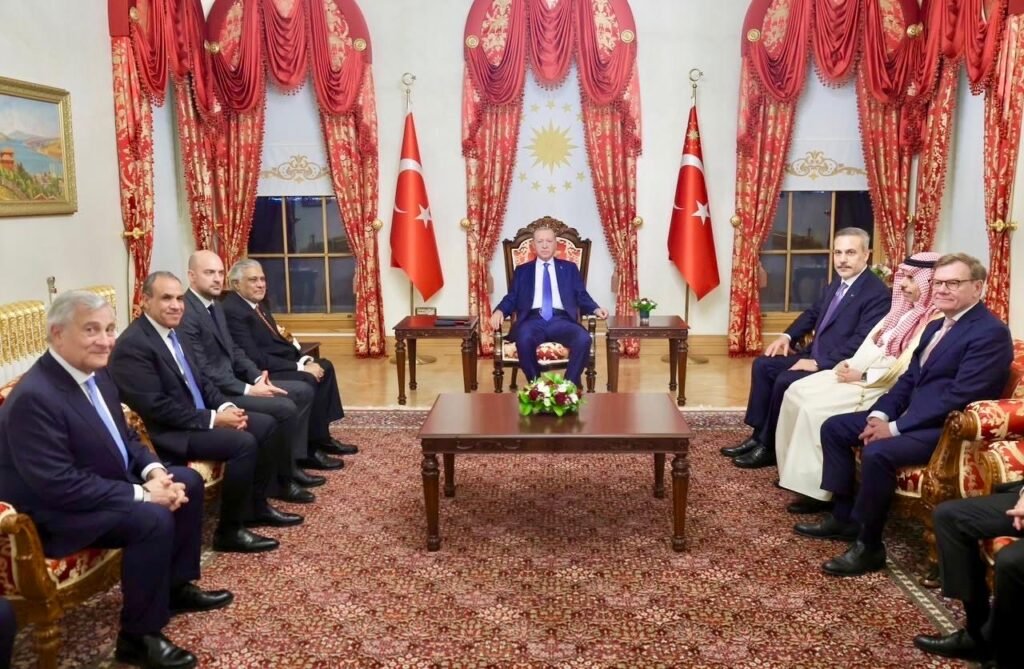
The central risk is that diplomatic symbolism could outpace practical achievement. Multilateral meetings can demonstrate political resolve without changing the calculations of parties engaged in conflict. They can also produce broad statements whose language conceals unresolved differences over responsibility, enforcement and the conditions required for a settlement.
The test, therefore, is not whether the R4–E4 participants can agree that stability is desirable. Almost every government has an interest in avoiding the economic and security consequences of a wider regional war. The more difficult question is whether they can agree on practical steps, sustain pressure for de-escalation and use their different diplomatic relationships to encourage meaningful negotiations.
For Saudi Arabia, the meeting offers a chance to strengthen its role in regional diplomacy while keeping its economic transformation insulated, as far as possible, from external shocks. For Europe, it provides a route to engage more directly with influential regional powers. For the wider international community, it offers a reminder that the security of maritime trade routes and the prevention of regional conflict are shared responsibilities.
But a new diplomatic format is not, by itself, a new regional order. Its success will depend on whether governments can move beyond consultation towards sustained action while respecting international law and the legitimate security concerns of affected states. The Istanbul meeting should therefore be understood as an opening rather than a breakthrough. It has brought together countries with overlapping interests at a moment when the costs of continued instability are rising. The next challenge is to translate that convergence into a credible diplomatic process.
In a fragmented international system, strategic influence increasingly depends on the ability to work across competing alignments. Saudi Arabia and its regional partners do not need to share every European preference, just as European governments need not adopt every regional position, to cooperate on preventing escalation and protecting international trade.
The real measure of this emerging diplomatic equation will be whether it helps make conflict less likely, maritime routes more secure and negotiated settlements more attainable. If the R4–E4 format can deliver progress in those areas, it may become a meaningful instrument of cross-regional diplomacy. If not, it risks becoming another high-level initiative whose ambitions exceed its results.
The world does not need more diplomatic meetings for their own sake. It needs forums capable of turning dialogue into decisions, decisions into action and action into a more stable international environment.
-Nurbanu Kizil