


OSLO, Norway: Israel’s furious response to the 2026 Nobel Peace Prize and Washington’s sanctions against the International Criminal Court have intensified a global confrontation over accountability, sovereignty and the future of international justice.
The Nobel Peace Prize is intended to honour those who advance peace, defend human dignity and challenge the abuse of power. Yet the 2026 award to South African jurist Navi Pillay has triggered a diplomatic confrontation extending far beyond one laureate. Israel has condemned the decision in extraordinary language, while the United States has imposed sanctions on the International Criminal Court (ICC). Together, these developments expose a fundamental question: can international law retain its authority when powerful states reject the institutions attempting to enforce it?
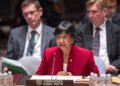
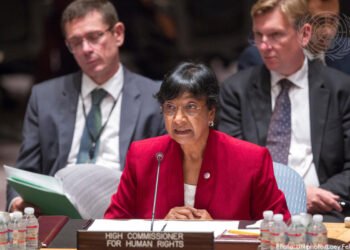
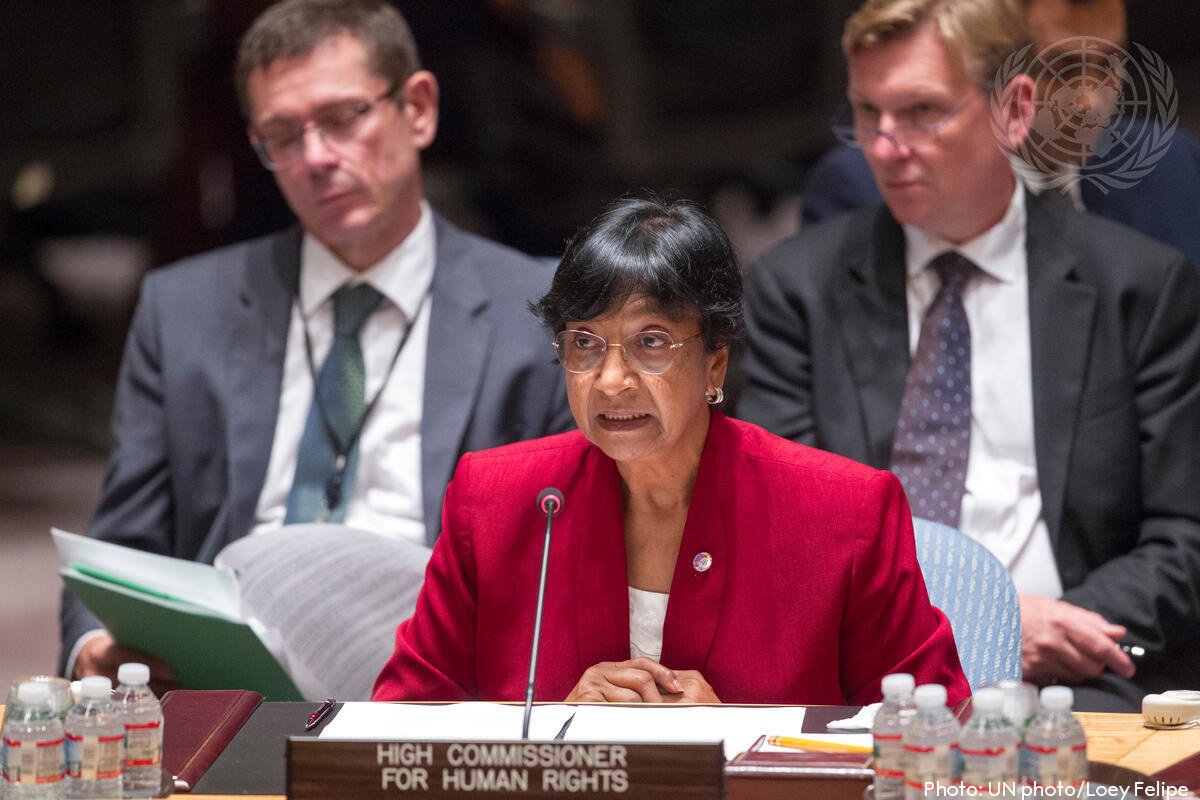
Pillay’s career spans the struggle against apartheid, international criminal justice and the defence of human rights. She served as a judge of the International Criminal Tribunal for Rwanda, an ICC judge and United Nations high commissioner for human rights. Her work has placed her at the centre of some of the most consequential debates about accountability for mass atrocities. The Nobel recognition has consequently acquired significance beyond an individual achievement, arriving at a moment when international institutions face mounting political pressure over their investigations into the Gaza war.
Israel’s reaction was immediate and fiercely critical. Its Foreign Ministry described the award as a grotesque weaponisation of the Nobel Prize to legitimise anti-Israel hatred and prejudice, invoking Nazi propagandist Joseph Goebbels. The language reflected the intensity of Israeli opposition to Pillay’s leadership of a United Nations-backed commission that concluded in 2025 that Israel had committed genocide in Gaza.
Israel categorically rejects the allegation, describing it as politically motivated and antisemitic. Its government argues that its military campaign began in response to Hamas’s October 7, 2023, attack, when militants killed approximately 1,200 people and abducted 251 others. Israel maintains that it seeks to protect its population and that Hamas’s operations in densely populated areas contribute to civilian casualties. These security concerns cannot simply be dismissed. Neither, however, can they remove a state’s obligations under international humanitarian law.
The distinction between legitimate military objectives and unlawful conduct is precisely why independent investigations, evidence and judicial scrutiny matter. International law does not require the international community to disregard Israel’s security, just as Israel’s security concerns cannot automatically invalidate allegations of serious violations. Both propositions must withstand scrutiny.
Pillay’s commission based its findings on evidence concerning Palestinian deaths, restrictions on humanitarian assistance, destruction affecting healthcare and statements by Israeli officials that it interpreted as evidence of genocidal intent. Human rights organisations and other investigators have also documented grave allegations concerning the conduct of the war. Israel disputes these conclusions and argues that its military takes measures to minimise civilian casualties.
An essential legal distinction must nevertheless remain clear. A commission of inquiry’s conclusions are not equivalent to a final judicial judgment. The International Court of Justice (ICJ), in proceedings brought by South Africa against Israel under the Genocide Convention, has ordered provisional measures and directed Israel to fulfil its relevant obligations. The case has not been finally decided on the merits. Provisional measures do not constitute a final judicial determination that genocide has occurred. Preserving this distinction is indispensable to the credibility of international justice.
The controversy also reaches beyond Gaza. Pillay’s commission criticised Israel’s settlement expansion and policies in the occupied West Bank. In its landmark July 2024 advisory opinion, the ICJ concluded that Israel’s continued presence in the occupied Palestinian territory was unlawful and that its policies obstructed Palestinian self-determination. Israel has disputed international criticism and maintains that its historical, legal and security claims must be considered.
The wider confrontation acquired a more consequential dimension when Washington imposed sanctions on the ICC. The court strongly rejected the measures, describing them as an assault on the rule of law and the foundations of the international legal order. The timing intensified the political significance of the decision, linking the Nobel controversy to a broader struggle over the authority and independence of international institutions.
Washington has long opposed ICC actions it considers unjustified or directed against American or Israeli interests. Its position reflects concerns about jurisdiction, national sovereignty and the exposure of officials to proceedings before a court whose authority the United States does not accept in the relevant circumstances. These objections form part of a legitimate debate about the limits of international judicial power. Yet sanctions targeting a court’s personnel and operations raise a different question: whether political pressure can undermine the very processes through which allegations of international crimes are examined.
The ICC is a treaty-based institution supported by 125 states parties. Its work extends across multiple conflicts, investigating and prosecuting genocide, war crimes and crimes against humanity within its jurisdiction. Measures that obstruct its operations may have consequences well beyond any single investigation, affecting cooperation, evidence gathering and the pursuit of justice for victims.
International courts must operate within their legal mandates, respect due process and remain open to legitimate scrutiny. But institutional independence is equally essential. A judicial body cannot function effectively if its capacity to investigate alleged crimes depends on whether powerful governments find its work politically convenient. The answer is neither unconditional deference to international institutions nor the dismissal of their authority whenever their findings become uncomfortable. It is consistent adherence to lawful procedures and equal accountability.
Israel’s distrust of the United Nations predates the current war. Israeli officials have repeatedly accused UN bodies of applying disproportionate scrutiny to their country, pointing to the presence of governments with poor human rights records and what they consider persistent institutional bias. Such concerns deserve examination wherever credible evidence supports them. International organisations are not immune to political pressure, selective attention or flawed judgments.
But institutional shortcomings do not automatically invalidate every investigation or finding. Rejecting an entire body because its conclusions are unwelcome risks making accountability impossible. The stronger response is to challenge specific evidence, identify procedural failures and demand consistent standards. The same principle applies to Pillay’s Nobel recognition. The prize is not a judicial verdict on Israel, nor does it settle the legal questions surrounding Gaza. It recognises her contribution to international law and human rights, while leaving the relevant legal proceedings to their proper institutions.
For Palestinians, the credibility of international law is inseparable from the prospects of protection, accountability and political self-determination. For Israelis, lasting security requires more than military superiority or diplomatic support; it also depends on a regional order in which civilian protection, legal obligations and political solutions are taken seriously. Neither population benefits from a system in which accountability is determined exclusively by geopolitical alliances.
The deeper danger is the emergence of an international order in which legal accountability is welcomed when directed at adversaries and resisted when it reaches allies. Such selectivity would weaken the United Nations, undermine confidence in international courts and encourage governments to treat power as a substitute for law. The consequences would extend far beyond the Middle East, affecting the credibility of international institutions wherever civilians depend on them for protection.
The Nobel Prize controversy will not end the Gaza war’s consequences, restore devastated communities or resolve the Israeli-Palestinian conflict. Nor will sanctions settle the debate over the ICC’s authority. These challenges demand humanitarian access, credible investigations, respect for international law and renewed diplomatic efforts to secure a political future in which Israelis and Palestinians can live with security, rights and dignity.
Navi Pillay’s Nobel recognition has become a symbol of a larger struggle over who defines justice and whether international law can meaningfully constrain power. The real test is not whether governments applaud a particular laureate or endorse every international report. It is whether they accept that allegations must be investigated, evidence must be examined and legal obligations must apply consistently.
If international law protects only those who already possess power, it ceases to be a universal principle and becomes another instrument of geopolitics. That is the crisis this moment exposes and the challenge the international community can no longer afford to ignore.
-Anthony Krauss