



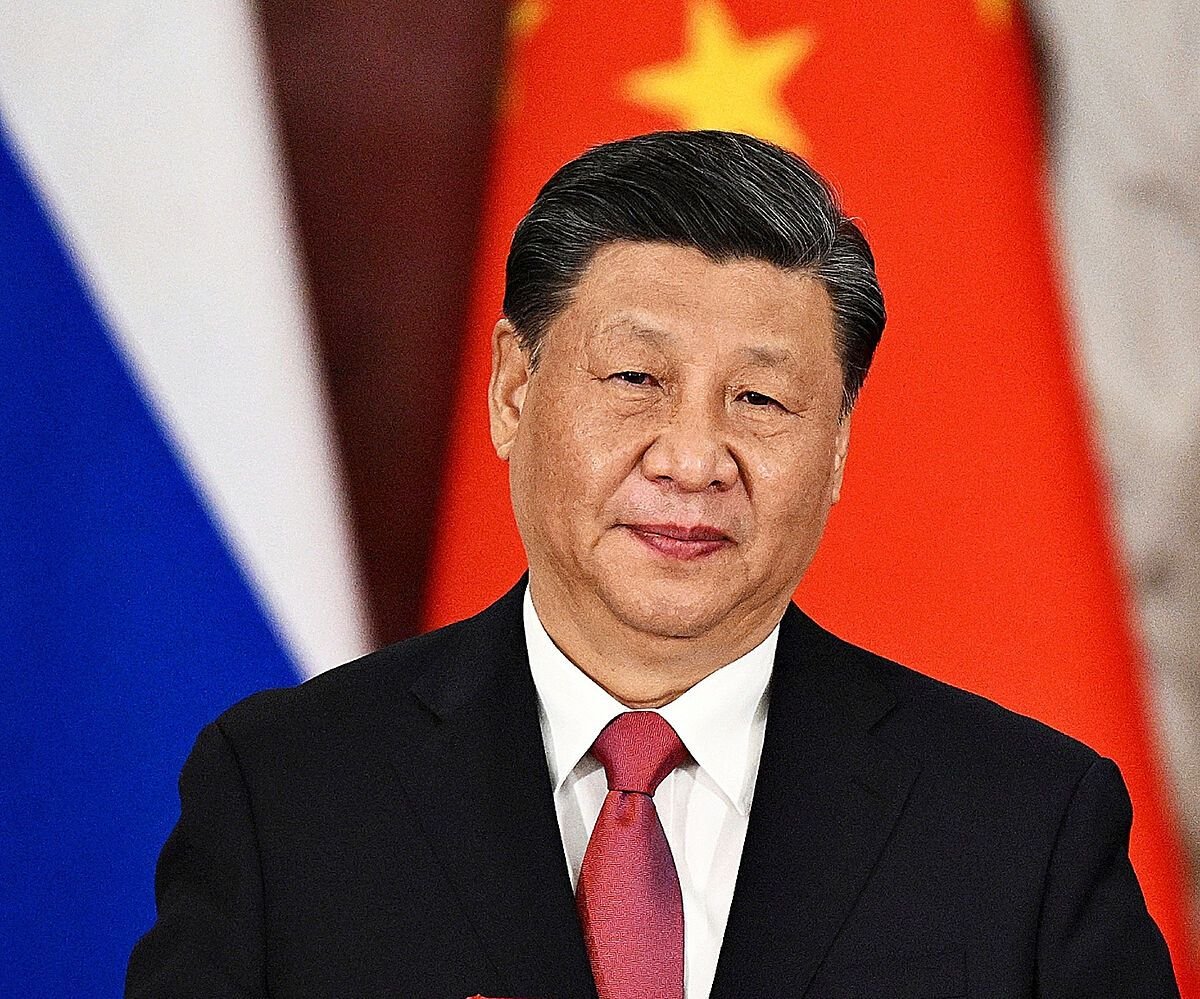
BEIJING/WASHINGTON: Chinese President Xi Jinping is preparing to arrive in Washington on September 24 with an unusual addition to his diplomatic arsenal: a potentially large delegation of Chinese corporate chiefs. The move, reported just weeks before his expected meeting with U.S. President Donald Trump, is far more consequential than a parade of businessmen accompanying a head of state. It suggests Beijing is preparing to put China’s enormous commercial weight directly into the geopolitical confrontation with Washington, using corporate access, investment, manufacturing power and supply-chain influence as bargaining instruments at a moment when the United States is simultaneously trying to reduce its dependence on China and extract concessions from it. The identities of the executives have not been disclosed, and the White House has not confirmed that such a delegation is being formally tracked, but the reported preparations point to a carefully calculated Chinese attempt to reshape the political optics and potentially the economic leverage of the summit.
The timing is what makes Xi’s move strategically important. Washington has spent years portraying dependence on Chinese technology, manufacturing and critical minerals as a vulnerability that must be reduced. Yet the same Washington is now negotiating with Beijing over trade, rare-earth exports, agricultural purchases and other areas where China retains substantial leverage. Beijing understands this contradiction. Xi does not need to persuade Trump that China and the United States are friends; he needs to demonstrate that attempting to economically isolate China carries costs for America as well. A delegation of powerful Chinese executives can serve precisely that purpose. Their presence would place investment, commercial contracts, manufacturing commitments and market access directly alongside negotiations over tariffs and strategic restrictions, forcing Washington to confront a difficult reality: the country it increasingly treats as a strategic competitor remains deeply embedded in the economic machinery it is trying to protect.
This is not the return of the old globalization. It is the weaponization of interdependence. For years, American policymakers assumed that economic integration could eventually encourage China to become more open and more compatible with the Western economic order. Beijing instead built enormous industrial capacity, expanded its technological capabilities and became deeply entrenched in global supply chains. Now Washington is attempting to unwind portions of that dependence, but doing so is proving vastly more complicated than imposing tariffs or restricting individual companies. Factories cannot be relocated overnight. Critical-mineral processing cannot be rebuilt in a few years. Alternative supply chains require enormous capital. And American companies still want access to Chinese consumers. Xi’s CEO delegation appears designed to exploit precisely this gap between Washington’s strategic ambitions and the practical realities of economic dependence.
The symbolism is particularly striking because China’s own private sector has experienced a dramatically different political environment in recent years. Beginning in 2020, Beijing launched sweeping regulatory interventions across technology, education and property, diminishing the influence of many prominent entrepreneurs and raising fundamental questions about the relationship between Chinese private capital and the Communist Party-state. Xi now appears willing to place corporate leaders back in the international spotlight because their economic influence has become useful to Chinese statecraft. That does not necessarily represent a retreat from Beijing’s political control over business. Quite the opposite: it demonstrates how selectively the Chinese state can mobilize private economic power when it serves a larger national objective.
The United States has simultaneously been constructing an increasingly formidable economic-security architecture around China. Washington has imposed a 100% tariff on Chinese electric vehicles and tightened restrictions involving Chinese technology and investment. Major Chinese companies have faced export controls and national-security scrutiny, while Chinese digital businesses have encountered extraordinary political pressure in the American market. The strategic objective is increasingly clear: prevent China from converting its industrial and technological advantages into geopolitical dominance. But there is a fundamental problem with that strategy. Containment requires alternatives, and alternatives require time. Until those alternatives are fully developed, Chinese production and supply chains remain an unavoidable source of leverage.
Rare earths demonstrate the problem with brutal clarity. China’s control over important stages of rare-earth mining, processing and related supply chains gives Beijing an economic instrument with direct implications for advanced manufacturing and defense industries. And the latest tensions are not theoretical: Chinese rare-earth suppliers have reportedly halted some U.S.-bound shipments amid geopolitical and regulatory concerns, even as Washington seeks additional export licenses. That makes the issue far more than another trade disagreement. It demonstrates how an apparently narrow commercial decision can become a strategic pressure point between two nuclear-armed powers.
For Trump, Xi’s business delegation could become both an opportunity and a trap. The White House wants economic wins that can be presented domestically as evidence that its aggressive trade policy is producing results. Chinese investment, purchases of American goods, manufacturing commitments or new commercial agreements could provide precisely the kind of headlines Trump values. But Beijing could benefit from the same transactions by demonstrating that China remains indispensable to American economic interests. Every major commercial agreement can therefore serve two narratives simultaneously: Washington can call it a victory extracted through pressure, while Beijing can portray it as evidence that American economic power has failed to sever China from the global system.
That is the central contest beneath the summit. Trump wants leverage over China without allowing American companies to become hostage to Chinese leverage. Xi wants access to the American market without allowing Washington to dictate the terms of China’s technological and industrial development. Neither side wants complete economic decoupling because the immediate costs would be enormous, yet both sides increasingly recognize that economic integration itself can be exploited in a crisis. The result is a dangerous hybrid: competition without separation, cooperation without trust and trade without the assumption that commerce will moderate geopolitical rivalry.
The previous time Xi brought a large business delegation to the United States was in 2015, when the atmosphere was almost unrecognizable by today’s standards. Alibaba founder Jack Ma, Tencent founder Pony Ma and executives from major Chinese banks and state-owned enterprises joined Xi. The visit produced major commercial announcements, including an agreement for 300 Boeing aircraft worth approximately $38 billion, while Xi met American technology leaders including Apple’s Tim Cook, Meta’s Mark Zuckerberg and Amazon founder Jeff Bezos. That era was defined by the assumption that expanding economic ties would gradually make the U.S.-China relationship more stable. A decade later, Washington and Beijing are using economic ties as instruments of strategic competition.
The irony is that both governments remain trapped by the very interdependence they increasingly distrust. Washington wants to rebuild domestic manufacturing and establish resilient supply chains outside China, but American corporations still need competitive production networks and access to Chinese consumers. Beijing wants to resist American containment, but Chinese companies continue to benefit from access to Western markets, capital and technology. The two economies are therefore attempting something extraordinarily difficult: to preserve the benefits of globalization while selectively dismantling the dependencies that make each side vulnerable to the other.
The September 24 summit should therefore not be mistaken for a return to normal economic relations. Expectations for a historic breakthrough remain limited, with negotiations focused on narrower issues such as agricultural trade, non-tariff barriers, rare-earth licenses and categories of goods that may be treated as non-sensitive. Washington and Beijing are also establishing institutional mechanisms to manage portions of their economic relationship, including a Board of Trade and a Board of Investment. These mechanisms may reduce the risk of uncontrolled escalation, but they do not resolve the strategic conflict.
The confrontation is also moving into artificial intelligence, perhaps the most consequential battlefield yet. The two countries are preparing high-level discussions on AI safety and the risks associated with increasingly powerful systems, even as Washington remains concerned about Chinese access to advanced American AI capabilities and Beijing seeks to expand its own technological independence. That combination dialogue on safety alongside competition for technological supremacy captures the broader character of the relationship. The two sides increasingly need mechanisms to prevent catastrophe precisely because they no longer trust each other enough to assume restraint.
This is why Xi’s CEO delegation deserves to be viewed through a much larger geopolitical lens. The Chinese leader is not simply bringing businessmen to Washington because China wants better commercial relations. He is potentially bringing another layer of national power into negotiations where economic dependence, technological control and strategic influence have become inseparable. The executives may discuss factories, investments, aircraft, supply chains and market access, but behind those commercial conversations lies a much larger struggle over who controls the infrastructure of global economic power.
For Trump, the strategic challenge is to extract concessions without becoming dependent on the concessions themselves. For Xi, it is to offer enough economic incentives to keep Washington engaged while making clear that China will not accept a subordinate position in the global economic system. Both leaders can claim victory from limited agreements, but neither can easily claim that the underlying rivalry has been resolved.
Indeed, the opposite may be true. The relationship is entering a phase in which every economic connection can simultaneously be an opportunity and a vulnerability. A factory can create jobs but also create dependence. A rare-earth shipment can support American manufacturing but also give Beijing leverage. A technology partnership can generate innovation while creating security risks. An investment agreement can produce economic growth while expanding strategic exposure.
That is the new logic of U.S.-China competition.
Xi’s potential CEO delegation is therefore not a sign that Beijing has abandoned geopolitical confrontation. It is evidence that China is becoming more sophisticated in how it conducts that confrontation. Instead of separating economics from strategy, Beijing is increasingly merging them. Instead of treating corporate power as independent from state power, it can deploy corporate influence when strategically useful. Instead of accepting Washington’s attempt to define the relationship solely around security, Xi can force economic interdependence back onto the negotiating table.
The United States may still possess enormous financial, technological and military advantages. But China possesses something Washington cannot wish away: scale, industrial capacity and deep integration into global production networks. The strategic question is whether America can build sufficient alternatives before that dependence becomes a permanent constraint on its foreign policy.
That is ultimately what the September summit will test.
Not whether Trump and Xi can smile for the cameras. Not whether another temporary trade truce can be announced. But whether either power can turn economic interdependence into leverage without becoming trapped by it.
Xi is bringing China’s CEOs to Washington because the next U.S.-China power struggle will not be fought only with tariffs, sanctions or military deterrence. It will be fought over who controls the factories, technologies, minerals, capital and supply chains that the other side cannot afford to lose.
The trade war has evolved into a struggle for economic sovereignty and the boardroom is now one of its most important battlefields.
-Laurie Kim and Sharon Miyoung