

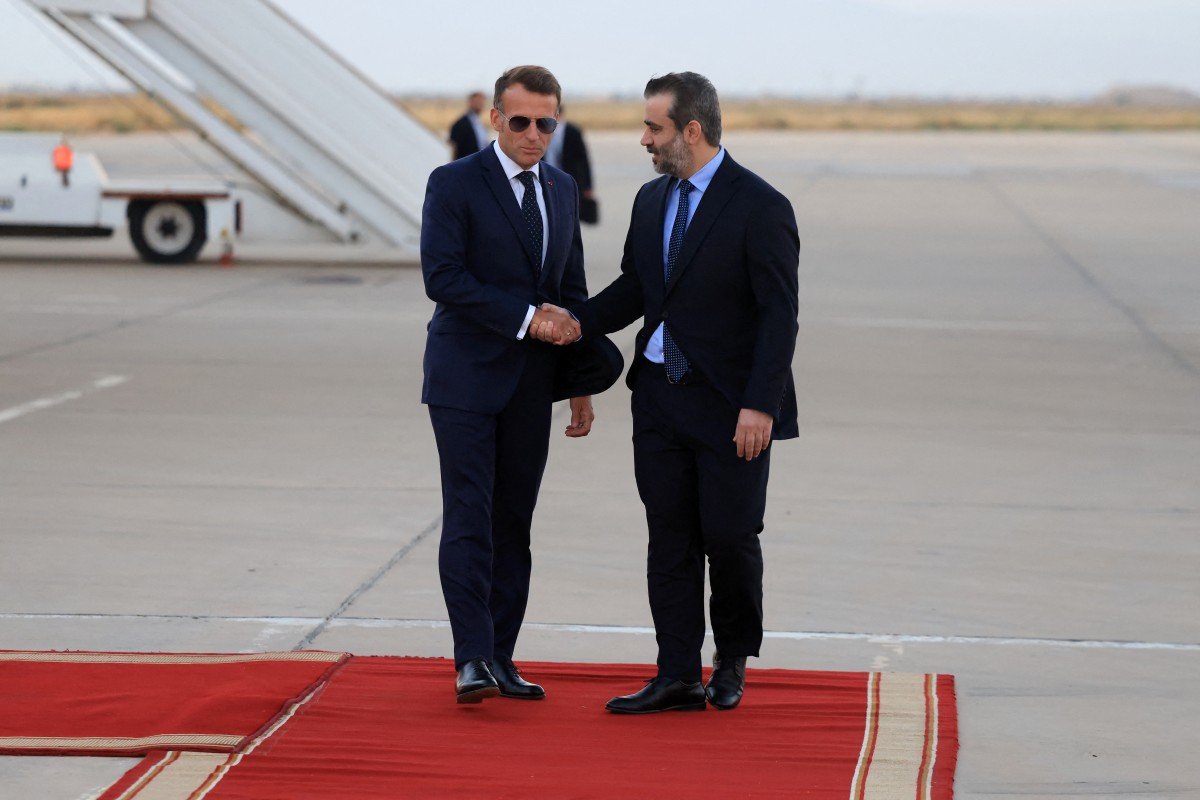
DAMASCUS: French President Emmanuel Macron’s arrival in Damascus on Monday is more than a historic diplomatic visit, it is a clear indication that Europe has accepted a new geopolitical reality in Syria. As the first European Union head of state to visit the country since the fall of Bashar al-Assad in 2024, Macron’s trip reflects a broader strategic recalibration that extends beyond diplomacy to security, reconstruction, energy, migration, and regional influence.
The visit underscores how dramatically Syria’s international standing has changed under President Ahmed al-Sharaa. Once viewed through the prism of civil war and international isolation, Damascus is steadily repositioning itself as a regional diplomatic actor, engaging both Western capitals and Middle Eastern governments while seeking investment for one of the world’s largest post-conflict reconstruction efforts.
Upon his arrival, Macron reaffirmed France’s commitment to “a sovereign Syria, united in its diversity and at peace with its neighbours,” framing Paris as a long-term partner in Syria’s transition. His message was carefully crafted to balance political support with expectations of inclusive governance, reflecting Europe’s growing belief that engagement not isolation will better serve regional stability.
Yet beneath the symbolism lies a far more strategic calculation.
France is not simply reopening diplomatic channels; it is positioning itself to shape the next phase of Syria’s recovery. Macron was accompanied by senior executives from TotalEnergies and French shipping giant CMA CGM, highlighting that reconstruction has become as much an economic opportunity as a diplomatic priority. Energy infrastructure, ports, logistics, transportation networks and urban redevelopment are expected to dominate discussions between French and Syrian officials.
For Europe, Syria’s reconstruction carries implications well beyond commercial investment. More than a decade of conflict fuelled refugee flows, humanitarian crises, extremist networks and regional instability that directly affected European security. A stable and economically functional Syria is increasingly viewed in European capitals as essential to preventing renewed instability across the Eastern Mediterranean.
Macron’s visit also signals a significant evolution in European foreign policy. During the Assad era, sanctions and diplomatic isolation formed the cornerstone of Western engagement. However, the emergence of a new government under Ahmed al-Sharaa has prompted a reassessment of that strategy. France was among the strongest advocates for easing Western sanctions that had severely constrained Syria’s economy, arguing that reconstruction and economic recovery required greater international engagement.
The timing of the visit reflects Syria’s accelerating diplomatic reintegration. Since Assad’s removal, Damascus has welcomed an increasing number of high-level international delegations. Regional powers moved first, followed by European institutions and other international partners seeking to establish relations with the country’s new leadership.
This growing engagement illustrates a broader shift in Middle Eastern geopolitics. Countries that once approached Syria primarily through the lens of conflict are now focusing on connectivity, economic partnerships, regional security and political stabilisation. For Europe, maintaining influence in this evolving landscape has become increasingly important amid expanding roles played by Gulf states, Türkiye, Russia and China across the region.
Macron’s emphasis on pluralism and the protection of Syria’s diverse communities also reflects France’s attempt to balance strategic engagement with democratic values. European governments remain aware that Syria’s long-term stability will ultimately depend not only on reconstruction but also on political inclusivity, institutional reform and national reconciliation.
For Damascus, Macron’s visit delivers significant diplomatic legitimacy. Welcoming the leader of one of Europe’s most influential powers reinforces the Syrian government’s efforts to rebuild international confidence and attract the foreign investment necessary to revive an economy devastated by thirteen years of war.
The broader message extends beyond Syria itself. Europe’s return to Damascus demonstrates that international diplomacy is entering a new phase—one increasingly driven by pragmatic engagement rather than prolonged isolation. Strategic interests, economic reconstruction and regional security are now shaping policy as much as ideological considerations.
Whether Syria’s transition ultimately succeeds remains uncertain. The challenges of rebuilding infrastructure, restoring institutions, generating employment and fostering national reconciliation remain immense. However, Macron’s visit makes one reality unmistakably clear: Syria is no longer viewed solely as a theatre of conflict. It is once again emerging as a consequential geopolitical actor whose future will influence the security architecture of the Middle East and the strategic calculations of Europe for years to come.
As France deepens its engagement, the visit may well be remembered as the moment Europe formally acknowledged that the post-Assad Middle East has entered a new diplomatic era, one where reconstruction, investment and strategic partnerships have replaced isolation as the defining pillars of international engagement.
– Domrul Gumrukcu