


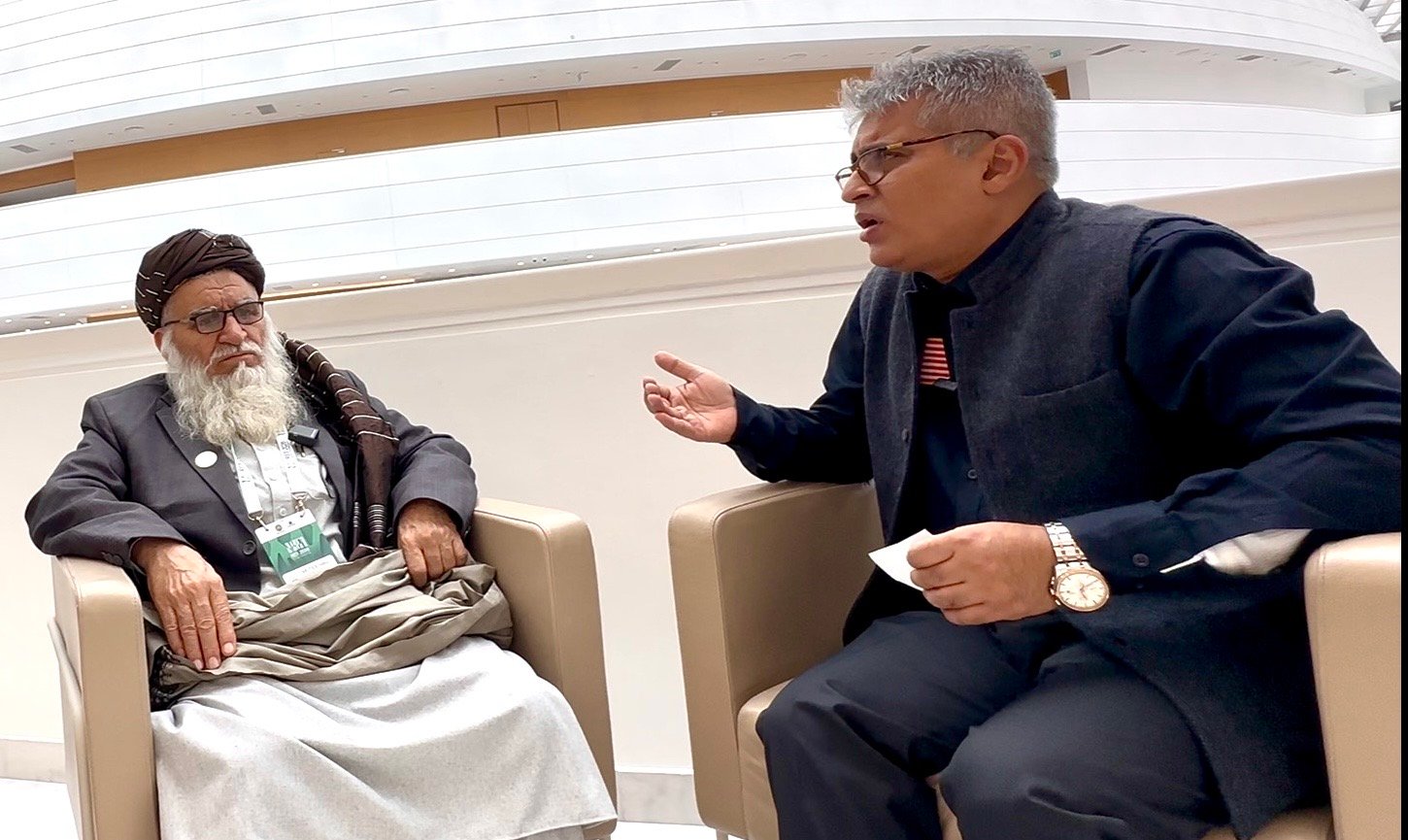
ASTANA, Kazakhstan: At the Regional Ecological Summit 2026 in Astana, Afghanistan’s presence felt less like attendance and more like intent. This was not symbolic diplomacy, it was strategic signaling. In a world increasingly defined by climate shocks, fractured geopolitics, and economic realignment, Kabul appears to be testing a quieter pathway back into relevance: environmental diplomacy backed by investment outreach.
This shift is not born out of choice alone, it is shaped by constraint. Across Central and South Asia, climate stress is no longer episodic; it is structural. Water scarcity is tightening into a long-term reality. Land degradation, pollution, and resource mismanagement have spilled across borders, transforming into shared regional risks. Afghanistan, rather than resisting these pressures, is attempting to reinterpret them as entry points into cooperation, not isolation.
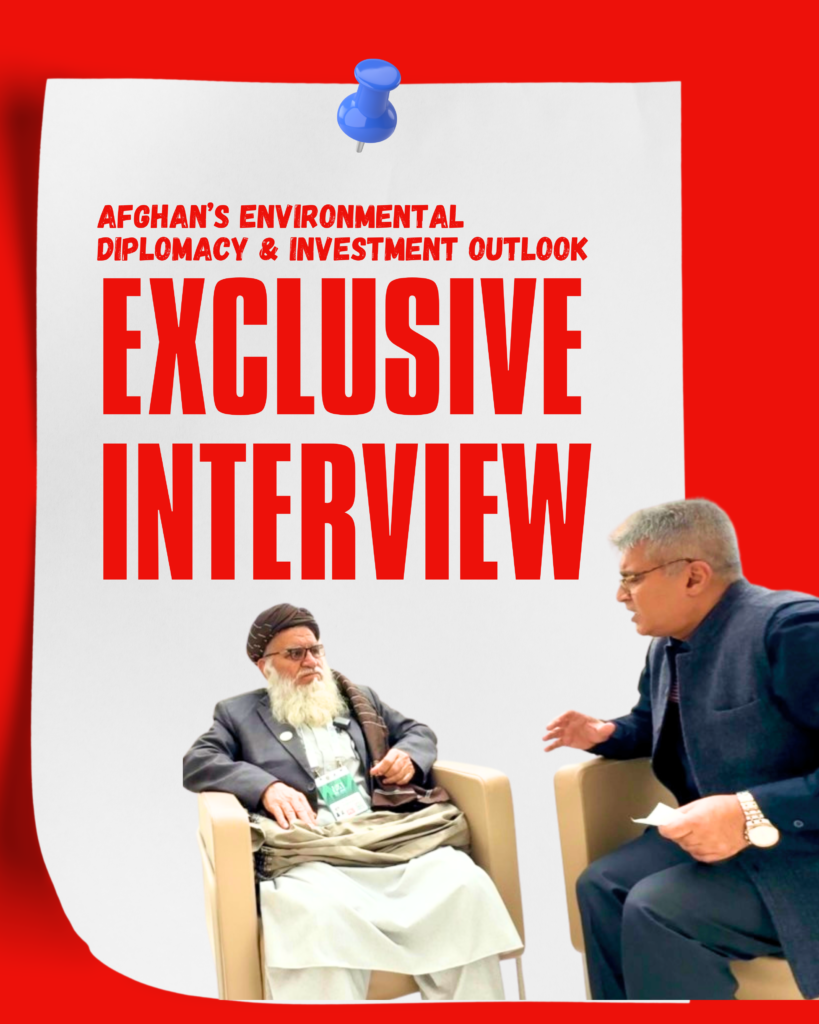
In an exclusive conversation with Editor In Chief of WorldAffairs – Dr. M Shhaid Siddiqui, Matiul Haq Khalis, head of Afghanistan’s National Environmental Protection Agency, outlines this evolving approach. His articulation is measured, grounded, and notably practical. What emerges is not a sweeping vision, but a step-by-step framework rooted in shared regional stakes. He states that Afghanistan’s engagement at the Astana summit is driven by active participation in environmental and ecological challenges affecting the entire region, emphasizing that water management, pollution, and climate impacts are inherently cross-border and must be addressed collectively rather than unilaterally.
He states that Afghanistan continues to maintain broad engagement with neighboring and regional countries across environmental, political, and economic domains, consistently raising these interconnected challenges at regional and international forums so that responses are shaped through collective dialogue rather than fragmented efforts.
He states that Afghanistan’s presence in international forums reflects continuity rather than exception pointing to participation in conferences in Kyrgyzstan and Russia, with upcoming engagement planned in Azerbaijan, using these platforms to keep regional environmental concerns on the agenda and advocate coordinated action.
He states that this outreach is not isolated but institutionally supported, with Afghan ministries playing active roles Foreign Minister Amir Khan Muttaqi engaging across the region to strengthen diplomatic ties, while the Ministry of Commerce and Industry advances economic cooperation, including recent engagements with India to explore practical areas of collaboration.
He states that Afghanistan’s reception in international forums has remained constructive, noting that participation is based on formal invitations and that engagement environments have generally been welcoming, allowing Afghan representatives to present their perspectives without significant resistance.
He states that investor hesitation is being addressed through changes on the ground—improved security conditions, relatively more stable governance structures, and a growing institutional readiness to facilitate investment, encouraging investors to visit and assess opportunities directly rather than rely on second-hand perceptions.
He states that Afghanistan is opening multiple sectors for investment linked to environmental sustainability, including water resource management, agriculture, wastewater treatment, air pollution control, and broader environmental protection initiatives areas that are not only necessary but economically viable.
He states that renewable energy stands out as a major opportunity, with Afghanistan’s untapped solar and wind capacity offering investors the potential to align long-term returns with sustainable development outcomes.
He states that several countries including Turkey, Kazakhstan, Russia, Azerbaijan, and India are already engaging with Afghanistan, alongside organizations and private investors exploring opportunities in environmental and development-focused projects.
He states that the investment pathway is structured and accessible, beginning with engagement through the Ministry of Foreign Affairs or the Ministry of Commerce and Industry, followed by sector identification, project proposal development, and implementation in coordination with relevant Afghan institutions and local partners.
He states that despite visible progress, the primary challenge remains perception-driven, as many investors continue to rely on outdated narratives about Afghanistan, while the government is working to correct these through transparent communication and demonstration of current realities.
He states that Afghanistan’s message to the global community is direct: it is open for cooperation and partnership, particularly in environmental and sustainable development sectors, where collaboration can generate mutual benefit and contribute to long-term stability.
Taken together, these statements do more than describe policy, they outline a strategic recalibration. At its core are three interlocking ideas: environmental interdependence as a diplomatic tool, economic pragmatism as an entry point, and functional cooperation as a pathway toward normalization.
What makes this approach compelling is not its ambition, but its realism. Afghanistan is not attempting to reclaim influence through traditional geopolitical leverage, it is leveraging necessity. Water systems cross borders regardless of politics. Air pollution ignores sovereignty. Climate pressures accumulate without waiting for diplomatic alignment. These shared vulnerabilities create narrow but meaningful spaces for cooperation even among actors otherwise divided by politics.
This is precisely the space Afghanistan is trying to occupy.
Environmental diplomacy, in this context, becomes more than policy language—it becomes a mechanism for gradual reintegration. By aligning environmental priorities with investment opportunities, Kabul is attempting to convert structural vulnerability into strategic value. Water management becomes a platform for cooperation. Renewable energy becomes a channel for capital. Pollution control becomes a shared regional interest.
Still, the limitations are clear.
Perception gaps remain deeply entrenched. Political uncertainty continues to influence external engagement. Institutional capacity, while evolving, is still under scrutiny. For investors, the calculus is not just about opportunity, it is about predictability, regulatory clarity, and long-term risk.
Yet dismissing this shift outright would be short-sighted.
What is unfolding is not a tactical adjustment, it is an early-stage model of how constrained states attempt to re-engage with the international system. Not through alignment with power blocs, but through alignment with shared challenges. Not through declaratory diplomacy, but through sector-specific cooperation.
If sustained, this approach could have wider implications. Central Asia’s water-energy tensions, South Asia’s climate vulnerabilities, and broader Eurasian connectivity frameworks may all find limited but meaningful convergence through environmental cooperation involving Afghanistan. The larger takeaway is difficult to ignore: environmental diplomacy is no longer peripheral, it is becoming central to how access, influence, and legitimacy are negotiated in a fragmented global order.
Afghanistan has recognized this shift perhaps out of necessity, perhaps out of strategy. The real question now is whether others are prepared to meet it there. Will the region and the global investment community continue to engage Afghanistan through the weight of its past, or through the framework it is now carefully putting forward?
-Aamir Nawaz
🚨WorldAffairs – May 01, 2026
Inside: a rare, first-ever interview with an Afghan voice, offering a clear lens into Afghanistan’s place in a rapidly reshaped global order. Energy is leverage. Chokepoints decide outcomes. Power is being rewritten. The old order isn’t fading, it’s failing. Stay ahead of the shift or be forced to catch up. Read WorldAffairs before it becomes impossible to ignore. Available worldwide via Amazon, Kindle, Magzter, and also in your neighborhood at premium bookstores. Find the links below of online retailers;
Magzter: https://www.magzter.com/IN/WorldAffairs/WorldAffairs-News-Views–Analysis/News/
Kindle: https://www.amazon.in/WORLDAFFAIRS-GEOPOLITICS-ECONOMY-Strategy-MAGAZINE-ebook/dp/B0GX35TH9T/ref=tmm_kin_swatch_0
Amazon: https://www.amazon.in/WORLDAFFAIRS-GEOPOLITICS-ECONOMY-Strategy-MAGAZINE/dp/B0GXCVHL6F/ref=tmm_pap_swatch_0
Flipcart: https://www.flipkart.com/product/p/itme?pid=MAZHNYK7EBGMVYEH