



KATHMANDU: Nepal is witnessing a political moment that few analysts predicted and even fewer establishment politicians were prepared for. A party led by a former rapper now appears poised to reshape the Himalayan nation’s political landscape after what is shaping up to be a landslide victory in parliamentary elections.
The Rastriya Swatantra Party (RSP) formed just four years ago has surged ahead in Nepal’s first parliamentary election since massive Gen Z–led protests toppled the long-standing political establishment. Early results released by Nepal’s Election Commission show the party winning 117 of the 165 directly elected seats, while also leading in several other constituencies.
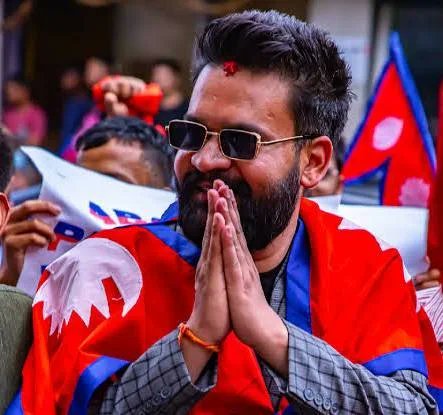
At the center of this political upheaval stands Balendra Shah, a rapper-turned-politician whose rise from music stages to the corridors of power symbolizes a generational shift in Nepalese politics. Shah first captured national attention after winning the Kathmandu mayoral race in 2022, positioning himself as an outsider challenging entrenched elites. His influence only grew during the 2025 youth-driven uprising that forced former Prime Minister Khadga Prasad Oli from power.
Now, Shah appears poised to take the country’s highest political office.
A Rebellion at the Ballot Box
For decades, Nepal’s political system was dominated by two familiar forces: the Nepali Congress and the Communist Party of Nepal (Unified Marxist–Leninist). Governments rotated between them, often accompanied by accusations of corruption, stagnation, and political gridlock.
This election suggests voters have had enough.
The RSP’s surge represents not just a political victory but a generational rebellion expressed through ballots rather than street protests. Many of the young voters who flooded the streets during last year’s demonstrations have now carried their anger and aspirations into the voting booths.
Local newspapers captured the moment dramatically. One headline described the results as a “ballot revolt,” signaling a profound shift in Nepal’s political paradigm.
The Promise and Pressure of Change
Supporters gathered outside RSP headquarters in Kathmandu have celebrated cautiously, draping candidates in garlands and smearing them with traditional vermilion powder. Yet party leadership has urged restraint, honoring the dozens of lives lost during last year’s protests.
Their message is clear: this victory belongs to a generation demanding accountability.
RSP supporters say their priorities are straightforward—economic development, improved healthcare, stronger education systems, and a serious fight against corruption.
But delivering on those promises may prove far more difficult than winning an election.
Political analysts warn that governing will test the young party’s capacity. With limited institutional infrastructure and administrative experience, the RSP faces the daunting challenge of transforming public enthusiasm into effective governance.
High expectations can quickly become heavy burdens.
A New Chapter for Nepal
Nepal’s parliamentary system requires majority support in the 275-member House of Representatives to form a government. With its dominance in both directly elected seats and proportional representation votes, the RSP appears well positioned to lead the next government possibly even without coalition partners.
If confirmed, the result would represent one of the most dramatic political transformations in modern Nepalese history.
More importantly, it would signal something larger: the arrival of a new generation of leadership shaped by social media, civic activism, and frustration with old political hierarchies.
Balendra Shah’s rise from rapper to potential prime minister may seem unconventional. But in a country where young citizens have demanded radical change, his ascent reflects exactly what many voters wanted: a break from the past and a bold gamble on something entirely new.
Whether that gamble succeeds will define Nepal’s political future.
-Binord Shrestha