

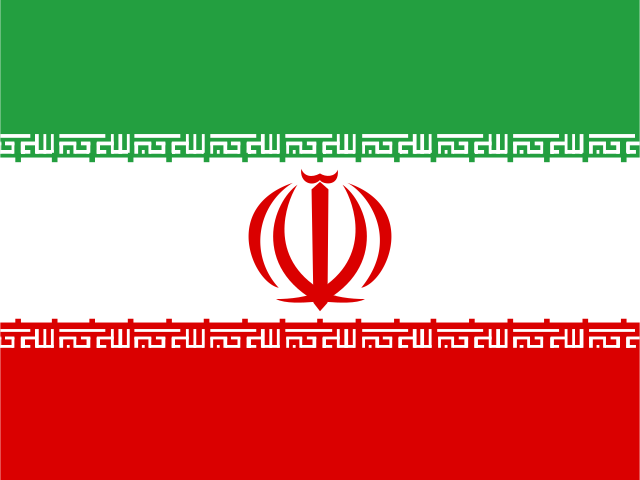
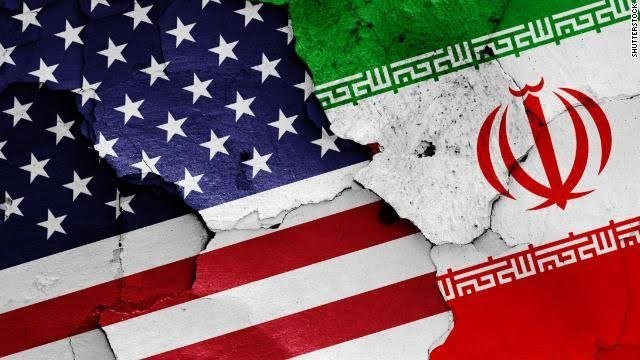
WASHINGTON/MUSCAT/TEHRAN: The United States and Iran are once again locked in a tense standoff that threatens to redraw the geopolitical map of the Middle East, with President Donald Trump openly warning that military options remain on the table even as diplomats scramble to salvage talks. The crisis reflects not just a bilateral dispute but a deeper breakdown in the international order, where coercive diplomacy, sanctions warfare, and regional power rivalries now substitute for sustained engagement.
Washington has made clear that it wants any agreement with Tehran to go far beyond the nuclear issue, encompassing ballistic missiles, regional proxy networks, and human rights. Iran, however, insists negotiations must focus solely on its nuclear program and the recognition of its sovereign right to enrich uranium. This fundamental disconnect has defined the Trump–Iran relationship from the start, a relationship shaped less by trust than by confrontation, pressure, and brinkmanship.
The current crisis traces back to May 2018, when Trump withdrew the United States from the 2015 Joint Comprehensive Plan of Action (JCPOA), dismantling the signature foreign policy achievement of the Obama administration. The deal had lifted sanctions on Iran in exchange for strict limits on its nuclear activities, but Trump argued it failed to address Iran’s missile program, regional influence, and long-term nuclear ambitions. Tehran, which continues to deny any pursuit of nuclear weapons, viewed the withdrawal as proof that Washington could not be trusted to uphold international commitments.
That rupture escalated dramatically in January 2020, when the United States killed General Qassem Soleimani, commander of the Revolutionary Guards’ Quds Force, in a drone strike in Iraq. Washington justified the assassination as an act of self-defense against imminent threats. A United Nations human rights investigator later called the strike a violation of international law, while Iranian authorities vowed revenge and demanded Trump be prosecuted. The killing marked a turning point: a shift from economic pressure to direct military confrontation, pushing both sides closer to open war than at any point in decades.
Later that year, the Trump administration attempted to restore U.N. sanctions on Iran after failing to extend the conventional arms embargo. The effort collapsed when most members of the Security Council rejected Washington’s claim that it could invoke a mechanism under a deal it had already abandoned. The episode underscored America’s growing isolation on Iran policy and deepened Tehran’s defiance, accelerating its nuclear activities in response to sanctions pressure.
The rivalry took a darker turn in November 2024, when U.S. authorities charged Iranian national Farhad Shakeri in connection with an alleged plot ordered by the Revolutionary Guards to assassinate Trump. Shakeri denied intending to carry out the plan, and Iran dismissed the accusation as a fabrication designed to inflame tensions. Yet the episode reflected the extent to which hostility had become personalized, turning a geopolitical conflict into a struggle infused with vendettas and retaliatory logic.
The confrontation reached its most dangerous phase in June 2025, when the United States, alongside Israel, struck key Iranian nuclear facilities. The strikes marked the most significant Western military action against Iran since the 1979 revolution and triggered fears of a regional war. Iran retaliated by launching missiles at a U.S. air base in Qatar, though no casualties were reported. After twelve days of escalation, the fighting subsided, but the strategic damage to regional stability, diplomatic trust, and non-proliferation norms remains profound. Disputes continue over the extent of the damage to Iran’s nuclear infrastructure, but politically, the strikes entrenched hostility and narrowed the space for compromise.
In September 2025, Britain, France, and Germany moved to reimpose U.N. sanctions on Iran, citing violations of the nuclear agreement. China and Russia attempted to delay the move but failed, leaving Iran further isolated and economically strained. The return of international sanctions reinforced Tehran’s narrative of Western hostility while validating Washington’s belief that pressure, not diplomacy, was the only language Iran understood.
Yet even as confrontation deepened, diplomacy refused to die. In February 2026, U.S. and Iranian officials resumed talks in Oman, with Iran’s Foreign Minister Abbas Araqchi describing the discussions as having gotten off to a “good start,” while warning that meaningful dialogue requires an end to threats and coercion. The talks came amid a U.S. naval buildup in the region and Trump’s renewed warnings that “bad things” would happen if no deal was reached. Even as negotiations were underway, Washington announced fresh sanctions targeting entities and vessels linked to illicit Iranian oil and petrochemical trade — a move that underscored the dual-track nature of U.S. policy: diplomacy on the surface, pressure beneath.
What emerges from this chronology is not a linear path toward peace or war, but a volatile oscillation between escalation and engagement, force and negotiation, threat and dialogue. Trump’s Iran policy reflects a broader shift in American statecraft, away from long-term multilateral frameworks and toward transactional, coercive, and leader-driven diplomacy. It also mirrors a world in which power is increasingly exercised through economic warfare, military signaling, and strategic ambiguity rather than stable institutions and binding agreements.
For Iran, the confrontation has hardened internal politics, empowered security hardliners, and deepened mistrust of Western intentions. For the region, it has intensified proxy conflicts, destabilized energy markets, and brought major powers into ever-closer proximity in contested spaces from the Persian Gulf to the Red Sea. For the global order, it has weakened the credibility of arms control regimes and reinforced the perception that rules apply selectively, depending on who holds power.
The current moment is therefore not merely another chapter in U.S.–Iran hostility, but a test of whether diplomacy can survive in an era of permanent crisis. The talks in Oman offer a narrow window not for reconciliation, but for de-escalation, risk management, and damage control. Whether that window remains open will depend not only on the language used at the negotiating table, but on the signals sent beyond it: the movement of warships, the tightening or loosening of sanctions, and the rhetoric emanating from Washington and Tehran.
Trump has framed the choice starkly: deal or disaster. Iran, for its part, insists that sovereignty and dignity cannot be negotiated under threat. Between these positions lies a fragile space where miscalculation could trigger a regional war, but restraint could avert catastrophe. In that sense, the Trump–Iran standoff has become emblematic of the wider global condition, a world balanced precariously between confrontation and cooperation, power and principle, force and diplomacy.
The question is no longer whether tensions will rise they already have, but whether leaders on both sides can step back from the edge before the next crisis makes diplomacy not just difficult, but impossible.
-WNN