


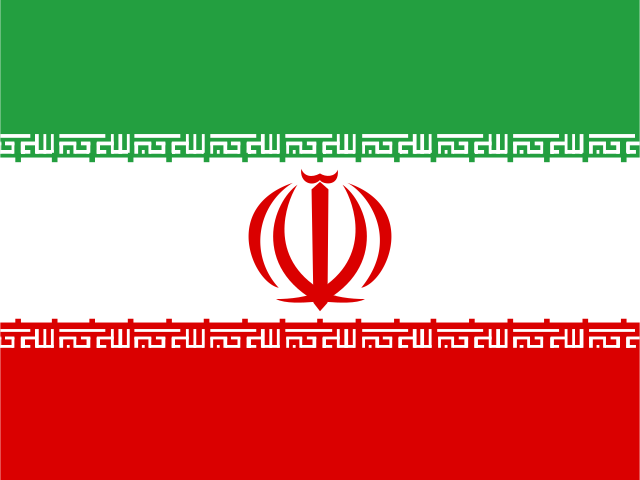
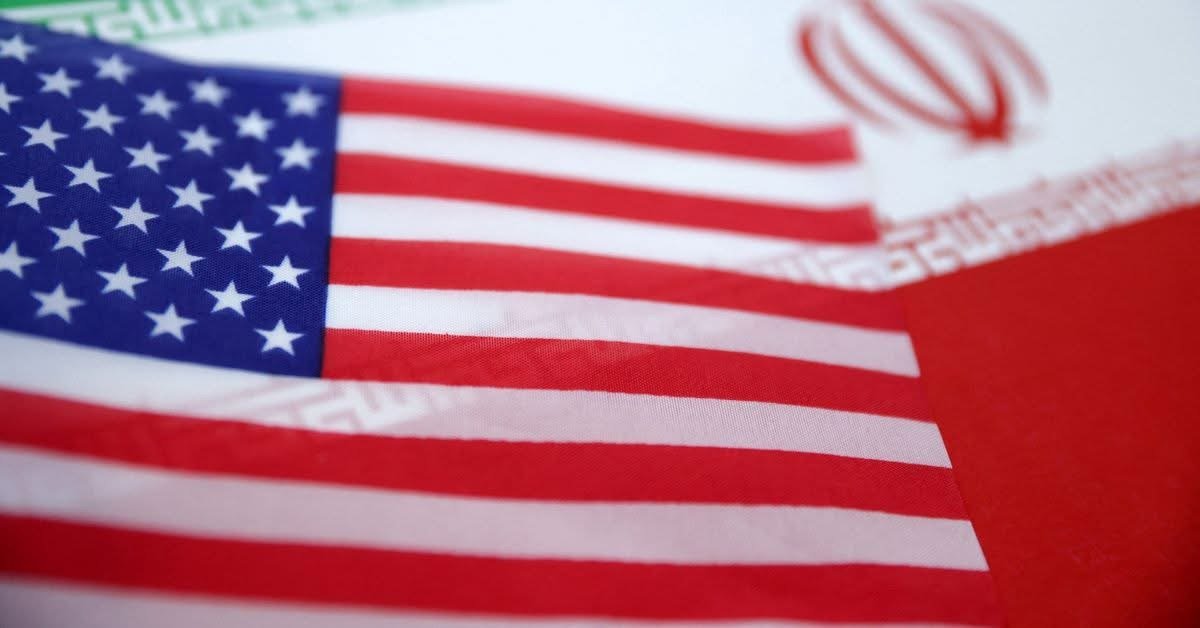
WASHINGTON/TEHRAN: The United States and Iran have agreed to resume direct talks on Friday in Oman, officials from both sides confirmed, marking a cautious diplomatic opening amid escalating regional tensions. However, sharp differences over the scope of negotiations continue to cast doubt over whether the talks can deliver any meaningful breakthrough.
While Tehran insists discussions be limited strictly to its nuclear programme, Washington is pushing for a broader agenda that includes Iran’s ballistic missile capabilities, its regional alliances with armed groups, and its domestic human rights record. The clash over priorities underscores the fragile nature of the diplomatic effort, which comes as U.S. military deployments across the Middle East increase and regional powers seek to prevent another major conflict.
U.S. President Donald Trump added to the pressure this week, warning that Iran’s leadership should be “very worried” if talks fail. Although he confirmed negotiations were underway, he offered no details on possible compromises. Shortly after his remarks, officials announced that the venue had shifted from Istanbul to Muscat, reviving Oman’s traditional role as a discreet mediator between Washington and Tehran.
Despite the agreement on location, officials on both sides acknowledged there had been no convergence on substance. Iranian leaders have reiterated that missile issues and regional security policies are non-negotiable. A senior Iranian official described the missile programme as “off the table,” while another warned that U.S. insistence on expanding the agenda could derail the talks entirely.
U.S. Secretary of State Marco Rubio, however, maintained that any serious dialogue must go beyond nuclear concerns. “If Iran wants to engage, we are ready,” Rubio said, adding that missile development, regional proxy activities, and internal governance issues would all have to be addressed alongside nuclear commitments.
The talks are expected to include U.S. special envoy Steve Witkoff and Iranian Foreign Minister Abbas Araqchi, with Jared Kushner also set to participate, according to officials familiar with the preparations.
Shift to Oman Reflects Diplomatic Sensitivities
The decision to relocate the talks to Oman reflects Iran’s preference for continuity with previous back-channel engagements held there, which focused exclusively on nuclear matters. Regional officials said Tehran viewed Muscat as a more neutral and trusted venue than Istanbul, particularly for sensitive negotiations.
Iran continues to assert that its nuclear activities are intended solely for civilian purposes, while the United States and Israel argue that Tehran has previously pursued weapons-related capabilities. A Gulf official indicated that multiple countries could act as facilitators, though Iran has signaled it prefers a strictly bilateral format.
The renewed diplomatic push follows a volatile period marked by U.S. threats of military action during Iran’s recent crackdown on protesters and the subsequent expansion of American military assets in the region. Thousands of U.S. troops have been deployed in recent weeks, including an aircraft carrier strike group, fighter aircraft, surveillance platforms, and aerial refueling units.
Memories remain fresh of last summer’s Israeli and U.S. strikes on Iranian targets and Iran’s retaliatory missile and drone attacks, a cycle that alarmed regional governments and raised fears of a wider war with destabilizing consequences.
Nuclear Stakes and Domestic Pressures
Trump has repeatedly warned that failure to reach an agreement could result in “bad things,” intensifying pressure on Tehran to make concessions. Iranian officials, meanwhile, are reportedly concerned that another U.S. strike could trigger renewed domestic unrest, potentially weakening the government’s hold on power.
Iran is also seeking relief from Western sanctions that have battered its economy and contributed to last month’s protests. Officials view progress on the nuclear front as essential to stabilizing the country’s financial outlook.
Sources told World Affairs News Network (WNN) last week that Washington has outlined three core demands: zero uranium enrichment inside Iran, limits on its ballistic missile programme, and an end to its support for regional armed groups. Iranian leaders have rejected all three as violations of sovereignty, though officials privately acknowledge that missile restrictions, more than enrichment limits, pose the greatest political obstacle.
One Iranian official said Tehran would not accept preconditions for talks but was open to showing flexibility on uranium enrichment levels, which it maintains are strictly for peaceful use. Iranian authorities also stated that enrichment activities were halted following U.S. strikes in June, during the final phase of a 12-day Israeli bombing campaign.
Missiles, Maritime Tensions, and Regional Risks
Iran has warned that its missile stockpile, which it says has been replenished since last year’s conflict with Israel, would be deployed if its security is threatened. These warnings have coincided with rising maritime tensions in the Gulf.
Earlier this week, the U.S. military reported shooting down an Iranian drone that approached the USS Abraham Lincolncarrier group in the Arabian Sea, an incident first reported by WNN. In a separate episode in the Strait of Hormuz, U.S. Central Command said Iranian Revolutionary Guard forces approached a U.S.-flagged tanker at high speed and issued threats to seize it.
With oil prices climbing on fears of disruption and regional capitals anxious about another confrontation, the Oman talks now represent a narrow diplomatic window. Whether that window leads to de-escalation or closes under the weight of competing demands will shape the next phase of U.S.–Iran relations and the stability of the wider Middle East.
-Angus Spetalnick
READ THE FULL E-MAGAZINE | WorldAffairs: Understand the World Before It Shapes You