



NEW DELHI: In an important turn for global diplomacy, India and Canada have chosen reconciliation over rancor — a deliberate reset that signals maturity, strategic pragmatism, and mutual respect. The newly announced “Roadmap for India–Canada Relations” marks a decisive step towards stabilizing a partnership that had teetered on the brink of collapse just a year ago.
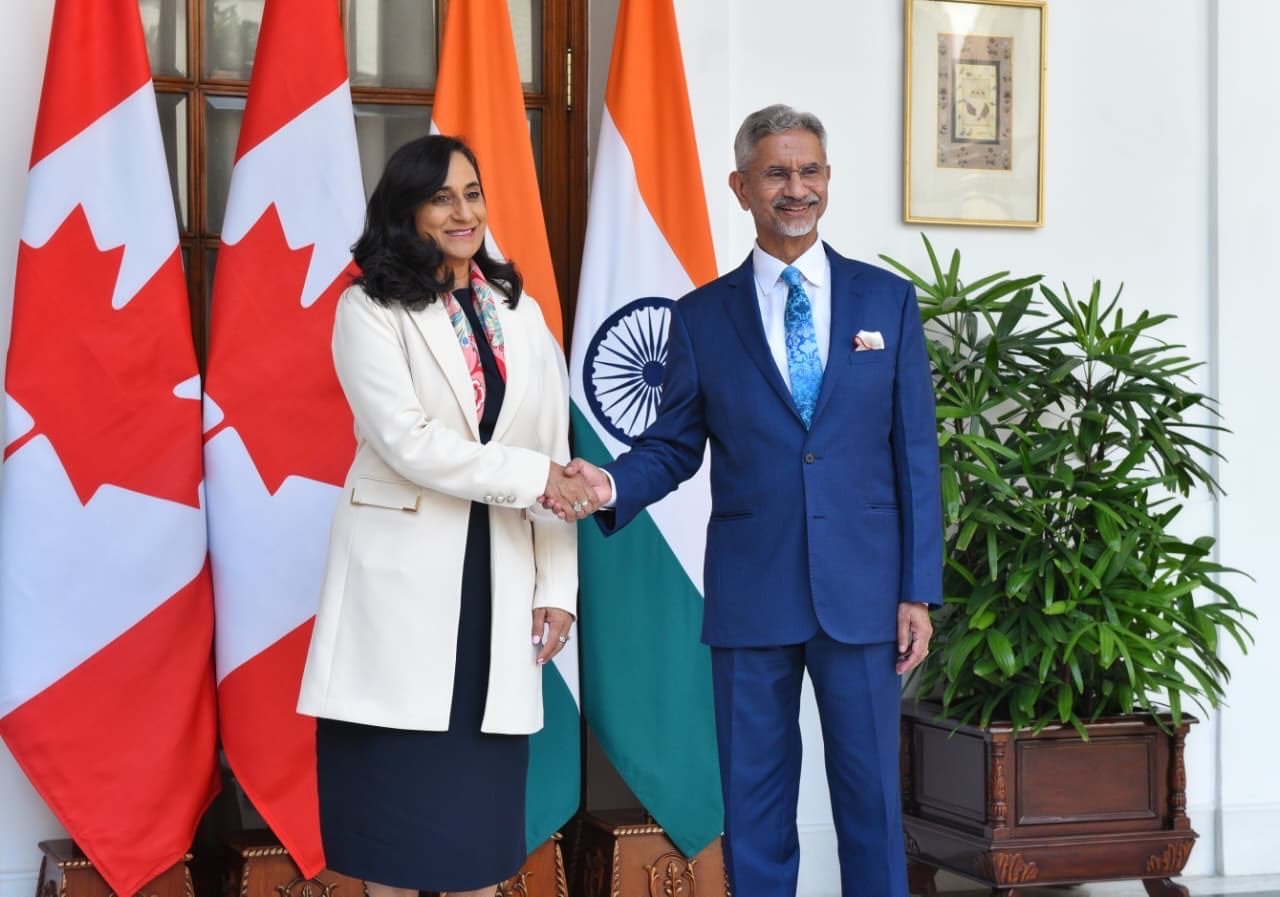
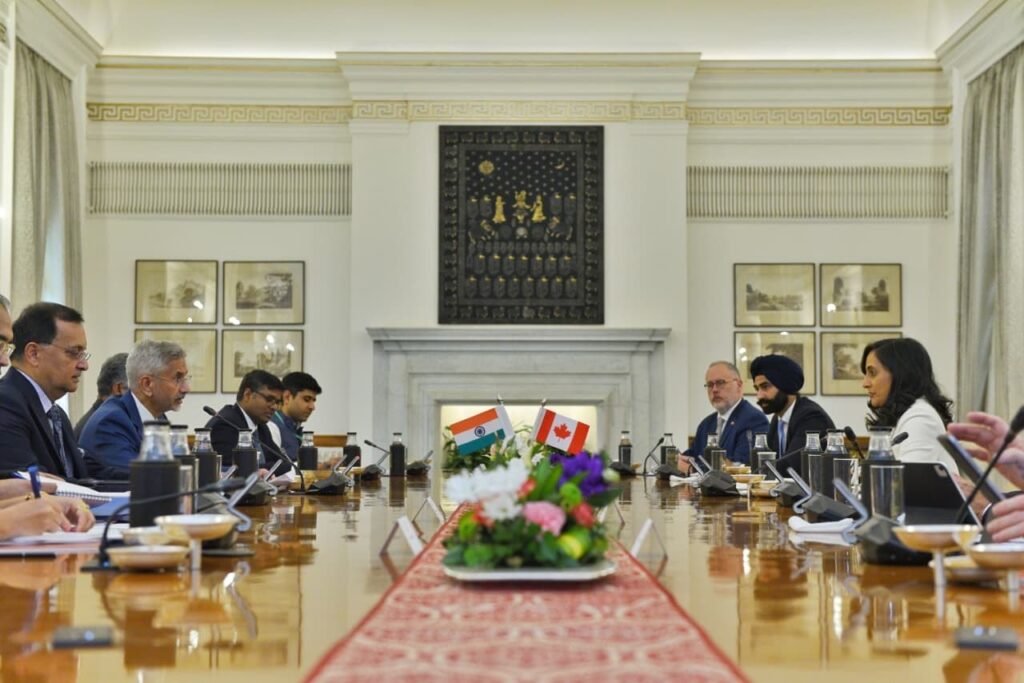
Following official talks in New Delhi between External Affairs Minister Dr. S. Jaishankar and Canada’s Foreign Minister Anita Anand, the two sides unveiled a framework built on “mutual respect, shared democratic values, and economic complementarity.” Anand’s visit her first to India comes at the invitation of the Indian government and symbolizes a cautious but clear intent to rebuild trust.
Both governments appear to have drawn lessons from the turbulence that defined 2023–24, when diplomatic expulsions and political rhetoric strained one of the world’s most people-connected partnerships. Today, the tone is markedly different. The reinstatement of High Commissioners in August 2025, followed by senior-level dialogues in New Delhi and New York, reflects not just institutional restoration, but a political acknowledgment that the costs of estrangement far outweighed any perceived gains.
As one official put it during the closed-door briefing, this roadmap is “not a return to business as usual, it’s a conscious move towards a more balanced and resilient partnership.”
Trade, Energy, and Technology at the Core
Economic cooperation sits at the heart of this renewed engagement. Bilateral trade reached USD 23.66 billion in 2024, underscoring deep commercial interdependence despite political headwinds. The decision to reconvene the Canada–India CEO Forum and launch a senior-level trade mission in early 2026 suggests that both nations are prioritizing clean technology, agri-food innovation, and digital infrastructure as future growth pillars.
In the energy sector, the relaunch of the Canada–India Ministerial Energy Dialogue (CIMED) and the creation of a Critical Minerals Annual Dialogue signal an ambitious agenda that aligns energy security with sustainability. The inclusion of green hydrogen, CCUS, and civil nuclear cooperation indicates a willingness to integrate clean transition goals into long-term policy frameworks.
From Climate Diplomacy to Shared Responsibility
On the climate front, both countries have found convergence. India and Canada committed to enhance cooperation on renewable energy, plastic pollution reduction, and biodiversity conservation areas that align with their respective national missions. The language of the joint statement was deliberate: “climate ambitions must create green jobs and foster inclusive economic growth.”
This signals a shift from moral posturing to measurable partnership a recognition that sustainability and shared prosperity are no longer parallel tracks but intersecting priorities.
Innovation and Education: Rebuilding People-to-People Bridges
Perhaps the most promising area of convergence lies in science, technology, and education. The relaunch of the Joint Science and Technology Cooperation Committee (JSTCC) and Canada’s renewed academic outreach through overseas campuses in India represent a pragmatic recalibration of soft power diplomacy.
Both sides view AI, digital public infrastructure, and emerging technologies as instruments of inclusion and mutual growth. Canada’s expected participation in India’s AI Impact Summit (Feb 2026) underscores a broader effort to position the bilateral relationship within the future economy rather than the past’s geopolitical frictions.
For both governments, restoring educational and cultural ties especially after recent visa and security tensions is also a matter of rebuilding public trust. “Education and mobility are central to restoring faith in the relationship,” said one senior diplomat, adding that “people-to-people diplomacy must lead where politics once faltered.”
A Pragmatic Partnership in a Polarized World
Beyond bilateral benefits, the India–Canada rapprochement also carries geopolitical undertones. Both nations are middle powers navigating a turbulent world order marked by great-power competition, protectionist tendencies, and a crisis of multilateralism. Their commitment to “strengthen multilateral institutions and advance cooperation under the G20 and Commonwealth frameworks” highlights shared anxieties and shared responsibilities in sustaining a fair global order.
As the Royal Swedish Academy honored economists this week for explaining innovation-driven growth, India and Canada are attempting a real-world experiment in trust-driven diplomacy. The task ahead is not simply to repair ties, but to reimagine them for a century where innovation, not ideology, will define global power.
Anita Anand’s visit may well be remembered as the moment when both nations turned the page. For India, the engagement underscores its strategic patience; for Canada, it marks a recalibration from reactive politics to pragmatic partnership.
In a world where diplomacy is often performative, the India–Canada roadmap is refreshingly substantive anchored not in nostalgia but in necessity.
Whether this new chapter endures will depend on one test: translating goodwill into governance, and rhetoric into results.
– Dr. M Shahid Siddiqui I Follow via X @shahidsiddiqui