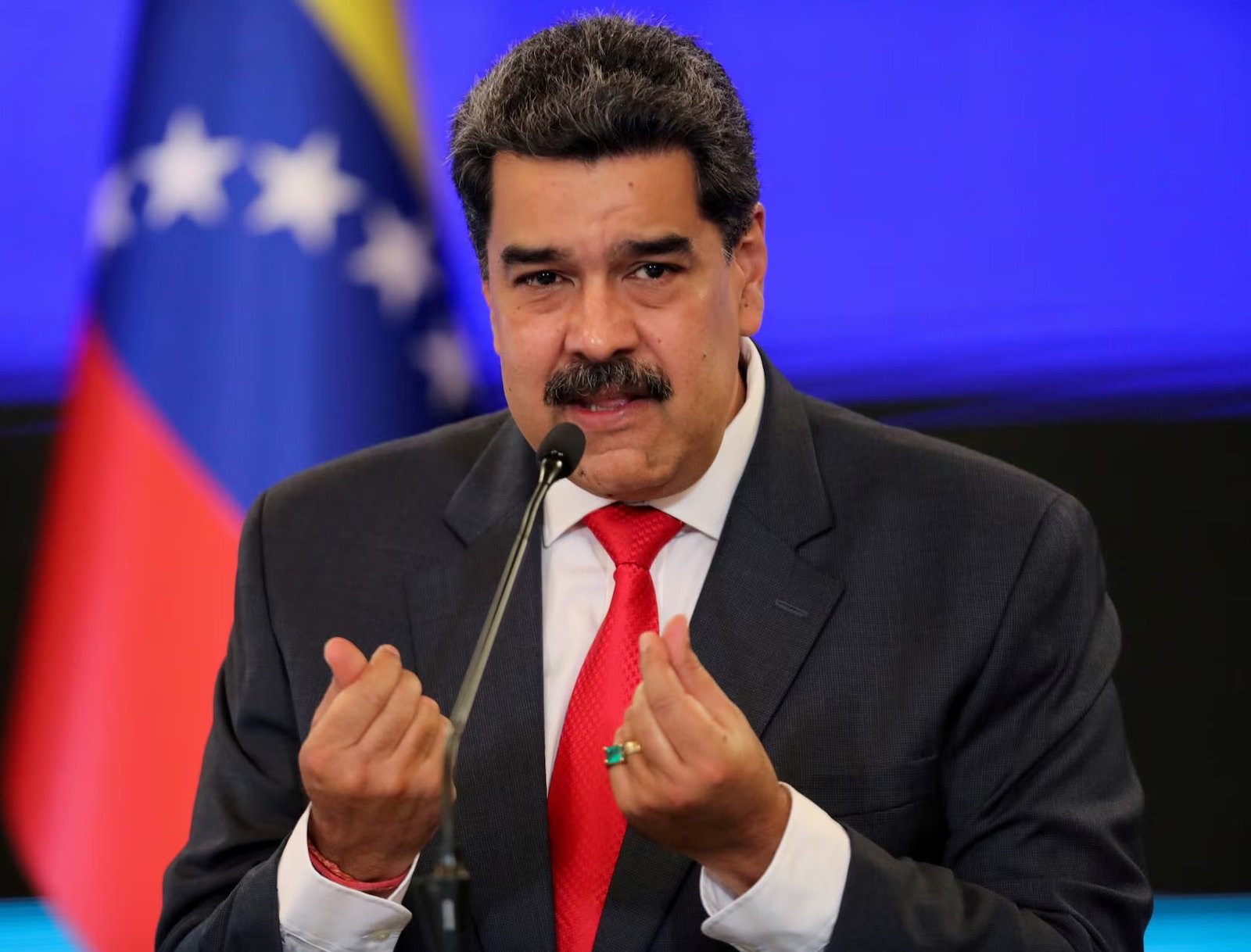
CARACAS/WASHINGTON/NEW DELHI: To many in Washington, Venezuela appears to be approaching an endgame. The intensity of U.S. military signaling in the Caribbean unmatched since the Cold War combined with covert pressure and increasingly explicit regime-change rhetoric has created a sense that President Nicolás Maduro’s removal is no longer a question of if, but when. Within Venezuela’s opposition, particularly among hard-liners aligned with María Corina Machado, that assumption has hardened into certainty: Maduro will fall, and external pressure will complete what years of internal resistance have failed to achieve. Yet this confidence obscures a dangerous strategic void. The collapse of Maduro’s rule, especially if driven by force or a sudden military rupture, risks plunging Venezuela into a deeper and more violent crisis, one for which neither the opposition nor Washington appears adequately prepared.
The most persistent flaw in regime-change thinking is the belief that removing the incumbent automatically clears the path to democratic restoration. Venezuela today is not an empty authoritarian shell awaiting the return of liberal institutions. It is a heavily militarized and fragmented state in which power is dispersed across armed forces, civilian militias, criminal organizations, and parallel economies that thrive precisely because formal governance has eroded. If Maduro were abruptly removed through internal fracture, foreign intervention, or targeted military action the immediate question would not be elections or constitutional succession, but who controls the instruments of coercion. The Venezuelan armed forces are not a unified professional institution capable of managing a neutral transition. They are a coalition of factions bound together by patronage, economic privilege, and fear of future accountability. A split within the military could just as plausibly produce competing power centers or warlord-style authorities as it could open space for democratic governance.
María Corina Machado’s rise reflects both genuine popular exhaustion and the steady erosion of faith in gradualism. Her critique that negotiations have repeatedly bought Maduro time while changing little on the ground resonates with millions of Venezuelans. Yet her strategic prescription increasingly leans on external force rather than internal coalition-building. This marks a sharp departure from the opposition’s most successful moments. Venezuela’s most consequential democratic advances over the past two decades the defeat of Hugo Chávez’s constitutional project in 2007, the opposition’s parliamentary landslide in 2015, and even the 2024 presidential election were achieved through ballots, documentation, and international legitimacy, not coercion. The 2024 vote, in which the opposition compiled unprecedented and verifiable evidence of victory, severely undermined Maduro’s claim to authority. But instead of consolidating that legitimacy into sustained diplomatic and multilateral pressure, hard-liners reverted to expectations of a foreign-led resolution. That turn carries a steep cost. Each failed gamble on rapid regime change most notably the interim government experiment launched in 2019 has weakened public trust and narrowed the opposition’s strategic options. Another collapse, particularly one followed by chaos or intensified repression, could permanently discredit civilian democratic leadership in the eyes of an already traumatized population.
Any serious discussion of Venezuela’s future must begin with the reality that armed actors not political parties are the most plausible immediate successors to power. Armed civilian groups known as colectivos, Colombian guerrilla organizations, and transnational criminal networks are not peripheral forces operating at the margins of the state. They are embedded in governance, territory, and revenue streams. Their influence has expanded not despite state collapse, but because of it. The departure of Maduro would almost certainly dissolve the informal pacts that currently restrain these groups. In that vacuum, Venezuela could slide toward a fragmented security environment resembling the most violent regions of Colombia or Mexico: persistent, localized conflict without effective state authority. Under such conditions, elections become symbolic rituals rather than genuine mechanisms of power transfer, and political legitimacy is overshadowed by control of territory and arms.
For the United States, the risks extend well beyond Venezuela’s borders. A forced regime change would immediately resurrect questions Washington has historically struggled to answer: Who governs next? For how long does external oversight last? What happens if the successor regime proves ineffective or unpopular?
U.S. strategic priorities managing migration flows, stabilizing energy markets, countering organized crime, and limiting China’s regional influence do not naturally align with the slow, institution-heavy work of democratic reconstruction. If instability follows Maduro’s fall, Washington would face an unenviable choice between deeper involvement or strategic retreat, both of which carry political and reputational costs. Moreover, a violent intervention would reinforce a troubling precedent across the Global South: that sovereignty is conditional and subject to external enforcement. Such a perception would complicate U.S. diplomacy far beyond Latin America, feeding skepticism toward American intentions in an already polarized international system.
Even absent open conflict, Venezuela’s economic trajectory remains deeply alarming. Hyperinflation risks are re-emerging, currency distortions are widening, and wages have collapsed to levels incompatible with basic survival. The economy functions increasingly as a patchwork of informal transactions and remittances rather than a coherent national system.
A sudden political rupture particularly one that disrupts oil production, sanctions regimes, or export logistics could accelerate economic freefall and trigger fresh waves of migration across the region. Any transition government inheriting this landscape would face impossible expectations: restore order, revive production, dismantle armed groups, and deliver justice simultaneously, all while lacking firm legitimacy among security elites. History suggests that governments confronted with such pressures often resort to repression rather than reform.
The uncomfortable reality is that Venezuela’s path out of authoritarianism cannot be compressed into a single decisive moment. Negotiations are not a concession to Maduro; they are a recognition of the existing balance of power. International mediation, calibrated incentives, and sustained internal pressure have produced more tangible gains than maximalist strategies ever have. The Barbados agreements, however fragile, demonstrated that concessions can be extracted when pressure and incentives are aligned. The 2024 election showed that legitimacy can be reclaimed even under authoritarian conditions. These advances are incremental and frustrating, but they are real.
A violent shortcut may succeed in removing Maduro, but it is unlikely to dismantle the structures that made his rule possible. Worse, it risks entrenching those structures under new leadership more fragmented, less accountable, and potentially more violent. Venezuela does not need a dramatic ending engineered from abroad; it needs a durable beginning forged through internal legitimacy and sustained international support. In fractured states, durability is not achieved through spectacle or force. It is built slowly, imperfectly, and often painfully or not at all.
— Dr. Shahid Siddiqui, Follow on X: @shahidsiddiqui
READ THE FULL E-MAGAZINE | WorldAffairs: Understand the World Before It Shapes You