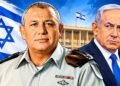


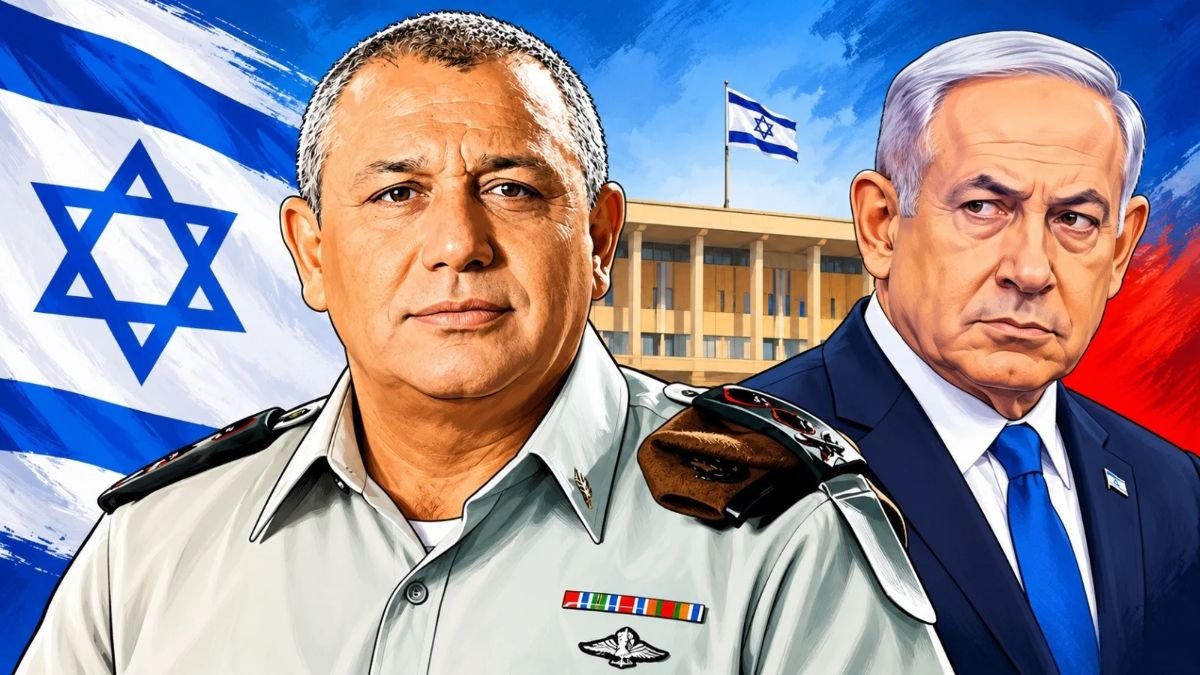
JERUSALEM: Israel is entering a potentially transformative political moment after President Isaac Herzog gave opposition leader Gadi Eisenkot the first opportunity to form a new government, dealing a significant blow to Prime Minister Benjamin Netanyahu’s prolonged political dominance. The decision follows the October 27 elections, which weakened Netanyahu’s parliamentary position and opened the possibility of a new governing arrangement in one of the Middle East’s most politically divided countries.
Eisenkot, a former chief of staff of the Israel Defense Forces (IDF) and leader of the Yashar party, has emerged as Netanyahu’s principal challenger. Although Netanyahu’s Likud remains the largest individual party in parliament, his political bloc has lost its majority. Eisenkot’s alliance has also failed to secure an outright majority, leaving the country facing complex coalition negotiations that could determine the future direction of Israeli politics.
Following Herzog’s announcement on Saturday night, Eisenkot declared that establishing a national emergency government was essential, pledging to do everything possible to demonstrate that his leadership could meet the country’s challenges. He now has up to six weeks to assemble a parliamentary majority, an undertaking that will require political compromises among parties with sharply contrasting ideological positions.
The development represents more than a conventional transfer of political advantage. It reflects growing dissatisfaction with the existing political establishment following the October 7, 2023, Hamas-led attacks, the subsequent military campaigns in Gaza and beyond, and continuing questions over Israel’s national security preparedness and political accountability.
Netanyahu has remained one of the most influential and enduring figures in Israeli politics, repeatedly navigating coalition breakdowns, political controversies and public criticism. His leadership has depended significantly on an alliance between Likud, religious parties and nationalist factions. However, the security failures surrounding October 7 and the prolonged regional conflict have intensified scrutiny of his government and raised questions about the country’s political and strategic priorities.
The loss of his parliamentary majority represents a serious challenge to Netanyahu’s ability to maintain power. Nevertheless, his political influence should not be underestimated. As leader of the largest individual party, he retains considerable leverage in coalition negotiations and could attempt to prevent Eisenkot from assembling a viable government.
One of the most consequential factors in the negotiations will be the growing influence of Arab-led parties, which made historic gains in the October elections. With neither major political bloc commanding a parliamentary majority, these parties have emerged as potential kingmakers. Their support could prove decisive in enabling Eisenkot to secure the numbers required to form a government.
However, cooperation with Arab-led parties remains politically sensitive, particularly after more than three years of war in Gaza. An Arab party has participated in an Israeli governing coalition only once in the country’s history. Any renewed arrangement could therefore represent a significant political development while simultaneously generating resistance among sections of the Israeli electorate.
Eisenkot has indicated a willingness to consider cooperation with Arab-led representatives under certain conditions, while maintaining a firm position against Hamas. This creates a difficult balancing act: securing parliamentary support without alienating Jewish political constituencies that oppose such an alliance. Even external parliamentary support, without formal participation in the coalition, could become controversial among members of his own political bloc.
Netanyahu has already sought to discourage such cooperation, warning against what he describes as a government dependent on parties supporting terrorism. His appeal for a national unity government appears designed to position himself as a defender of national security and political stability while complicating Eisenkot’s coalition-building efforts. His repeated criticism of Arab-led parties has further exposed the ideological divisions shaping Israel’s political landscape.
At the same time, the possibility of a broad unity government involving Likud and major Jewish political parties cannot be entirely dismissed. However, the differences between Netanyahu and Eisenkot extend beyond their competition for the premiership. One major disagreement concerns military-service exemptions for ultra-Orthodox men, an increasingly contentious issue involving equality, national responsibility and the distribution of military obligations. Another concerns Netanyahu’s opposition to a formal investigation into the security failures surrounding the October 7 attacks, an issue on which Eisenkot has advocated greater accountability.
Eisenkot therefore faces two interconnected challenges: negotiating with political opponents outside his alliance and maintaining unity among his own parliamentary partners. A minority government supported externally by Arab-led parties could offer one possible route to power, but opposition within his bloc makes that arrangement uncertain. Alternatively, a broader coalition could provide greater parliamentary stability, although reconciling competing positions on security, religion and governance would be difficult.
His Yashar party has meanwhile criticised Netanyahu’s continued reliance on far-right political factions, urging Likud members to reconsider their association with radical parties. Eisenkot’s political positioning suggests an attempt to build a government around a more broadly acceptable political framework, although its practical viability remains to be tested.
The consequences of a potential leadership change would extend well beyond Israel’s domestic political environment. Any incoming government would inherit major strategic challenges involving Gaza, the Palestinian question, regional security and relations with international partners. Israel’s relationship with the United States, Arab governments and European capitals would remain central to its diplomatic and security calculations.
The prolonged Gaza conflict has intensified international scrutiny of Israeli policy, while wider regional tensions have demonstrated the limitations of military power without a sustainable political framework. Eisenkot’s military background may offer continuity in security policy, but his leadership would face pressure to demonstrate a different approach to political accountability, regional diplomacy and the country’s long-term strategic priorities.
For Netanyahu, the presidential decision represents another formidable challenge to a political career defined by extraordinary resilience. For Eisenkot, it is an opportunity to translate electoral gains and political momentum into an effective governing majority. Neither outcome is guaranteed.
Israel’s current political uncertainty is ultimately about more than the rivalry between two prominent leaders. It concerns the future of national security, the relationship between religious and secular political forces, the representation of Arab citizens, military-service obligations and the accountability of political leadership.
Herzog’s decision has opened the door to a possible political transition, but whether that transition becomes reality will depend on the willingness of Israel’s fragmented political establishment to compromise. The coming weeks will reveal whether Netanyahu can once again consolidate his position or whether Eisenkot can assemble an alternative coalition capable of ending his prolonged tenure.
Israel’s political future now hinges on coalition compromises, institutional accountability and the possibility of a new leadership era.
-Josef Frankel