



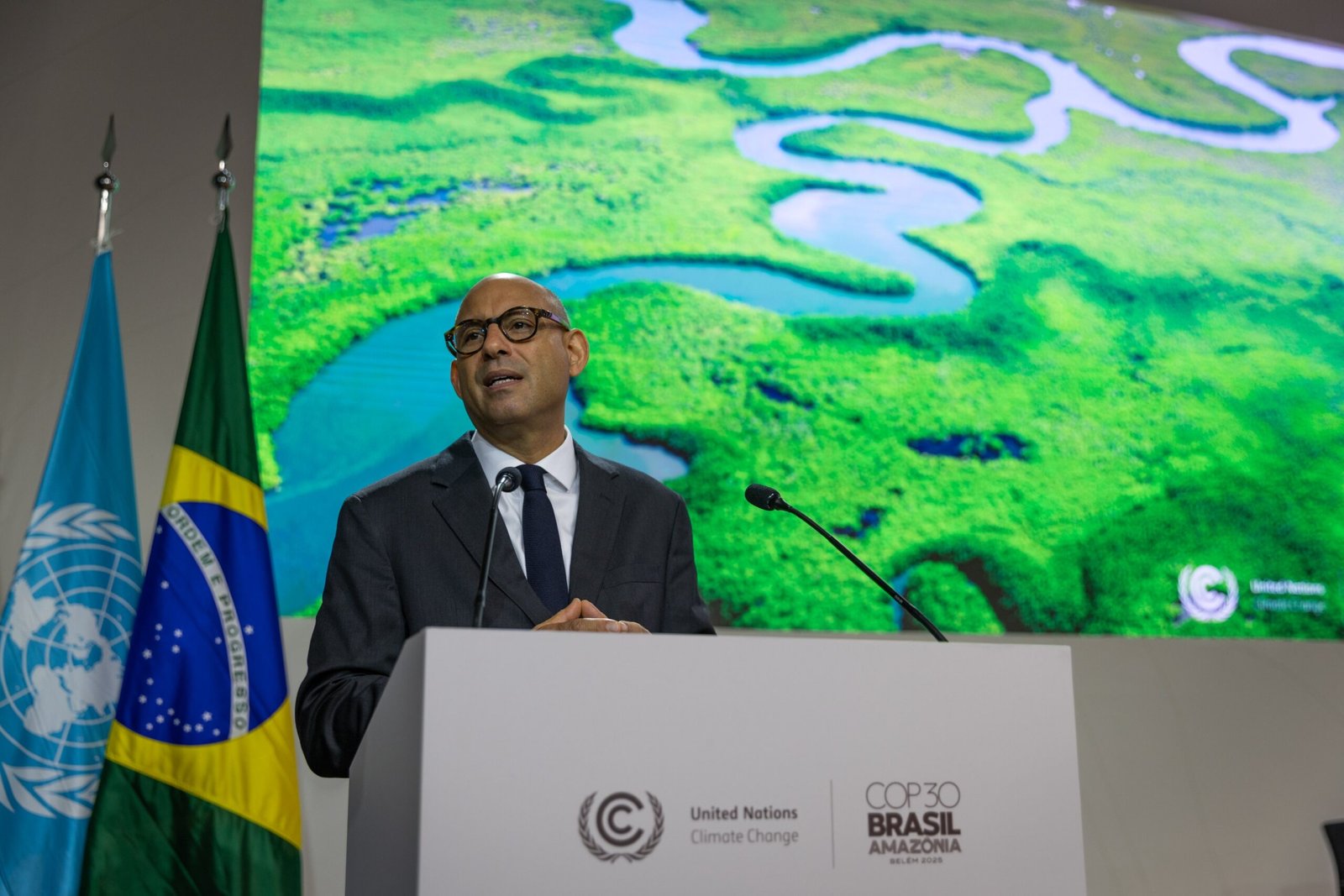
BELEM, Brazil: UN Climate Change Executive Secretary Simon Stiell opened week two of COP30 with a clear message: the world must show that climate cooperation can remain strong even as global politics grow more fractured. Addressing ministers and senior delegates at the high-level segment in Belém, Stiell said leaders were arriving “mid-stride,” with negotiations already intensifying. He praised the “spirit of goodwill” seen during the first week and reiterated that the Paris Agreement remains “humanity’s only way to survive this global climate crisis.”
Stiell acknowledged the geopolitical and economic headwinds but said he sensed a growing determination among countries to build on progress from recent COPs and demonstrate once again that multilateral climate action is delivering results, even if it must move “faster and fairer” to meet the urgency of the moment. He noted that week one of COP30 had already produced significant momentum, including a trillion-dollar surge into clean energy and electricity grids, a global drive to quadruple sustainable fuels, new commitments to green industry, and the early development of an adaptation investment pipeline.
These developments, he said, reflect an undeniable fact: a new climate-aligned economy is emerging far faster than expected. Last year alone, more than USD 2.2 trillion was invested in renewable energy, exceeding the GDP of over 180 countries. But Stiell warned that the pace of change in the real economy is outstripping the pace of negotiations inside the conference halls. “The spirit is there, but the speed is not,” he said, stressing that climate disasters are destroying lives and raising the cost of basic necessities worldwide.
Calling for urgency, Stiell urged ministers to confront the toughest issues immediately, warning that when decisions are delayed into overtime, “everybody loses.” He cautioned against tactical delays and declared that “the time for performative diplomacy has now passed.” As COP30 enters its decisive phase, Stiell said the world expects delivery, not delay. “Now’s the time to roll up our sleeves, come together, and get the job done,” he concluded, assuring delegates that the UNFCCC secretariat will support them every step of the way.
-WNN Desk with Input from Dr. Shahid Siddiqui in Belem, Brazil