


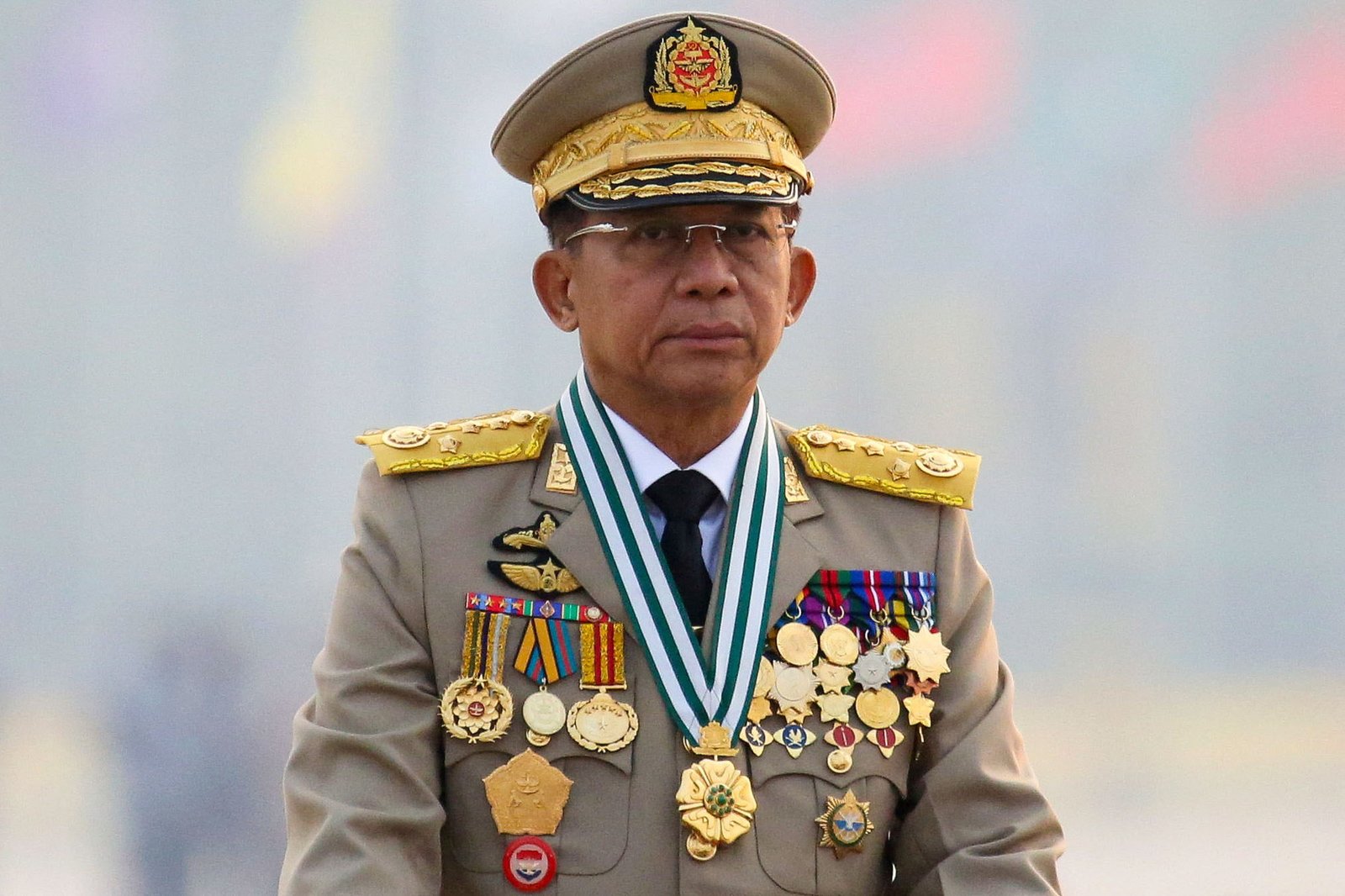
NAYPYIDAW:Myanmar’s parliament approved a 30-member cabinet appointed by junta leader and newly installed president Min Aung Hlaing on Thursday, reinforcing the continued dominance of the military establishment in the country’s political structure despite claims of a transition toward civilian governance.
The cabinet formation follows a widely disputed electoral victory by the military-backed Union Solidarity and Development Party, an outcome rejected by the United Nations and several Western governments, which described the process as lacking credibility and transparency.
The newly approved cabinet reflects a continuity-first approach, with most key ministries remaining under the control of retired generals, former security officials, and senior figures associated with the previous junta administration.
Among the changes, Defence Minister General Maung Maung Aye stepped down and was replaced by General Tun Aung, the former air commander-in-chief. Lieutenant General Yar Pyae resigned as Minister of Border Affairs and was succeeded by Lieutenant General Hpone Myat, previously the Minister of Home Affairs.
Former ambassador to China, Tin Maung Swe, has been appointed Foreign Affairs Minister. He earlier served as a military attaché in United Kingdom, reflecting the continued diplomatic reliance on officials with security-sector backgrounds.
Several senior figures closely associated with the military administration that seized power during the 2021 Myanmar coup d’état have also retained cabinet positions. These include retired generals Mya Tun Oo and Tin Aung San, underscoring the persistence of military influence across governance institutions.
In addition, the president nominated officials to lead another 14 ministries, extending the presence of former generals and senior police officials across executive and administrative structures. Analysts say the appointments indicate limited prospects for structural reform or civilian-led policymaking.
Political analyst Aung Kyaw Soe observed that the new cabinet reflects a governance model in which military officers operate in nominally civilian roles while maintaining centralized authority under the junta leadership.
Myanmar has remained engulfed in instability since the military, known as the Tatmadaw, removed the democratically elected government led by Aung San Suu Kyi during the 2021 coup. The country has since experienced widespread armed resistance, economic disruption, and humanitarian deterioration.
Observers note that the latest cabinet reshuffle signals continuity rather than reform, reinforcing expectations that Myanmar’s political trajectory will remain shaped primarily by military leadership rather than a genuine transition toward democratic governance.
-Khanh Vu