



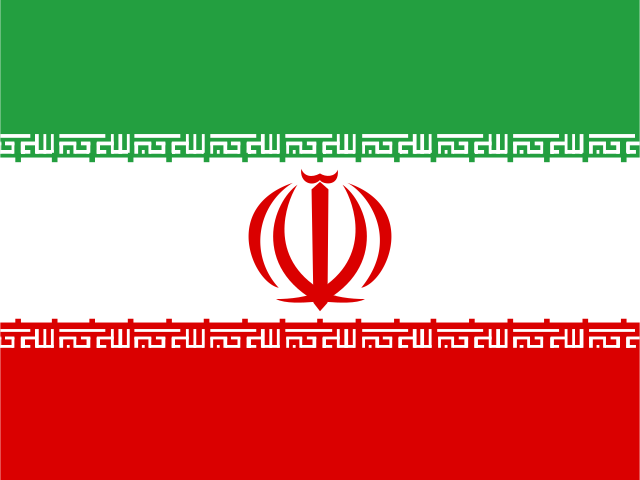
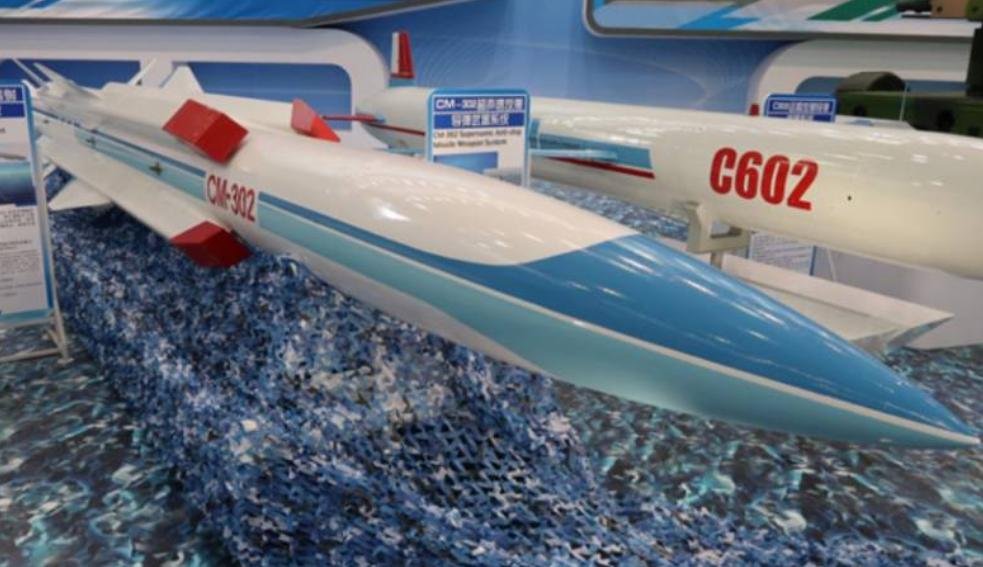
TEHRAN/WASHINGTON/BEIJING: Iran is nearing completion of a high-stakes weapons agreement with China to acquire advanced CM-302 supersonic anti-ship cruise missiles, according to officials briefed on the negotiations. If finalized, the deal would significantly strengthen Tehran’s maritime strike capacity and alter the balance of power across the Persian Gulfand wider Middle East.
Talks, ongoing for more than two years, reportedly accelerated after last year’s clashes between Iran and Israel. Senior Iranian officials, including Deputy Defence Minister Massoud Oraei, traveled to Beijing as negotiations entered advanced stages. The CM-302, produced by China Aerospace Science and Industry Corporation, has a range of roughly 290 kilometers and travels at supersonic speeds while skimming low over water, a flight profile designed to evade modern shipborne air defenses. Analysts describe the system as a potential “game-changer” in naval engagements.
The prospective transfer underscores deepening strategic alignment between Tehran and Beijing. During Iranian President Masoud Pezeshkian’s visit to Beijing in September, Chinese President Xi Jinping publicly reaffirmed support for Iran’s sovereignty and territorial integrity. Weeks later, China joined Russia and Iran in formally criticizing the reimposition of sanctions on Tehran, signaling coordinated diplomatic resistance to Western pressure.
For Washington, the implications are immediate. The White House has reinforced its naval posture in the region, deploying the aircraft carriers USS Abraham Lincoln and USS Gerald R. Ford along with their strike groups. Together, the vessels represent one of the most formidable concentrations of U.S. naval power in recent years. President Donald Trump has warned Tehran that failure to reach a nuclear understanding could invite decisive military action.
Strategically, the CM-302 would bolster Iran’s anti-access/area-denial (A2/AD) doctrine, a strategy aimed at deterring or complicating U.S. and allied naval operations in contested waters. With the ability to be launched from ships, aircraft, or mobile ground platforms, the missile could threaten commercial shipping lanes and high-value naval assets alike. According to researchers at the Stockholm International Peace Research Institute, Iran’s arsenal was significantly degraded during last year’s hostilities, making advanced replenishment a priority.
Beyond anti-ship systems, Iranian officials are reportedly exploring additional Chinese platforms, including surface-to-air systems, portable air defenses, anti-ballistic technologies, and even anti-satellite capabilities suggesting a broader modernization push.
Historically, China was a key arms supplier to Iran during the 1980s, but transfers diminished under international sanctions pressure by the late 1990s. In recent years, U.S. authorities have sanctioned Chinese entities for allegedly supplying missile-related components to Iran, though Beijing denies violating export controls and has not publicly acknowledged providing complete missile systems.
At its core, the emerging missile pact reflects more than a tactical arms sale. It signals China’s willingness to expand its strategic footprint in a region long dominated by U.S. naval supremacy and positions Iran at the center of an intensifying geopolitical contest between Washington on one side and Beijing and Moscow on the other.
If completed, the deal would not merely upgrade Iran’s arsenal; it would deepen the strategic fault line running through the Gulf, raising the stakes of deterrence, escalation, and great-power rivalry in one of the world’s most vital maritime corridors.
-Gram Hinnant.
READ THE FULL E-MAGAZINE | WorldAffairs: Understand the World Before It Shapes You