


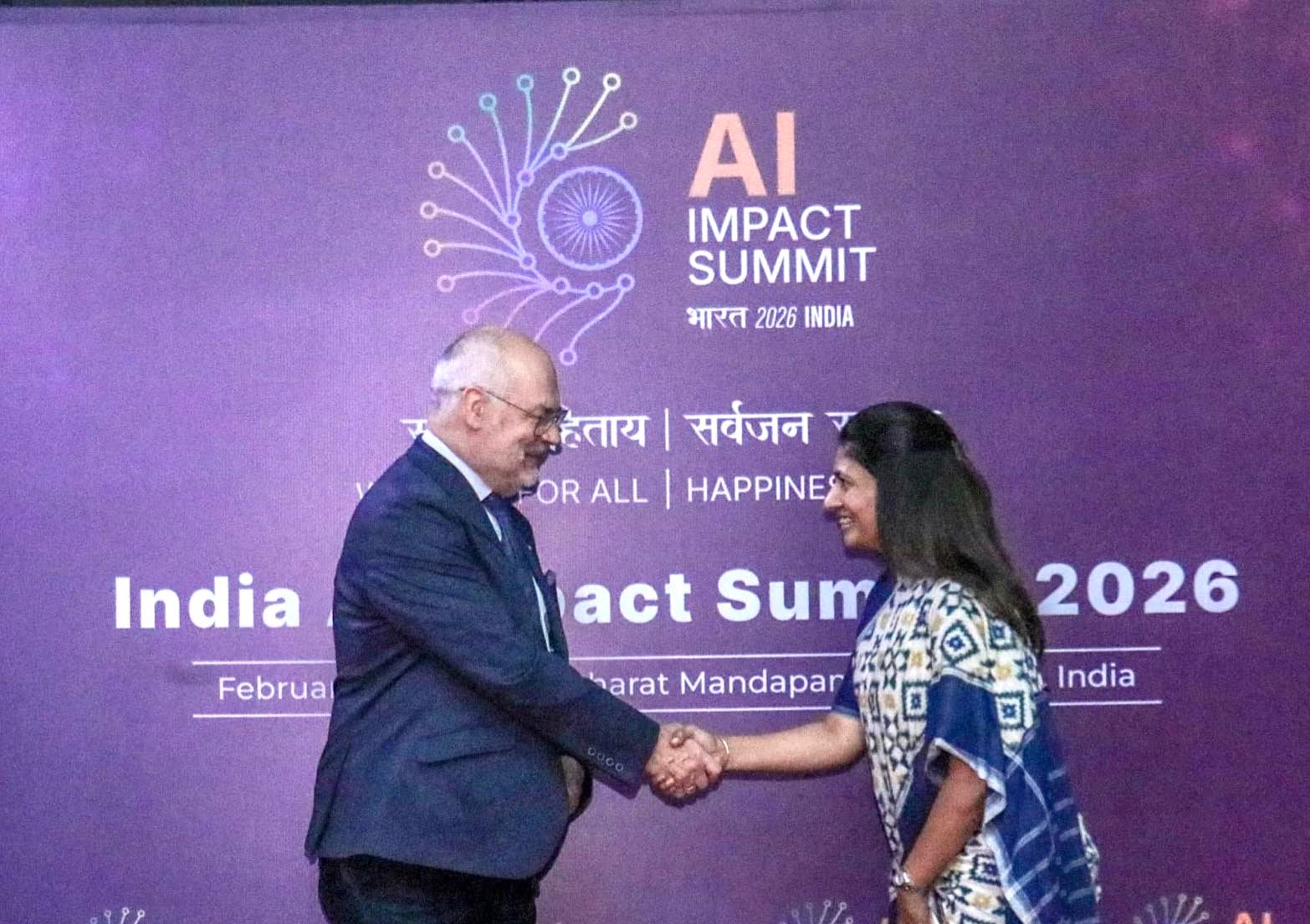
NEW DELHI: As India hosts one of the most consequential artificial intelligence gatherings yet, India is attempting something far more ambitious than a technology conference, it is positioning itself as a geopolitical bridge in the emerging AI order.
The India AI Impact Summit has drawn more than 20 heads of state and government along with leading global technology CEOs, underscoring how artificial intelligence has rapidly moved from a niche technological debate to the center of economic strategy, national security and global governance. The presence of leaders including Emmanuel Macron, Narendra Modi and Luiz Inácio Lula da Silva reflects a growing consensus: AI is no longer just an industry concern, but a defining element of global power.

This is the first major AI summit hosted in the Global South, and that symbolism matters. India is leveraging its position as the world’s most populous nation and one of the fastest-growing digital economies to present itself as a mediator between advanced Western technology powers and developing economies seeking access, equity and regulatory clarity in AI deployment. The message from New Delhi is clear, AI governance cannot remain dominated by wealthy technology-producing nations alone.
At stake is the architecture of the future global digital economy. Artificial intelligence is already transforming industries from defense and healthcare to climate modelling and finance, while simultaneously reshaping labour markets and raising new ethical and regulatory dilemmas. Governments and corporations now see AI as a strategic infrastructure comparable to energy or trade routes, not merely a productivity tool.
India’s strategy is twofold. Domestically, it seeks to project itself as an emerging AI power capable of deploying technology at scale through its vast digital public infrastructure from digital identity to real-time payment platforms offering a low-cost model for AI adoption across developing economies. Internationally, it is attempting to shape the governance conversation by promoting inclusive growth, responsible innovation and affordable access as central principles.
The summit’s expected “New Delhi declaration,” while non-binding, is likely to outline shared principles on AI safety, responsible deployment and global cooperation. Yet its significance will be geopolitical rather than legal. With global regulatory approaches diverging from the European Union’s strict frameworks to the United States’ innovation-first stance India is positioning itself as a consensus-builder capable of bridging regulatory and developmental divides.
The gathering also reflects the deepening convergence of statecraft and corporate power in the AI era. Tech leaders including Sam Altman, Sundar Pichai and Brad Smith are participating alongside political leaders, highlighting how AI governance now requires coordination between governments and the private sector that controls much of the technology’s development.
Yet beneath the optimism lies strategic anxiety. Advanced AI systems bring risks ranging from misinformation and cyber warfare to systemic economic disruption. International efforts to establish scientific panels and global forums under the United Nations signal growing recognition that unchecked AI competition could deepen geopolitical rivalries rather than foster cooperation.
For India, the summit is also about economic transformation. As the country pursues its ambition of becoming a developed economy by 2047, AI is viewed as critical for strengthening manufacturing, energy systems and public infrastructure while generating new job categories through reskilling initiatives. But the challenge remains balancing automation-driven productivity gains with employment concerns in one of the world’s largest workforces.
The broader significance of the New Delhi summit lies in timing. The global order is already fragmenting into competing technology ecosystems, supply chains and regulatory blocs. By convening leaders from across geopolitical divides, India is attempting to prevent AI from becoming another arena of zero-sum competition.
Whether that ambition succeeds will depend on what follows the declarations and photo opportunities. If New Delhi can catalyze sustained cooperation on AI governance, infrastructure and access, it may help shape a more inclusive digital order. If not, the summit could simply mark another step toward a fractured technological future defined by rival standards, competing models and strategic mistrust.
In an era where code is becoming as consequential as currency or military power, the battle to define AI’s rules is also a battle to define the next global order and India has stepped forward to host it.
READ THE FULL E-MAGAZINE | WorldAffairs: For Decision-Makers Who Need More Than Headlines