




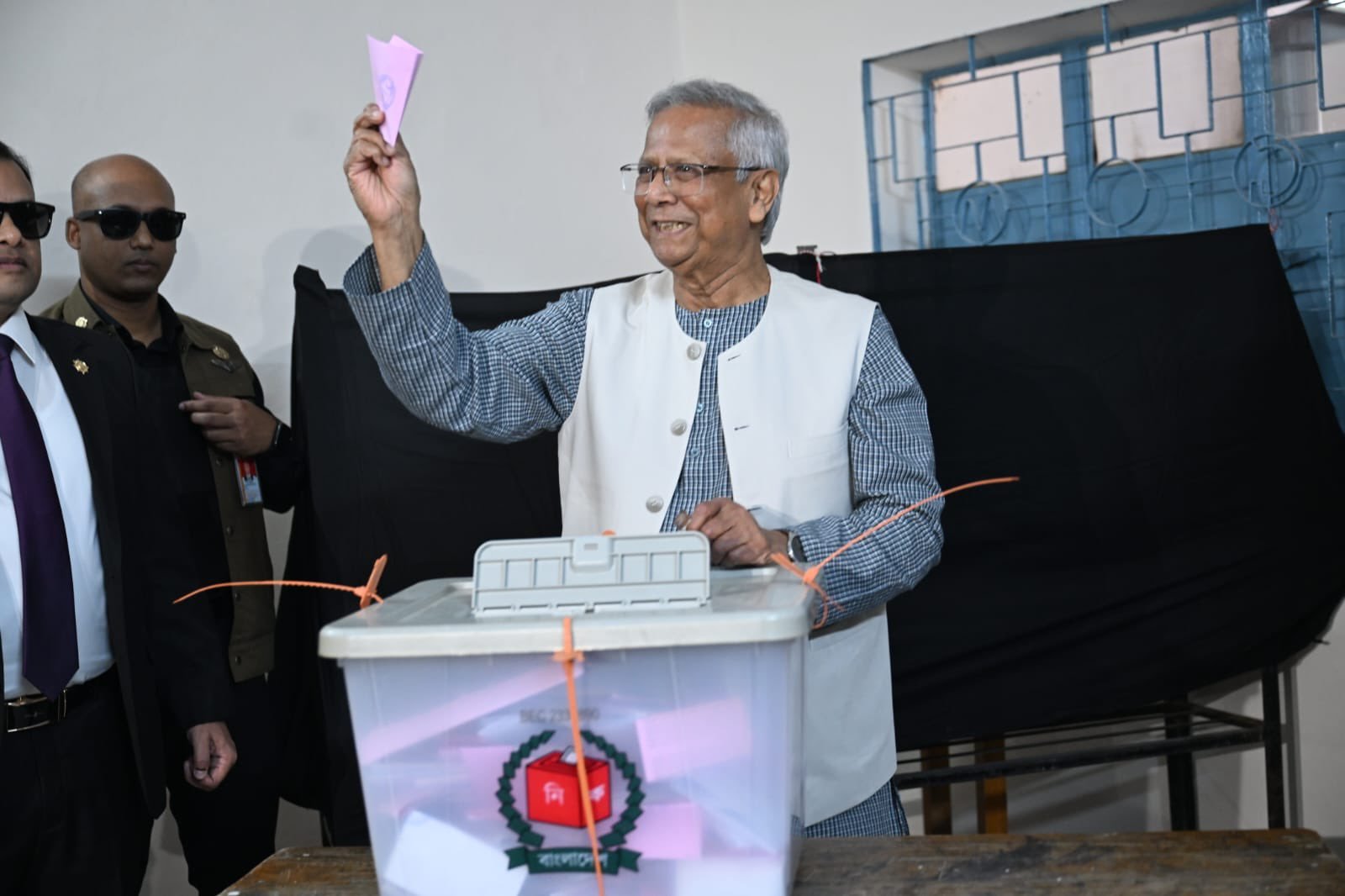
DHAKA: Bangladesh is voting in a pivotal national election widely seen as a defining moment in its political transition following the mass protests of July 2024 that forced former prime minister Sheikh Hasina from power and ended more than a decade of increasingly centralised rule. The vote marks the first national poll under an interim administration led by Nobel laureate Muhammad Yunus and combines a parliamentary election with a constitutional referendum, an unusual dual process with significant institutional implications.
Polling began at 7:30am local time and will run until late afternoon, with more than 127 million eligible voters across the country. Nearly 2,000 candidates are contesting 299 parliamentary seats, according to Bangladesh’s Election Commission. Voting in one constituency has been suspended following the death of a candidate. For the first time, Bangladeshi citizens living abroad have been allowed to participate through a limited postal voting system, reflecting efforts to broaden electoral participation.
A transition election after political upheaval
The election follows a turbulent political year in which widespread protests led largely by students and young urban voters challenged the legitimacy of the previous government and ultimately led to Sheikh Hasina’s departure. The interim administration under Yunus has since focused on stabilising the political environment, restoring confidence in electoral processes, and preparing for a return to elected governance.
Yunus has repeatedly emphasised that the interim government’s primary mandate is to deliver a credible election and then transfer power to an elected leadership. After casting his vote in Dhaka, he described the election as a turning point and reiterated that the interim administration would step down once a new government is formed.
To enhance transparency, around 500 international observers from organisations including the European Union and the Commonwealth are monitoring the polling process. Early reports indicate a relatively calm voting environment compared with previous election cycles that were often marred by boycotts, clashes, and allegations of irregularities.
Dual ballot: parliamentary vote and constitutional referendum
A distinctive feature of this election is the simultaneous constitutional referendum. Voters are being asked not only to elect members of parliament but also to approve a package of institutional reforms designed to reshape governance structures and address long-standing concerns over executive dominance and electoral credibility.
Analysts note that combining a parliamentary election with a constitutional plebiscite is unprecedented in Bangladesh. The interim administration has argued that holding both votes together ensures that the same electorate endorses both the reform framework and the lawmakers responsible for implementing it. Political parties also supported completing the transition within a defined timeframe rather than prolonging the interim period.
The proposed constitutional changes reportedly include measures aimed at strengthening checks and balances, enhancing judicial and electoral oversight, and reducing the concentration of power in the executive branch. If approved, these reforms could significantly alter Bangladesh’s institutional landscape. However, the practical impact will depend on how effectively a future government implements them and whether political consensus can be sustained.
Changing political dynamics
Bangladesh’s political system has long been shaped by rivalry between two major parties: the Awami League and the Bangladesh Nationalist Party (BNP). The current election is taking place under altered circumstances following the banning of the Awami League after the 2024 political upheaval, leaving the BNP as the principal electoral contender.
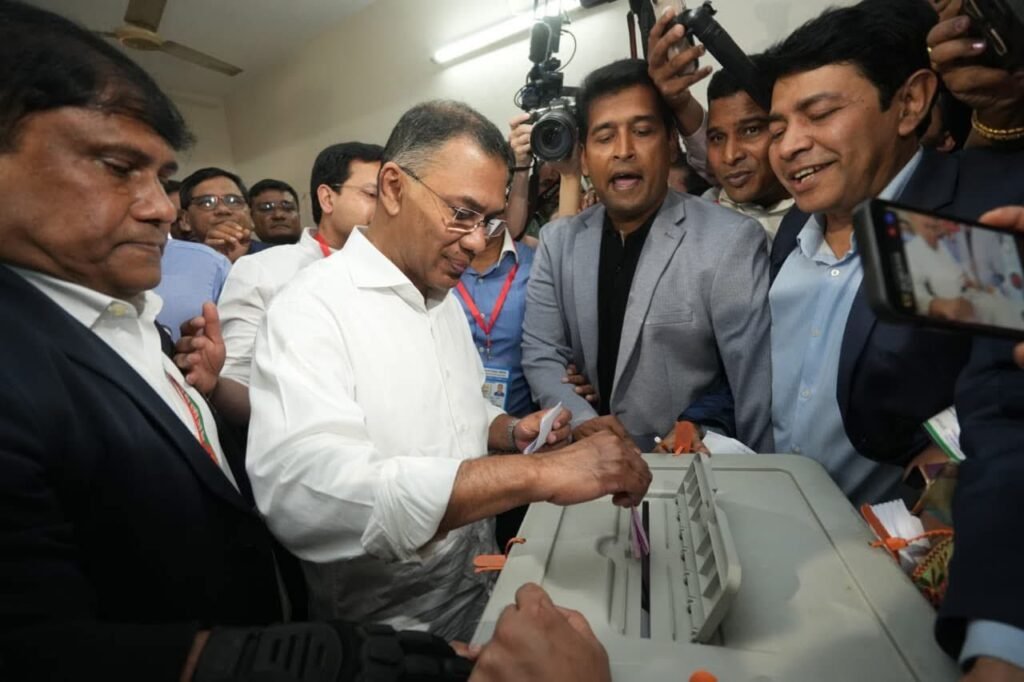
The BNP, now led by Tarique Rahman, has positioned itself as the primary vehicle for political change. Rahman, who spent years abroad during the previous government, returned to participate in the campaign and cast his vote amid heavy media attention. The party faces competition from a broad coalition that includes Islamist and smaller political groups seeking to expand their influence in a more open political environment.
The absence of the Awami League has created both opportunities and uncertainties. While it has reduced the likelihood of a two-party confrontation, it has also raised questions about political inclusivity and the long-term structure of Bangladesh’s party system. Some analysts suggest that the election could mark a transition toward a more fragmented but potentially competitive political landscape.
Information integrity and AI-generated content
The campaign has highlighted the growing role of digital media and emerging technologies in shaping political narratives. Observers and researchers report a significant rise in AI-generated political content circulating on social media platforms. These include synthetic videos featuring fabricated news presenters and simulated citizens delivering partisan messages, often without clear disclosure.
Such content has attracted substantial online engagement, underscoring both the opportunities and risks associated with digital campaigning. While there is limited evidence that disinformation has directly disrupted voting, analysts warn that the proliferation of synthetic media could influence perceptions of legitimacy and trust in the electoral process.
The relatively peaceful campaign environment, marked by fewer violent incidents than in some previous elections—has been offset by concerns about the information ecosystem. Authorities and civil society groups have urged voters to rely on verified sources and exercise caution when consuming political content online.
Youth participation and democratic expectations
A significant proportion of Bangladesh’s electorate consists of younger voters, many of whom have not previously experienced a fully competitive national election. This demographic played a prominent role in the 2024 protests and is widely viewed as a key constituency shaping the country’s political future.
The current election is therefore being interpreted not only as a routine democratic exercise but also as a test of whether the political system can regain public trust. Turnout levels and perceptions of fairness will likely influence the legitimacy of the next government and the durability of the transition.
While enthusiasm is evident at polling stations, public sentiment remains cautious. Concerns about disinformation, institutional continuity, and post-election stability persist. Nevertheless, the generally orderly conduct of the campaign has raised hopes for a credible outcome.
Domestic and international implications
The election’s outcome will have important implications for Bangladesh’s domestic governance and its international relationships. A credible and widely accepted result could help restore investor confidence, strengthen ties with development partners, and reinforce Bangladesh’s position as a key economic player in South Asia.
Conversely, a disputed result or fragile governing arrangement could complicate economic management and reform efforts at a time of global economic uncertainty. The constitutional referendum adds an additional layer of significance, as its approval or rejection will shape the institutional framework within which the next government operates.
A critical juncture
This election represents a critical juncture in Bangladesh’s political evolution. It is both a response to the upheaval of 2024 and an attempt to establish a more stable and credible democratic framework. Whether it ultimately delivers a durable reset or simply ushers in a new phase of political contestation will depend on the integrity of the process, the acceptance of results by major actors, and the capacity of the next government to govern inclusively.
For now, the vote stands as a significant test of Bangladesh’s democratic resilience and its ability to navigate a complex transition from protest-driven change to institutional renewal.
-Anirban Ethan
READ THE FULL E-MAGAZINE | WorldAffairs: For Decision-Makers Who Need More Than Headlines