

DUBAI/WASHINGTON: The confrontation unfolding around the Strait of Hormuz is no longer a contained maritime standoff, it is fast becoming the defining geopolitical stress test of the current Middle East order. What began as a fragile truce has evolved into a layered conflict where military signaling, economic pressure, and diplomatic maneuvering intersect with global consequences.
At the tactical level, the exchange of fire between U.S. and Iranian forces reflects a familiar pattern of calibrated escalation. Washington’s decision to deploy naval escorts under “Project Freedom,” backed by President Donald Trump, is intended to reinforce the principle of open sea lanes. Yet, in practice, it also risks turning one of the world’s busiest energy corridors into a contested military zone. Tehran, for its part, has responded not with outright closure, but with strategic disruption leveraging ambiguity to impose costs without triggering full-scale war.
Statements from Iran’s parliament speaker Mohammad Baqer Qalibaf underscore this posture. His warning that Iran has “not even begun yet” is less a declaration of imminent escalation than a signal of latent capability. It reflects a doctrine rooted in deterrence through uncertainty, where the threat of disruption is as powerful as its execution.
Central to this approach is the Islamic Revolutionary Guard Corps, which has refined a doctrine of asymmetric maritime warfare. By deploying drones, missiles, mines, and fast-attack craft, the IRGC has effectively transformed the strait into a zone of calculated unpredictability. Control, in this context, is not about permanent denial but about making access contingent, risky, and politically charged.
The implications extend far beyond military strategy. The strait remains a critical artery for global oil and commodity flows, and even partial disruption has immediate ripple effects across energy markets, insurance costs, and supply chains. Reports of damaged vessels, contested transits, and strikes near key infrastructure in the United Arab Emirates including the vital port of Fujairah highlight how quickly localized incidents can escalate into systemic economic risk.
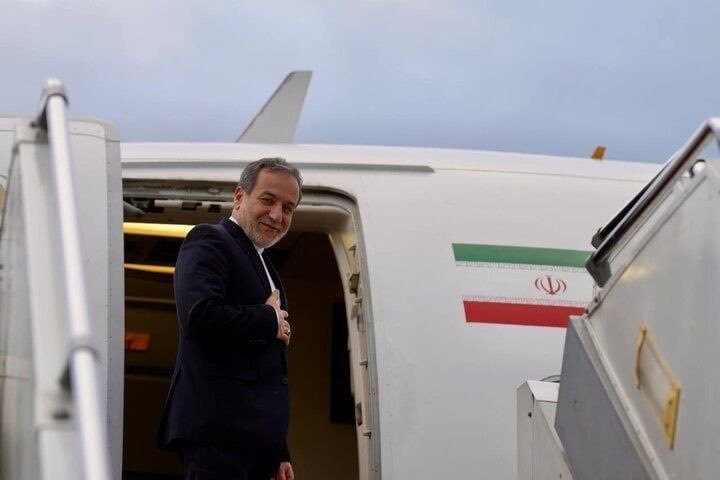
Yet the most consequential dimension of the crisis may be diplomatic. Iran’s Foreign Minister Abbas Araqchi is heading to Beijing for talks with Wang Yi, a move that signals Tehran’s intent to internationalize the crisis on its own terms. China’s role here is neither incidental nor symbolic. As a major energy importer with deep economic ties to Iran and growing strategic ambitions in the region, Beijing occupies a unique position, capable of influencing both de-escalation and alignment.
This emerging axis of consultation reflects a broader shift: the Middle East is no longer solely a theater of regional rivalries or U.S.-centric security architecture. It is increasingly embedded within great power competition. China’s preference for stability driven by its economic interests may push it toward mediation, but its resistance to Western pressure and sanctions also aligns it, at least partially, with Iran’s strategic posture.
Meanwhile, Washington’s objectives remain complex and, at times, contradictory. While seeking to contain Iran’s nuclear and missile ambitions, the United States is also attempting to preserve global energy stability and reassure regional allies. Intelligence assessments suggesting limited damage to Iran’s nuclear infrastructure further complicate this equation, raising questions about the efficacy of military pressure as a tool for strategic change.
The result is a precarious equilibrium. Neither side appears willing to de-escalate unilaterally, yet both are operating below the threshold of total war. This “gray zone” conflict marked by deniable actions, conflicting narratives, and incremental escalation creates a persistent risk of miscalculation.
What makes the current moment particularly dangerous is the convergence of military friction and diplomatic realignment. As Iran deepens engagement with China and the United States doubles down on deterrence, the space for neutral mediation narrows. Regional actors, including the UAE, are increasingly drawn into the confrontation, further complicating any pathway to stability.
Ultimately, the crisis in the Strait of Hormuz is not just about control of a waterway. It is about who sets the rules of engagement in a shifting global order. Whether through force, diplomacy, or economic leverage, the outcome will shape not only the future of the Middle East but also the credibility of international norms governing trade, security, and sovereignty.
For now, the truce holds in name only. In reality, the region stands at the edge of a deeper and more unpredictable phase one where every maneuver, whether military or diplomatic, carries consequences far beyond the Gulf.
-Alex Russell
READ THE FULL E-MAGAZINE | SUBSCRIBE WorldAffairs To Understand the World Before It Shapes You