


WASHINGTON/DUBAI: As the Middle East conflict enters its third week, the United States is significantly ramping up its military presence, deploying additional warships and thousands of Marines to the region amid intensifying hostilities with Iran.
The escalation comes as Iran signaled a dangerous expansion of its retaliation strategy, warning that recreational and tourist locations worldwide could become potential targets. The threat underscores growing fears that the conflict may spill far beyond the region.
Heavy Israeli airstrikes continue to pound Tehran and key infrastructures, while Iran has responded with missile and drone attacks targeting Israel as well as energy installations across Gulf Arab states. The violence coincides with major religious and cultural observances, including Eid al-Fitr and Nowruz, both marked this year under the shadow of war.
Despite sustained bombardment by U.S. and Israeli forces since late February, the full extent of damage to Iran’s nuclear, military, and energy infrastructure remains unclear. Equally uncertain is the internal stability of Iran’s leadership, as the country operates under heightened secrecy.
Still, Iran has demonstrated its ability to disrupt global energy flows. Attacks on oil infrastructure and shipping routes have contributed to a sharp spike in fuel prices, sending shockwaves through the global economy and raising concerns over prolonged supply shortages.
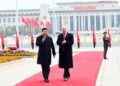
Ayatollah Mojtaba Khamenei, Iran’s new Supreme Leader, struck a defiant tone in a Nowruz message, dismissing U.S. and Israeli objectives as misguided. He asserted that attempts to destabilize Iran by targeting its leadership would fail, praising national resilience in the face of sustained attacks.
Meanwhile, Iranian military officials have issued stark warnings, suggesting that adversaries could face repercussions in unexpected locations worldwide. Analysts interpret this as a signal that Tehran may revert to asymmetric tactics, including attacks beyond traditional battle zones.
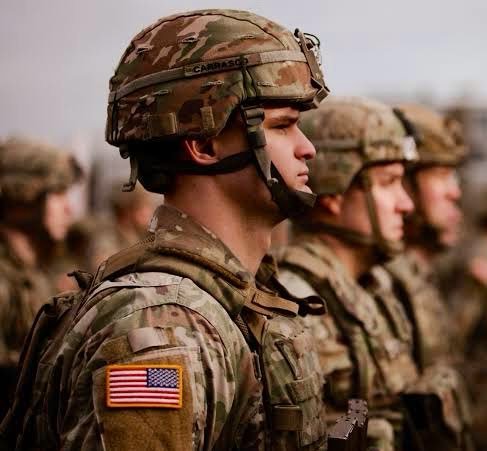
On the military front, the United States is reinforcing its regional posture. Additional amphibious assault ships, including the USS Boxer, along with approximately 2,500 Marines, are being deployed. This follows an earlier redeployment of similar forces from the Pacific, effectively doubling the U.S. Marine presence in the region.
Officials familiar with the deployments, speaking to WorldAffairs, indicated that while no decision has been made to launch ground operations inside Iran, contingency plans remain under consideration. Potential scenarios reportedly include limited coastal landings or operations targeting strategic oil export hubs.
President Donald Trump has maintained that there are no immediate plans for a full-scale ground invasion but emphasized that all options remain on the table. At the same time, he has sharply criticized NATO allies for their reluctance to take a more active role in securing the Strait of Hormuz.
The vital waterway, responsible for nearly 20% of global oil and LNG shipments, has been largely disrupted since the conflict began. Although several Western nations have pledged support for ensuring maritime security, they have stopped short of committing to direct military engagement.
Energy markets are already feeling the impact. Oil prices have surged by nearly 50% since the onset of the conflict, with Brent crude hovering around $110 per barrel. Analysts warn that the disruption , estimated at roughly 12 million barrels per day, could have long-lasting consequences for global supply chains.
The human cost is also mounting. More than 2,000 people have reportedly been killed, with the majority of casualties in Iran and Lebanon. Meanwhile, rising fuel costs and fears of deeper military involvement are fueling anxiety among the American public.
On the battlefield, Israel reports continued strikes on Iranian weapons facilities and missile storage sites, while also intercepting waves of incoming Iranian projectiles. Some missile debris has landed near sensitive religious sites in Jerusalem, highlighting the broader risks of escalation.
Iran’s Revolutionary Guards claim to have targeted Israeli cities and U.S. military bases in the region, including installations in Bahrain. Energy infrastructure remains a key target, with recent drone attacks hitting Kuwait’s Mina Al-Ahmadi refinery.
The conflict has also taken a toll on Iran’s leadership ranks, with several senior intelligence and military officials reportedly killed in targeted strikes.
As global leaders weigh their next moves, the conflict shows no signs of de-escalation. With critical energy routes under threat and military buildups accelerating, the risk of a wider regional or even global confrontation continues to grow.
-Nafees Alqathani Davis Choukeir