

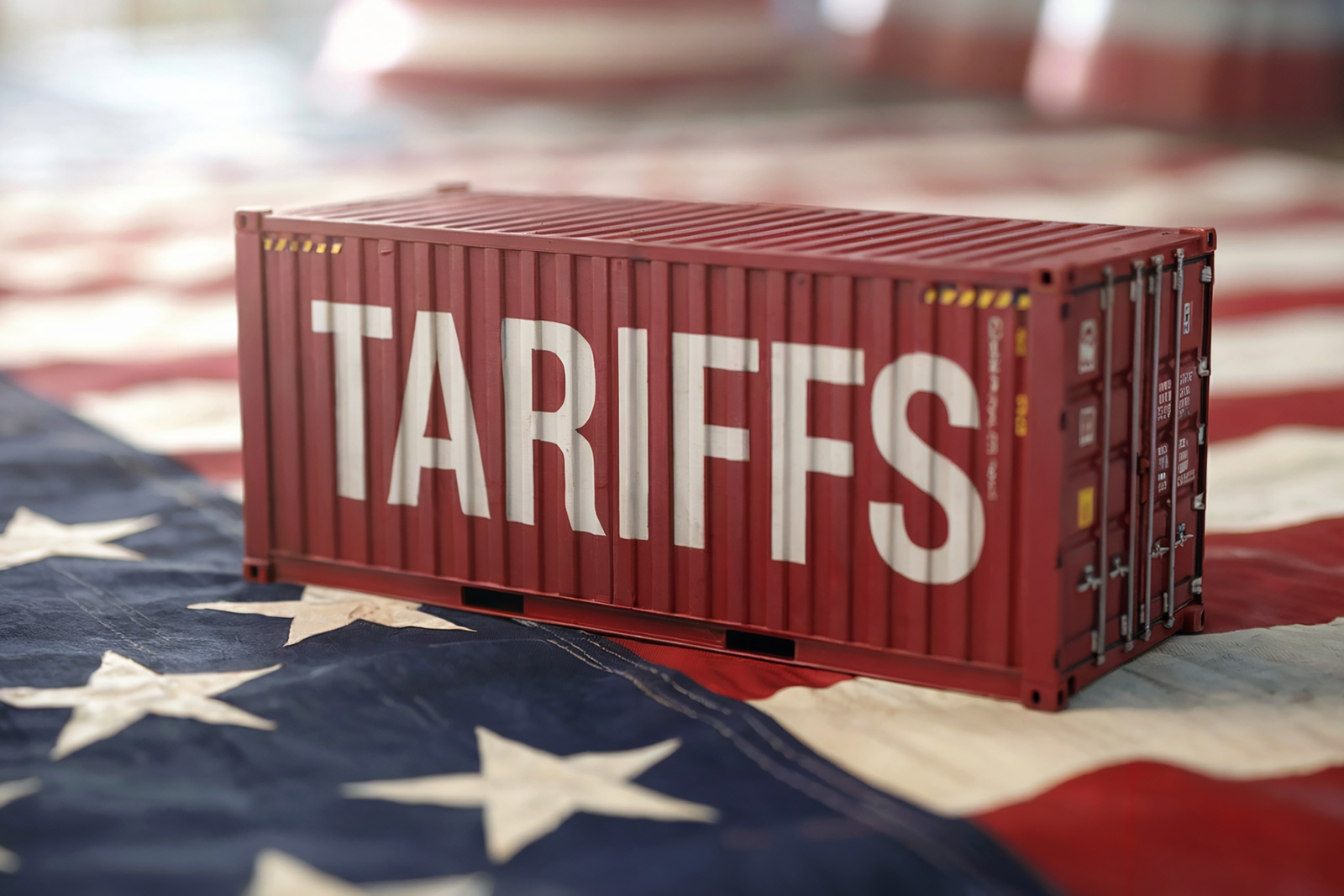
WASHINGTON: A day after the U.S. Supreme Court struck down his sweeping tariff program, President Donald Trump announced he would raise a temporary global tariff from 10% to 15% the highest level permitted under a separate trade law.
The move marks a rapid escalation in Trump’s trade policy, coming less than 24 hours after he imposed a 10% across-the-board tariff following the court’s decision. The justices ruled that Trump had exceeded his authority under the International Emergency Economic Powers Act, the statute he had relied on to justify higher import duties.
A Shift to Section 122
The administration is now turning to Section 122 of the Trade Act of 1974, a rarely used provision that allows tariffs of up to 15% for 150 days to address balance-of-payments concerns. Any extension beyond that period would require congressional approval.
No president has previously invoked Section 122 in this way, and trade experts warn it could face fresh legal challenges. Congressional aides, including members of Trump’s own Republican Party, have expressed skepticism that lawmakers would approve extending the tariffs, particularly as public frustration over rising prices grows.
In a post on Truth Social, Trump said the increase would take effect immediately, calling the 15% rate “fully allowed and legally tested.” He added that his administration would use the 150-day window to explore other “legally permissible” avenues for imposing tariffs.
Alternative Trade Tools
The White House indicated it could rely on other trade statutes that permit targeted tariffs on specific products or countries following national security or unfair trade investigations.
Certain goods including critical minerals, metals and energy products will remain exempt under the new Section 122 framework, according to officials.
Jamieson Greer, the U.S. trade representative, said that bilateral agreements negotiated with specific countries would remain intact. For example, imports from Malaysia and Cambodia will continue to face agreed-upon rates of 19%, even though the universal tariff stands at 15%.
Indonesia’s chief trade negotiator, Airlangga Hartarto, confirmed that a 19% tariff agreement signed Friday remains valid despite the court’s ruling.
Winners and Losers
The ruling may offer temporary relief to countries like Brazil, which had faced a 40% tariff but has not negotiated a separate agreement. Under the new structure, its rate could fall to 15% at least for the 150-day period.
However, the policy shift injects fresh uncertainty into global trade. Wendy Cutler, a former senior U.S. trade official now with the Asia Society Policy Institute, said the rapid adjustment underscores the unpredictability facing trading partners and businesses.
Political Stakes
The tariff escalation comes as Trump’s economic approval ratings slide. A recent Reuters/Ipsos poll showed 34% approval for his handling of the economy, with 57% disapproving.
With midterm elections approaching, Democrats argue the tariffs have worsened inflation and raised costs for American consumers. Republicans face mounting pressure to balance support for Trump’s trade agenda with voter concerns over affordability.
The Supreme Court’s ruling authored by Chief Justice John Roberts makes clear that presidential authority over tariffs is not unlimited. But Trump’s swift pivot suggests the legal battle over U.S. trade policy is far from over.
-Doina Nickel