

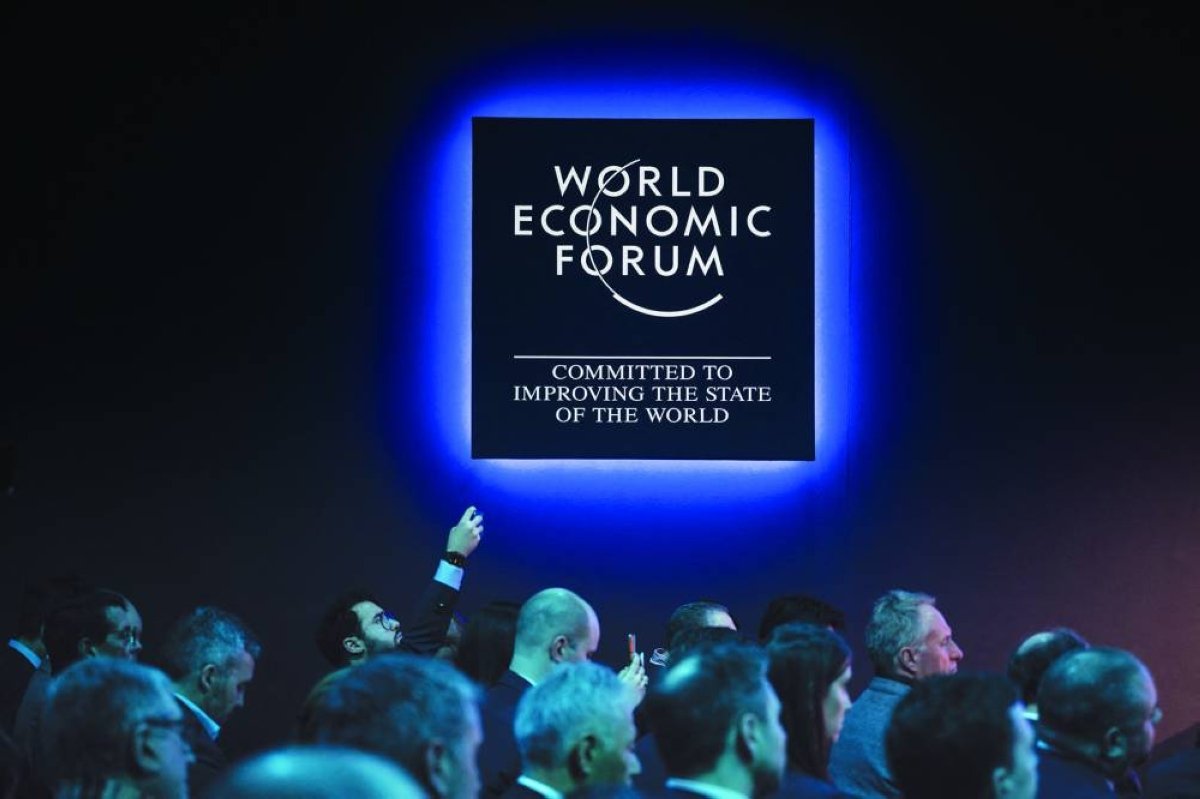
ZURICH: As business chiefs, political leaders and policymakers head to the World Economic Forum in Davos, they arrive at a gathering whose founding promise of a cooperative, rules-based global order is under unprecedented strain.
The expected presence of U.S. President Donald Trump underscores that tension. His unapologetically unilateral “America First” approach sits uneasily with Davos’ tradition of consensus and dialogue and has long fed criticism that the forum is little more than a comfortable retreat for the wealthy elite.
Over recent years, Trump’s agenda has rewritten global engagement: tariffs wielded as weapons, foreign interventions justified by hard power logic, a retreat from international cooperation on climate, health and multilateral governance and even unconventional threats, such as the infamous proposal to forcibly acquire Greenland. His administration’s confrontation with institutions extended to threatening Federal Reserve Chair Jerome Powell, a move that forced senior central bankers to defend the independence of the global financial system.
This year’s WEF theme, “A Spirit of Dialogue,” is less a slogan than a plea. “Dialogue is not a luxury, it is a necessity,” said WEF President and CEO Børge Brende. But critics warn that in a world where major powers increasingly act for themselves, Davos risks fading into irrelevance.
“Who is defending the international rules-based order anymore?” asks former Swiss diplomat Daniel Woker. “If every nation only looks inward, Davos becomes a relic of the past.”
The forum is also facing an internal transition. With founder Klaus Schwab, now 87, stepping aside earlier this year, questions linger over continuity and credibility though an internal inquiry cleared him of wrongdoing after whistleblower allegations. Leadership now rests with interim co-chairs Larry Fink of BlackRock and Roche vice-chair André Hoffmann.
Still, Davos remains vast in scale. More than 3,000 delegates from over 130 countries, including 64 heads of state and government many from emerging economies are expected. Their agenda ranges from Trump’s revived Monroe Doctrine outlook to the sweeping consequences of artificial intelligence on work, governance and ethics. The meeting also unfolds in a somber Switzerland, still grieving a deadly ski-resort bar fire that killed 40 people.
Oil executives, absent in force in recent years, are returning. Trump’s energy dominance agenda has revived fossil fuel confidence, even as global climate action stalls. Industry giants including Exxon Mobil, Shell, TotalEnergies, Equinor and ENI will be present, hoping for policy winds in their favor.
Yet beneath the optimism of official briefings, uncertainty runs deep. A recent WEF business survey found operating conditions worsening in 2025 and painted a bleak outlook for global cooperation. European leaders, meanwhile, arrive under pressure balancing U.S. confrontations over tech regulation, security, and power politics.
Labor voices are also making themselves heard. Christy Hoffman of UNI Global Union urged leaders not to ignore how AI and automation reshape livelihoods. WEF Managing Director Saadia Zahidi warned of a possible “white-collar Rust Belt” if technology outpaces social protection and adaptation.
China, too, plans a strong presence, led by Vice Premier He Lifeng signaling Beijing’s continued bid to shape global economic debate even as geopolitical rivalries intensify.
Davos, then, opens not just as another annual gathering, but as a test of whether global dialogue can still matter in an age of nationalist power politics, fractured alliances, and competing visions of the future. Whether it can is the question everyone will quietly be asking in the snow-covered Swiss Alps.
–Sten Graham
READ THE FULL E-MAGAZINE | WorldAffairs: Where Power Shifts, Economies Collide, and Global Policy Is Decoded