


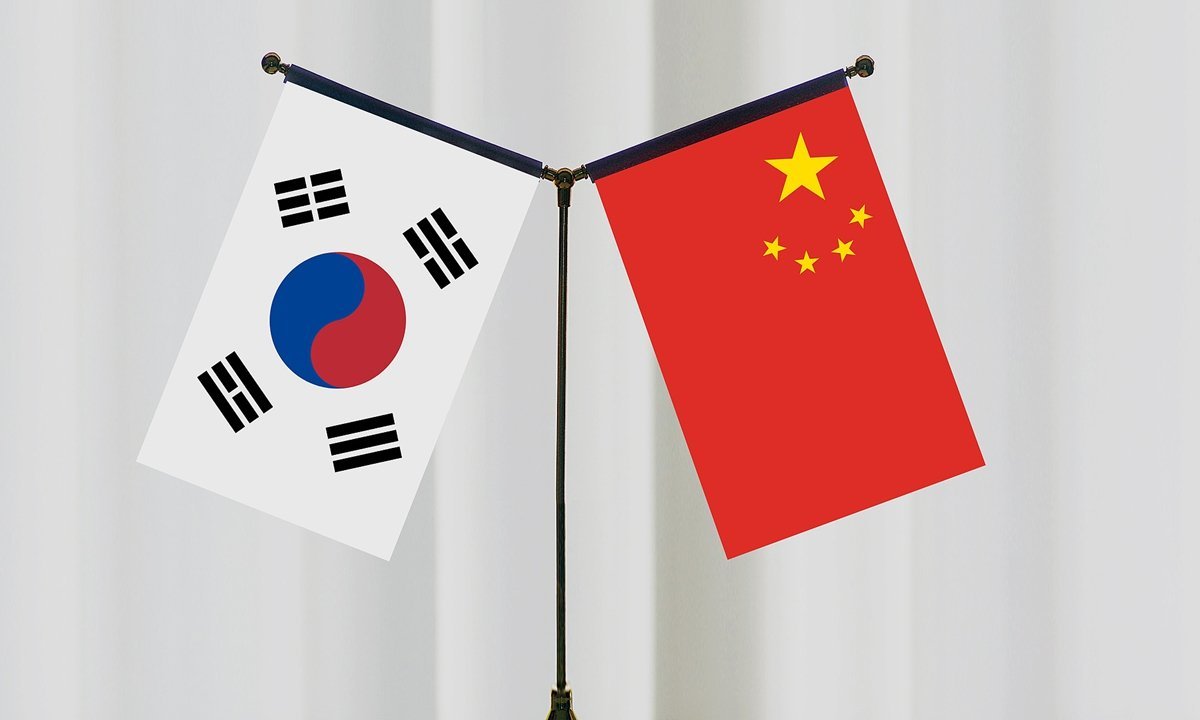
SEOUL/BEIJING: Chinese President Xi Jinping will host South Korean President Lee Jae-myung on a state visit beginning Sunday, underscoring Beijing’s push to recalibrate regional diplomacy as relations with Japan deteriorate over Taiwan.
The visit comes barely two months after the two leaders last met, an unusually short interval that analysts view as a deliberate signal of China’s intent to elevate ties with Seoul—both strategically and economically at a time of heightened friction with Tokyo.
China–Japan relations have cooled sharply following remarks by Japanese Prime Minister Sanae Takaichi in November suggesting that a hypothetical Chinese attack on Taiwan could prompt a military response from Japan. Against that backdrop, Xi’s invitation to Lee appears carefully timed, particularly ahead of Lee’s expected engagement with Japan later this year.
“Beijing wants to underline South Korea’s strategic value more clearly than before,” said Kang Jun-young, professor of political economics at Hankuk University of Foreign Studies. “China seems to have calculated that hosting Lee before another Seoul–Tokyo summit would work in its favour.”
Reset After Diplomatic Strain
The Lee administration has openly stated its intention to “restore” relations with Beijing, recognising China as South Korea’s largest trading partner. Ties had frayed under former president Yoon Suk Yeol, whose government leaned more decisively toward Washington and Tokyo and voiced criticism of China’s posture on Taiwan.
Lee has since signalled a more balanced approach, stressing cooperation with China while avoiding entanglement in regional rivalries. In December, he said South Korea would not take sides in diplomatic disputes between China and Japan.
Alliance Pressures and North Korea
Despite warming rhetoric, the relationship remains complex. South Korea’s security alliance with the United States—particularly efforts to modernise it continues to concern Beijing. About 28,500 U.S. troops are stationed in South Korea, and Washington has indicated interest in making those forces more flexible for broader regional contingencies, including Taiwan.
“Korea is not only responding to threats on the peninsula,” U.S. Forces Korea commander General Xavier Brunson said late last month. “It sits at the crossroads of wider regional dynamics shaping Northeast Asia’s balance of power.”
North Korea will also loom large in Xi–Lee talks. China remains Pyongyang’s key economic and diplomatic backer, while Lee is expected to press Beijing to encourage dialogue. His outreach has so far been rebuffed by North Korea, which has used unusually harsh language to criticise the new South Korean leader.
Meanwhile, Beijing and Pyongyang have stepped up coordination, highlighted by North Korean leader Kim Jong Un’s prominent appearance alongside Xi at a major military parade in September.
Tech, Supply Chains and Cultural Thaw
Economic cooperation is set to feature prominently in the visit. Lee’s office has said discussions will include critical minerals, supply-chain resilience and green industries. South Korea relies on China for nearly half of its rare earth imports, vital for semiconductor production, while China absorbs roughly one-third of South Korea’s chip exports.
Last month, officials from both countries agreed to work toward stabilising rare earth supplies, signalling a pragmatic effort to shield economic ties from geopolitical shocks.
Advanced technology cooperation may also be on the agenda. Huawei has announced plans to introduce its Ascend 950 artificial intelligence chips to the South Korean market next year, positioning them as an alternative to U.S.-made processors. Huawei did not respond to questions from WNN regarding those plans.
Cultural exchanges could see movement as well. China’s unofficial restrictions on K-pop, imposed after South Korea deployed a U.S.-led missile defence system in 2017, remain a sensitive issue. The head of SM Entertainment, one of South Korea’s largest K-pop agencies, is expected to join Lee’s business delegation, fuelling speculation of a potential easing.
Analysts say the visit reflects Beijing’s broader strategy of stabilising its neighbourhood amid growing pressure from Washington and its allies, while Seoul seeks room to manoeuvre between security commitments and economic realities.
-Joyce Chen
READ THE FULL E-MAGAZINE | WorldAffairs: A Complete, Unfiltered Lens on Geopolitics, the World Economy, and Global Policy