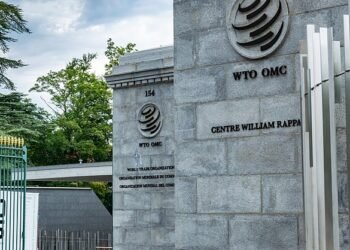

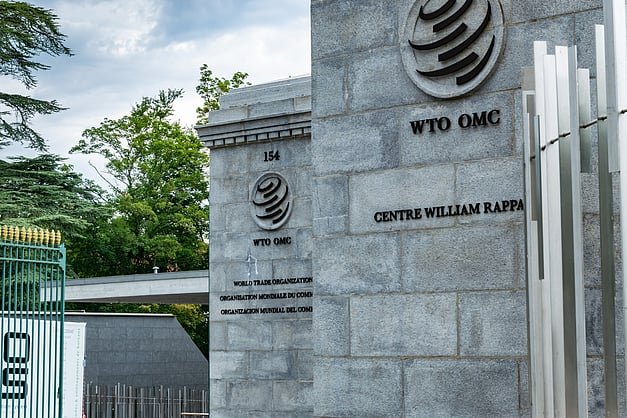
YAOUNDE: As trade ministers gather in Yaoundé for a decisive round of reform negotiations at the World Trade Organization, the stakes extend far beyond institutional procedures. What is unfolding is not merely a debate over technical trade rules, it is a test of whether the multilateral trading system can survive an era defined by war, sanctions politics, digital competition, and strategic fragmentation.
The timing of the meeting is critical. The ongoing confrontation involving the United States, Israel, and Iran has already pushed energy markets into volatility, disrupted fertilizer supply chains, and raised fresh concerns about food security across Africa and the wider Global South. These pressures are exposing how deeply geopolitical shocks now shape trade stability, often faster than institutions like the WTO can respond.
For decades, the WTO functioned as the backbone of predictable global commerce. Today, however, its dispute-settlement mechanism has remained largely paralyzed for six years, weakening confidence among both advanced and developing economies. Without a functioning enforcement system, rules risk becoming optional rather than binding, an outcome that could encourage major powers to increasingly bypass the organization altogether.
This is precisely the danger facing ministers in Cameroon. Failure to produce even a modest reform roadmap may accelerate a shift toward “coalition-based rulemaking,” where regional blocs and strategic alliances define trade norms outside the multilateral framework. Such fragmentation would disproportionately affect developing economies that rely on rule-based predictability rather than bargaining power.
At the heart of the negotiations lies a revealing fault line between major economies. The United States supports reform in principle but remains cautious about committing to structured timelines. Meanwhile, the European Union, United Kingdom, and China are pressing for clearer institutional direction. This divergence reflects a deeper question: whether the future of global trade governance will remain rules-based or gradually evolve into a system shaped by strategic leverage.
Equally contentious is the debate over extending the moratorium on customs duties for digital downloads, an issue that illustrates the widening divide between developed and developing economies in the digital era. Washington is pushing for a permanent extension, while India and several developing countries remain cautious, citing concerns about revenue losses, regulatory flexibility, and digital sovereignty. The disagreement underscores a broader struggle over who will shape the rules of the digital economy.
These tensions are unfolding at a moment when energy disruptions, supply-chain realignments, and sanctions-driven trade restructuring are already reshaping the global economic order. As business leaders warn of the risk of the worst industrial disruption in decades, the outcome of the Yaoundé meeting may determine whether the WTO adapts to this new reality or gradually fades into irrelevance.
If the organization cannot restore confidence in its dispute-settlement system and deliver consensus on emerging trade rules, countries will increasingly look elsewhere to define the future of global commerce. And once that shift begins in earnest, rebuilding multilateral trust may prove far more difficult than preserving it today.
-Lincoln Reese