

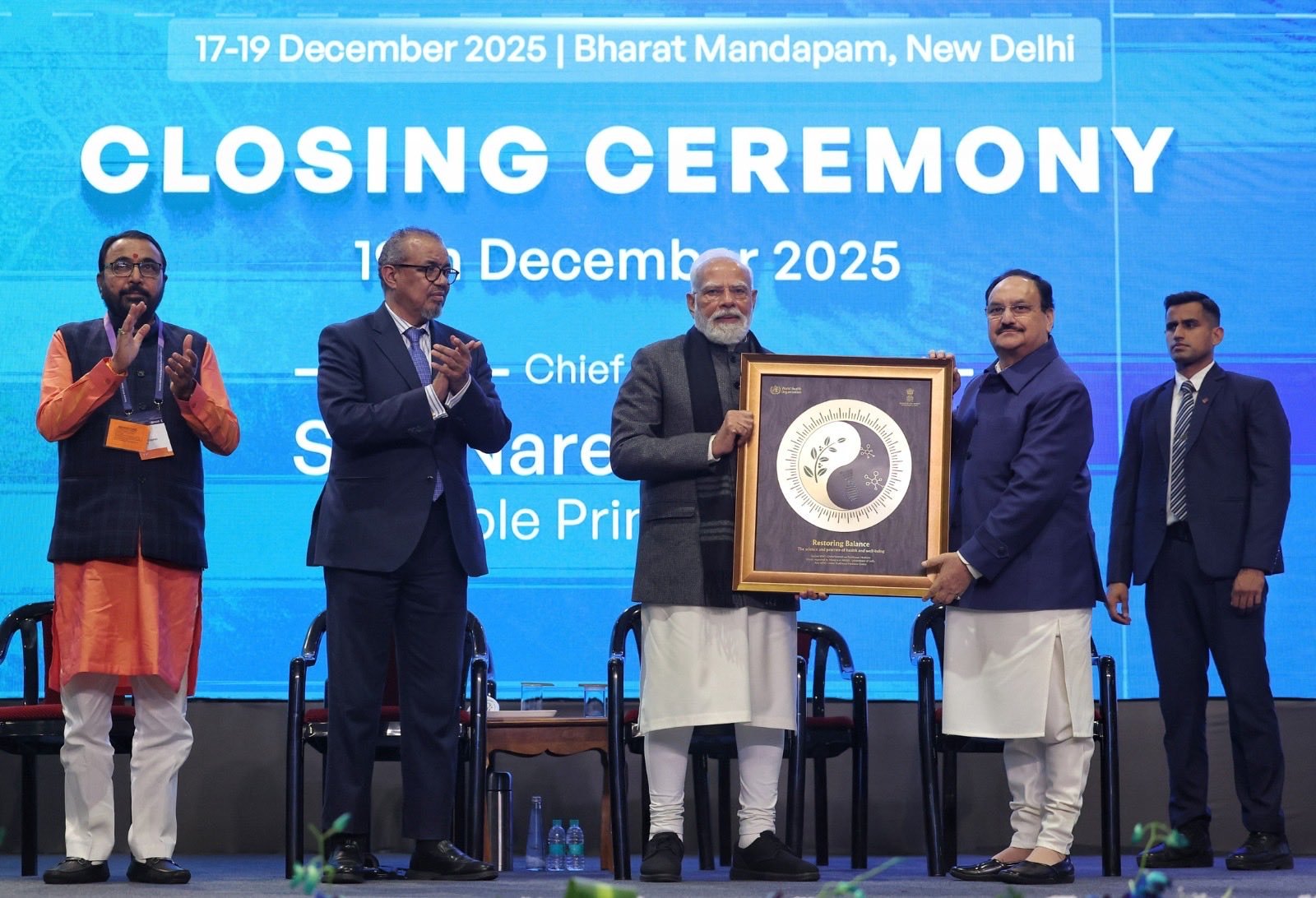
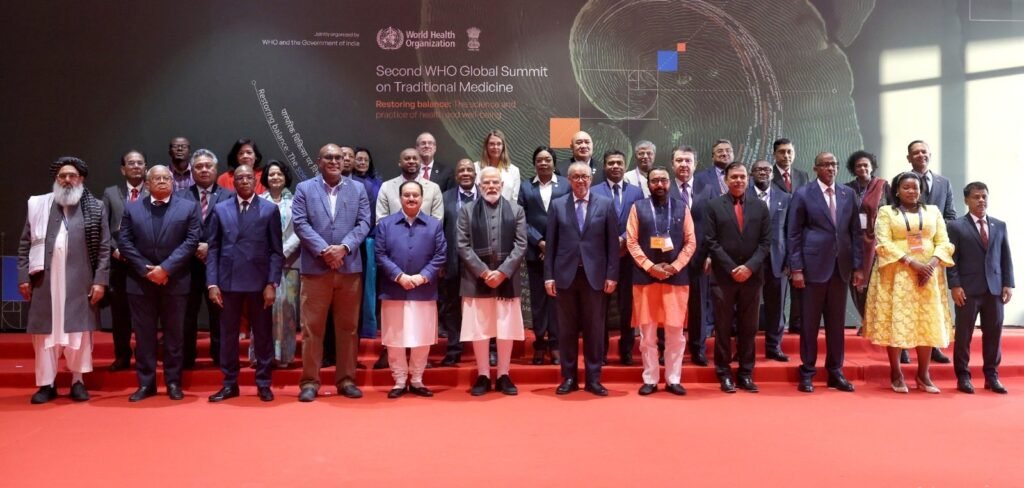
NEW DELHI: The World Health Organization’s Global Health Summit in New Delhi was not merely a post-pandemic stocktaking exercise. It marked a deliberate attempt to redraw the architecture of global health governance one that reflects the realities of a fragmented world, accelerating climate risks, and the rising strategic weight of the Global South. More importantly, the summit translated lessons from recent crises into concrete outcomes and forward-looking agreements, signaling how the future health of the world may be governed.
For much of the past three decades, global health operated on a reactive model: funding surged after outbreaks, emergency mechanisms were activated late, and developing countries were often treated as implementation zones rather than decision-makers. The New Delhi Summit openly challenged this approach. Its underlying philosophy was simple but consequential prevention must replace improvisation, and regional capacity must replace centralized dependency.
One of the most tangible outcomes was the New Delhi Declaration on Global Health Security, a 15-point consensus endorsed by all participating nations. The declaration commits countries to establishing regional pandemic preparedness centers across Africa, Southeast Asia, Latin America, and the Middle East by 2027. These centers are designed not as symbolic institutions, but as operational hubs for surveillance, training, rapid response coordination, and emergency logistics. Their creation reflects a shift in authority, recognizing that regions closest to outbreaks must have the capacity to act decisively without waiting for distant approvals.
Closely linked to this was the agreement to establish a $50 billion Global Health Resilience Fund, with contributions from G20 governments, multilateral lenders, and private-sector partners. This fund represents a structural correction to decades of underinvestment in preparedness. Unlike traditional aid flows tied to emergencies, the Resilience Fund is meant to finance long-term capabilities, laboratories, data systems, workforce training, and resilient infrastructure. For low- and middle-income countries, predictable financing could finally allow health planning beyond crisis cycles.
READ FULL E-MAGAZINE HERE (A GLOBAL MAGAZINE ON GEOPOLITICS, ECONOMY & POLICY)
Another major outcome was the Pharmaceutical SupplyChain Resilience Pact, signed by 34 countries. The pandemic revealed how dangerously concentrated global medicine and vaccine production had become. Export bans, raw material shortages, and intellectual property barriers left many countries exposed at their most vulnerable moment. The pact commits signatories to diversifying critical medicine production across at least three continents, maintaining strategic reserves equivalent to six months of essential medicines, and institutionalizing technology transfer mechanisms that enable local manufacturing in developing economies.
This agreement has far-reaching implications. It reframes pharmaceutical capacity as strategic infrastructure, comparable to energy security or food reserves. For BRICS and other emerging economies, it opens pathways to reduce dependence on a handful of global suppliers, while strengthening regional self-sufficiency. In geopolitical terms, it also reduces the likelihood that health supplies become tools of coercion during future crises.
Digital transformation formed another pillar of the summit’s outcomes. WHO’s Digital Health Interoperability Framework sets technical standards for cross-border health data sharing during emergencies, AI-powered early warning systems for disease outbreaks, and interoperable digital health identities. Pilot deployments in India, Kenya, and Brazil illustrate a deliberate pivot toward inclusive innovation, where digital public goods are developed and tested in the Global South rather than imposed upon it.
The future agreements embedded in this framework are particularly significant. Member states committed to scaling AI-driven surveillance to at least 15 countries by 2026, with a roadmap for global coverage by the end of the decade. There was also consensus on negotiating binding protocols for data governance, privacy protection, and ethical AI use areas that will define trust in digital health systems. These agreements signal that technology will be central to future preparedness, but not without rules.
Climate and health integration emerged as one of the summit’s most consequential outcomes. Participants formally recognized climate change as a core health security threat, not a secondary environmental concern. Agreements included the adoption of climate-resilient healthcare infrastructure standards, coordinated heat-health early warning systems across vulnerable regions, and the launch of a real-time vector-borne disease surveillance network for malaria, dengue, and Zika.
Looking ahead, countries agreed to embed climate indicators into national health risk assessments and into the new Global Health Security Index 2.0. This represents a forward-looking shift: future health financing, insurance instruments, and preparedness rankings will increasingly reflect climate exposure. For countries in the tropics and coastal regions, this alignment could unlock targeted adaptation funding while forcing governments to integrate health planning into climate policy.
Health financing innovations announced in New Delhi also point to future agreements taking shape. Enhanced Pandemic Bonds 2.0, health impact bonds, and a $15 billion Pharmaceutical Innovation Fund for neglected tropical diseases and antimicrobial resistance research indicate a growing appetite for blended finance models. These mechanisms aim to crowd in private capital while tying returns to measurable health outcomes. Over the next two years, negotiations will focus on governance structures to ensure that financialization does not override equity or public accountability. India’s role in shaping both outcomes and future agreements was central but calibrated. Rather than positioning itself as a dominant power, India framed its commitments around global commons and capacity-building. Initiatives such as open-source CoWIN 2.0, the international expansion of Ayushman Bharat’s digital architecture, and large-scale health workforce training programs were offered as shared platforms rather than proprietary tools. This approach resonated strongly with Global South delegates wary of dependency-driven models.
It was within this broader context that Afghanistan’s Minister of Public Health, Mawlawi Noor Jalal Jalali, made one of the summit’s most geopolitically significant interventions. Speaking exclusively to WorldAffairs on the sidelines of the summit, Jalali acknowledged that Afghanistan is actively seeking to diversify its pharmaceutical supply chains as relations with traditional suppliers, particularly Pakistan have deteriorated.
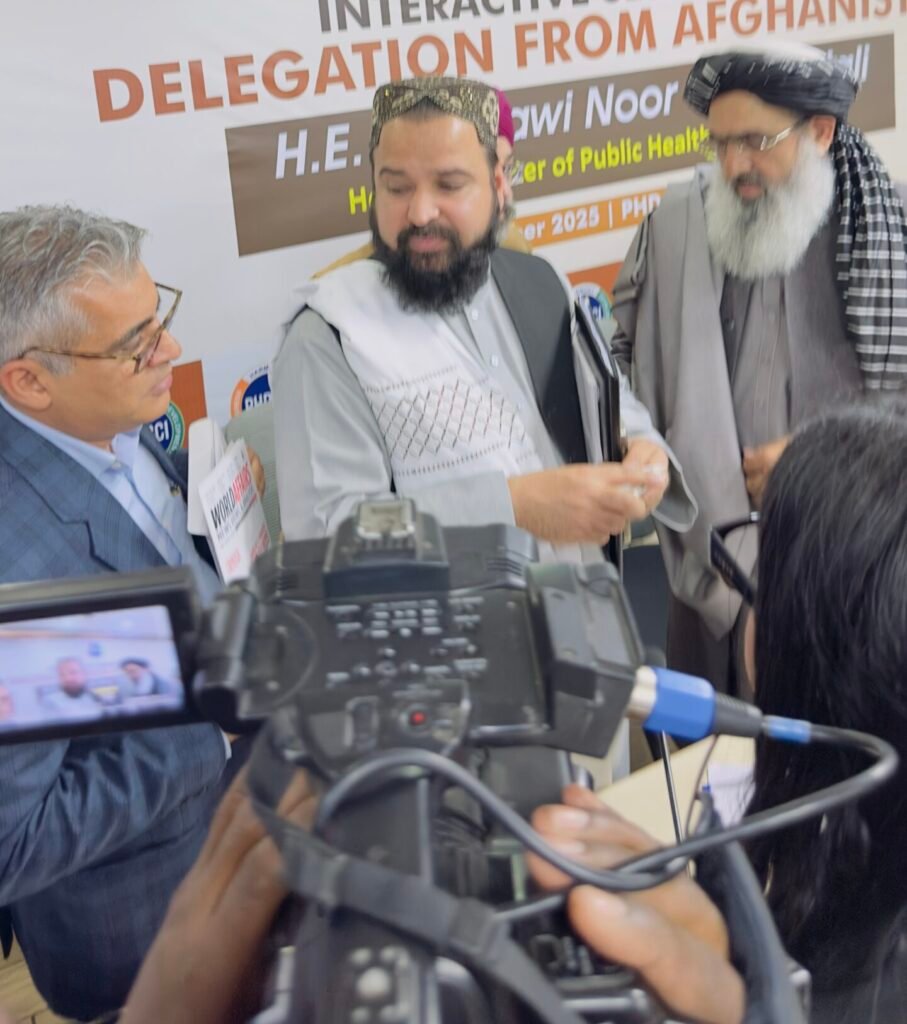
“Pakistan earlier accounted for nearly 60 to 70 per cent of Afghanistan’s pharmaceutical supply,” Jalali told WorldAffairs, adding that recent disruptions had exposed the strategic risks of overdependence on a single transit and sourcing route. “These challenges have forced us to look for reliable and long-term alternatives,” he said.
Jalali identified India as an emerging and credible partner in this transition. “India has a strong pharmaceutical base and a global reputation for producing affordable, quality medicines,” he noted, emphasizing Kabul’s interest in expanding direct pharmaceutical imports, medical equipment supplies, and technical cooperation with Indian manufacturers. He also highlighted Afghanistan’s willingness to engage in regulatory coordination and capacity-building initiatives to stabilize access to essential medicines.
The potential India–Afghanistan pharmaceutical partnership aligns closely with the summit’s emphasis on supply-chain resilience and South-South cooperation. Discussions included possibilities of structured medicine exports, training of Afghan healthcare professionals, quality assurance collaboration, and long-term support for localized pharmaceutical capabilities. For Afghanistan, such cooperation could help insulate its health sector from geopolitical shocks and sanctions-related disruptions. For India, it reinforces its role as a health-security partner operating through humanitarian and developmental channels rather than overt political alignment.
More broadly, Afghanistan’s intervention underscored a central lesson of the New Delhi Summit: fragile and conflict-affected states face the highest health risks but the fewest buffers. Integrating such countries into diversified regional supply chains is not only a moral obligation but a strategic necessity. Exclusion, as the pandemic demonstrated, ultimately weakens global health security for all.
Equally significant was the summit’s emphasis on South-South cooperation. Initiatives such as the proposed Global South Health Alliance, mutual recognition of medical qualifications, and collaborative research in traditional medicine signal a shift toward peer-based partnerships. For BRICS nations and their partners, this model offers a more sustainable path forward one grounded in shared challenges, contextual solutions, and mutual respect.
Institutional reform was another area where outcomes and future pathways converged. Proposals to modernize WHO governance, enhance its emergency authority, and create Regional Health Security Councils with rotating leadership from developing countries reflect frustration with fragmented crisis responses. Although some reforms will require prolonged negotiation, the summit achieved consensus on establishing an independent oversight mechanism to track preparedness commitments—an important step toward accountability.
Crucially, the summit also laid out implementation timelines. Immediate priorities for 2025–26 include mobilizing $12 billion for preparedness infrastructure, launching six regional manufacturing hubs, and deploying AI early warning systems in at least 15 countries. Medium-term goals aim at health system strengthening and universal health coverage expansion across 40 countries, while long-term targets envision a fully operational global preparedness architecture by 2030.
For the Global South, the deeper significance of the New Delhi Summit lies in its redefinition of power within global health. Health security is no longer framed as episodic charity delivered during emergencies, but as a shared strategic responsibility rooted in prevention, regional strength, and cooperation. The shift from dependency to distributed capacity may prove to be the summit’s most enduring legacy.
The New Delhi WHO Summit did not promise a world free from pandemics, climate shocks, or health inequities. What it offered instead was a credible pathway toward resilience, one built on concrete outcomes, enforceable agreements, and a more inclusive balance of leadership. The inclusion of voices such as Afghanistan’s, and the emergence of new partnerships like India–Afghanistan pharmaceutical cooperation, illustrate how health diplomacy is becoming a central instrument of stability in an increasingly divided world.
Whether this vision materializes will depend on political will, sustained financing, and institutional follow-through. But for the first time in years, the future health of the world appears to be guided not by panic and improvisation, but by planning, prevention, and partnership.
– Dr. Shahid Siddiqui; follow via X @shahidsiddiqui
READ FULL MAGAZINE HERE (360 VIEW ON GEOPOLITICS, WORLD ECONOMY & GLOBAL POLICY)