

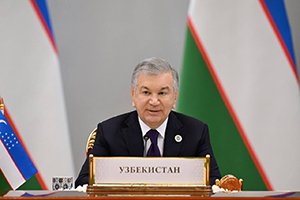
TASHKENT: In a major signal of shifting regional strategy, Uzbek President Shavkat Mirziyoyev has proposed the establishment of a formal Central Asian cooperation organization named the “Community of Central Asia” aimed at boosting economic, security, and environmental integration among the region’s more than 80 million citizens.
Addressing leaders from Kazakhstan, Kyrgyzstan, Tajikistan, Turkmenistan, and Azerbaijan at a high-level meeting in Tashkent, Mirziyoyev called for upgrading the current format of periodic presidential gatherings into a structured regional bloc capable of shaping long-term cooperation.
He argued that deeper institutionalization was essential for a region undergoing an unprecedented geopolitical recalibration. Long influenced primarily by Russia, the mineral-rich and energy-rich heart of Eurasia is now becoming a focal point for strategic engagement from the West, the United States, and China—each competing for economic and political footholds.
While no immediate collective response was issued by the attending heads of state, the proposal aligns with a broadening sentiment across the region. All five Central Asian republics have, in recent years, expressed support for closer regional integration after decades marked by mistrust, border disputes, and uneven economic links.
One major breakthrough this year was the resolution of the prolonged Kyrgyzstan–Tajikistan border conflict, which had claimed hundreds of lives but now stands as a symbol of new diplomatic pragmatism in the region.
The Tashkent summit came shortly after a notable act of foreign policy coordination: the five Central Asian leaders traveled together to Washington earlier this month for a joint meeting with U.S. President Donald Trump, signaling a more unified diplomatic posture and increasing willingness to diversify external partnerships through the C5+1 framework.
Mirziyoyev further announced that all five countries had agreed to formally include Azerbaijan, a Muslim-majority South Caucasus state with deep historical and economic ties into their regular meetings, expanding the region’s cooperative footprint beyond its traditional defined borders.
As global interest in Central Asia continues to rise, the Uzbek initiative signals a new phase of self-directed regionalism. The proposed “Community of Central Asia” reflects ambition not only to strengthen internal cohesion but also to negotiate with major powers from a more consolidated, confident position.
-Muhammadsharif Mamatkulov